



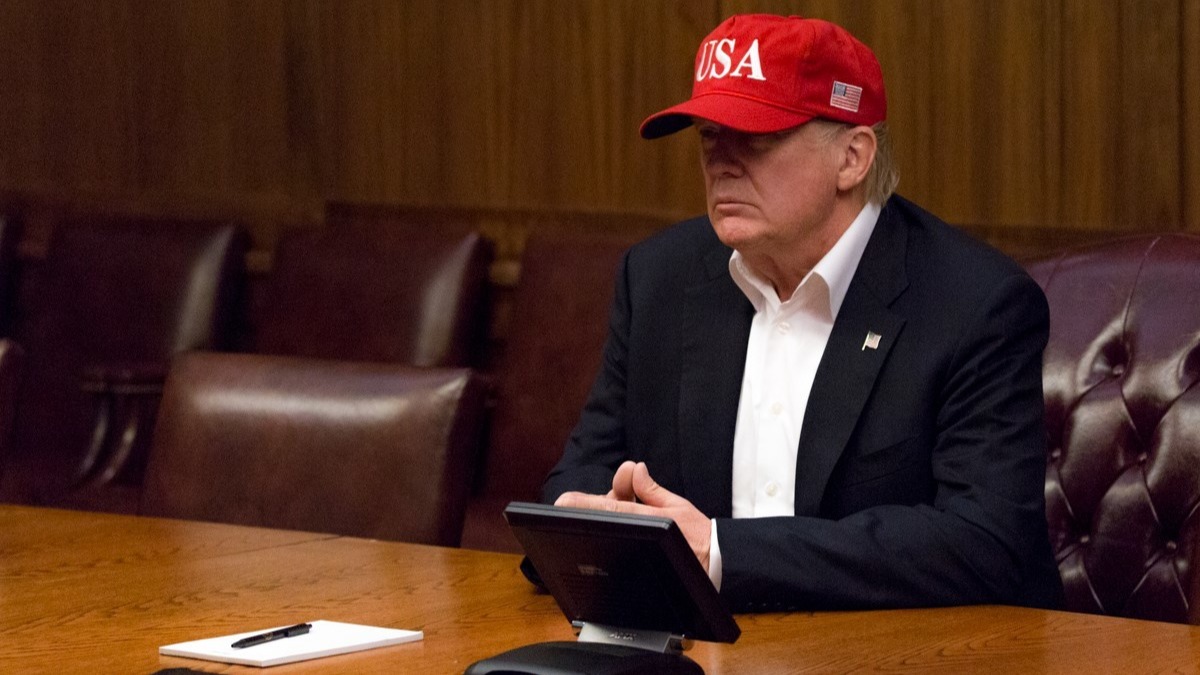

President Donald Trump extended the ceasefire with Iran indefinitely, but the move was met with immediate aggression in the Strait of Hormuz. Only hours after the administration announced the open-ended truce, at least two ships were attacked in the region, as per CBS News. It made the warnings from the president’s own advisers look prophetic.
The situation began unfolding Tuesday afternoon at the White House, where Trump gathered his national security team, including Secretary of State Marco Rubio, Defense Secretary Pete Hegseth, Chairman of the Joint Chiefs Dan Caine, and CIA Director John Ratcliffe.
The administration was facing a ceasefire deadline with total silence from the Iranian side. Despite sending over a list of broad deal points, the U.S. had received no response, leaving Vice President JD Vance’s planned trip to Pakistan for further talks in limbo.
Iran’s internal fractures are making it nearly impossible for the U.S. to find a reliable negotiating partner
Trump opted to extend the ceasefire without a specific end date, taking to his Truth Social platform to announce the decision. He stated he had directed the military to continue the blockade while remaining ready for further action, and that he would “extend the Ceasefire until such time as their proposal is submitted, and discussions are concluded, one way or the other.”
The move was a clear attempt to create space for a diplomatic solution, as the president remains wary of getting drawn into another long conflict. According to CNN, the administration’s working theory is that the silence from Tehran is not just defiance, but a sign of internal chaos.
Officials believe the Iranian leadership is “seriously fractured” and struggling to reach a consensus on uranium enrichment or how to empower their own negotiators. There is also uncertainty about whether new Supreme Leader Mojtaba Khamenei is giving clear instructions to his subordinates or whether they are simply guessing his intent.
The Iranian perspective, however, is very different. Mahdi Mohammadi, an adviser to the Iranian Parliament Speaker, publicly dismissed the extension on X. Iran’s top negotiator had already described the ongoing talks as a table of surrender, and Mohammadi echoed that defiant tone, stating that “Trump’s ceasefire extension means nothing.”
He added that the “losing side cannot dictate terms” and that the “continuation of the siege is no different from bombardment and must be met with a military response.” By early Wednesday, the U.K. Maritime Trade Operations Centre reported that an Iranian Revolutionary Guard Corps gunboat had fired on a container ship 15 nautical miles northeast of Oman, causing heavy damage to the bridge, though the crew was reported safe.
Just three hours later, a second cargo ship was fired upon 8 nautical miles west of Iran and forced to stop in the water. The IRGC confirmed they had intercepted both vessels, claiming the ships had entered the area without authorization and tampered with their navigation systems, warning that “disrupting the order and safety of the Strait of Hormuz is our red line.”
This escalation followed earlier U.S. blockade operations, in which American forces fired upon and seized an Iranian container ship and boarded an oil tanker linked to Iran’s oil trade in the Indian Ocean. Trump has been firm that the blockade will not be lifted until a final deal is in place, telling CNBC on Tuesday morning, “We’re not going to open the strait until we have a final deal.”
The real concern among the administration’s advisers was that extending the ceasefire would simply give Iran more time to maneuver. Some sources familiar with the discussions warned that the pause could allow Iran to drag out negotiations while it unearths missile systems that had been buried during the conflict.
With the Iran war now stretching into its eighth week, the White House is also trying to avoid any deal that resembles the Obama-era agreement, which Trump has consistently called weak. As of Wednesday, the situation remains extremely tense.
While one official suggested there is still a chance for negotiators to meet, that is far from certain. Both sides are feeling the economic pressure of the closed strait, which some in the region hoped would force a quick resolution. For now, the diplomatic effort is struggling to gain any real traction against the backdrop of these maritime attacks, proving just how difficult it is to secure the “great deal” the president insists is coming.








Published: Apr 22, 2026 08:30 am