



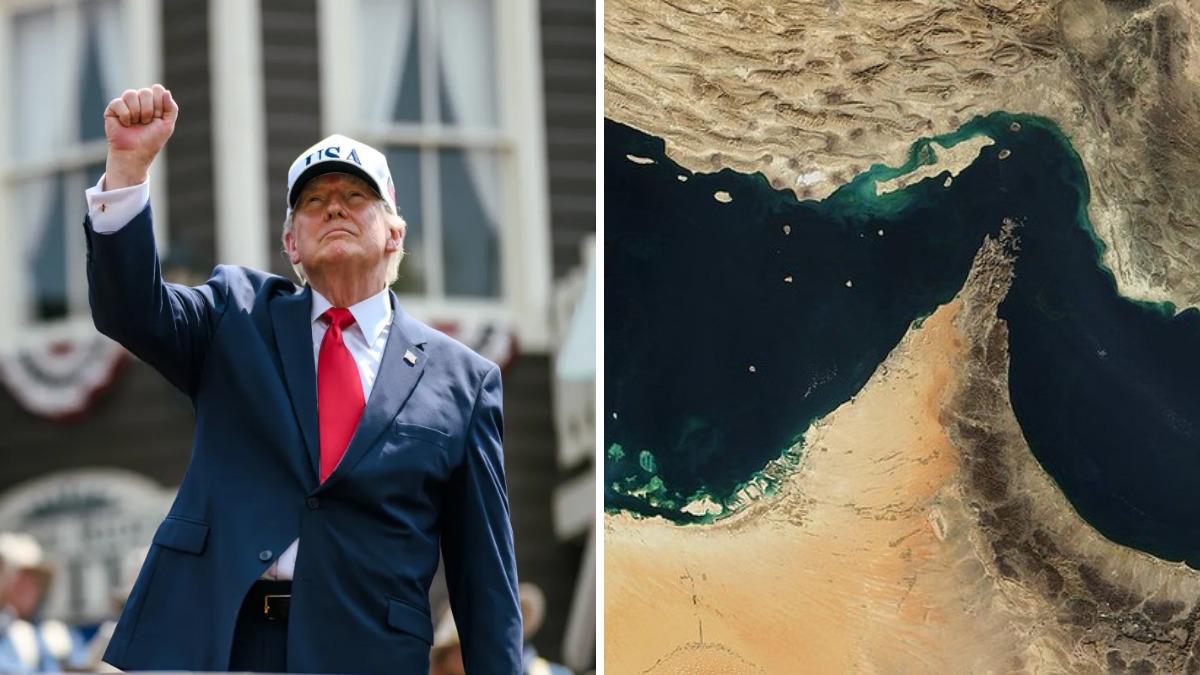

President Trump announced on Monday that the United States is officially reinstating a naval blockade on the Strait of Hormuz to manage transit through the waterway, The Hill reported. This development follows a series of military engagements between the United States and Iran that escalated over the weekend. The administration is positioning the U.S. military as the primary authority in the region, declaring that the U.S. will now be recognized as “the Guardian of the Hormuz Strait.”
This move is a direct response to ongoing tensions in the area, which serves as a vital corridor for global trade. The situation intensified significantly after Iran targeted a container ship for allegedly using an unauthorized route. Following that attack, which resulted in significant damage to the vessel and left one crew member missing, the United States launched multiple waves of offensive strikes.
U.S. Central Command confirmed that these operations involved hitting dozens of targets at multiple locations using precision munitions. The objective of these strikes is to degrade the ability of Iran to continue attacking international shipping flowing through the strait.
The logistics of global shipping through this corridor are changing
In a post on Truth Social, President Trump addressed the status of the waterway, stating, “The Hormuz Strait is OPEN, and will remain OPEN, with or without Iran.” He clarified the nature of the new maritime policy by noting, “We are reinstating the THE IRANIAN BLOCKADE, so named because it is only stopping Iran’s ships or customers from entering or leaving.”
This distinction is important because the administration has stated that all other nations will maintain fair and open use of the passage. The U.S. military maintains that Iran does not control the strait and that U.S. forces are postured to ensure freedom of navigation remains available to commercial shipping despite what the military command describes as continued unwarranted aggression and threats.
Part of this new operational framework includes a financial component aimed at covering the costs of security. President Trump stated that the U.S. will be reimbursed at a rate of 20 percent on all cargo shipped through the region. He characterized this as a matter of fairness, explaining that the funds are necessary to cover the costs required to provide safety and security to this volatile section of the world.
He further emphasized, “The U.S.A. will be, from this point forward, known as ‘THE GUARDIAN OF THE HORMUZ STRAIT,’ but as such, and as a matter of FAIRNESS, will be reimbursed, at the rate of 20% on all cargo shipped, for any and all costs necessary to do the job of providing safety and security to this very volatile section of the World.” According to the President, the process and formation for this toll system will begin immediately.
Earlier on Monday, the President indicated that the United States would be keeping the strait and suggested that the U.S. would likely run it. Meanwhile, the Islamic Revolutionary Guard Corps stated that the Strait of Hormuz is their territory and they will not allow “a rogue and child-killing army from the other side of the world to continue its illegal interference in it”.
The military activity has been persistent. On Saturday, the U.S. military launched a third round of strikes against Iran as a direct response to the attack on the container ship. U.S. Central Command noted that Iran had been provided an opportunity to demonstrate adherence to a memorandum of understanding after being held accountable for earlier attacks on commercial vessels, but the country failed to do so. The recent strikes on Sunday marked a new wave of offensive maneuvers to further secure the area.
During the NATO summit held last week, President Trump made it clear that the previous ceasefire between the United States and Iran is now over. The current situation represents a significant shift in how the waterway is managed. With the U.S. military taking a more hands-on approach to patrol and enforcement, the logistics of global shipping through this corridor are changing.





Published: Jul 13, 2026 04:30 pm