


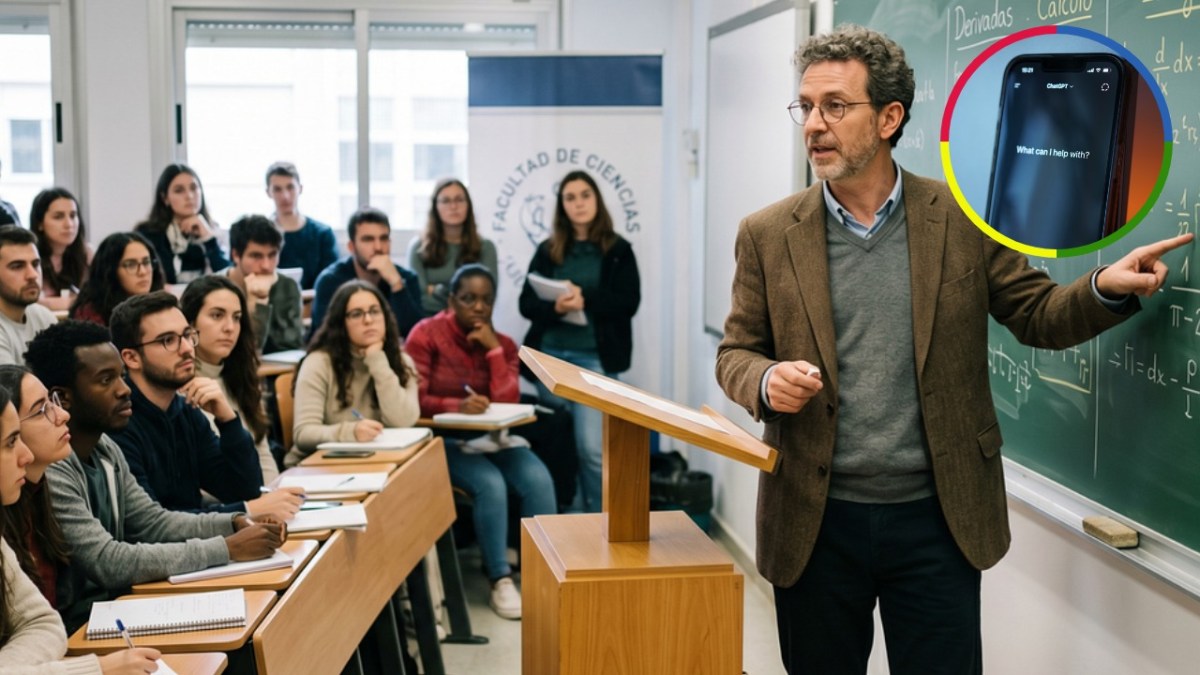

Richard Borcherds, a professor at UC Berkeley, has stopped grading student homework for correctness because he believes artificial intelligence has made the practice meaningless. He feels that the current environment creates a situation where students are pushed toward using tools like ChatGPT to get high grades, which hurts those who choose to do the work on their own.
As reported by Unilad, Borcherds pointed out that this shift penalizes honest students who want to do the work themselves. The professor noted that keeping track of who is doing the work is becoming a real struggle in classrooms today.
He explained his perspective by saying, “Student use of AI for homework is now widespread. Grading for correctness just adds a huge incentive for them to use AI for homework instead of doing it themselves, and penalizes students for honesty.”
He says even AI itself cannot offer a clear path forward
The challenge of identifying AI work has grown significantly as the technology becomes more polished. Borcherds mentioned that while AI used to leave behind clear signs of its involvement, those days are largely gone. He told the California Post, “There is no easy way to tell the difference between human and AI generated work. Occasionally one could tell it is AI because AI made a few characteristic errors, but AI has now improved so much that it rarely makes obvious mistakes.”
This massive change in how work is produced has led Borcherds to think about the future of mathematics as a career path. He shared his concerns in the student newspaper at UC Berkeley, the Daily Californian.
He is worried about a future where human mathematicians might find themselves unable to compete with the speed and capability of machines. Borcherds noted, “If AI continues to improve at present rate, then, in a few years, there’ll be nothing human mathematicians can do that AI can’t do better.”
The situation has reached a point where even the AI itself cannot offer a clear path forward for students entering the field. Borcherds actually tried to get an answer from the software, but the results were not helpful. He shared, “I have no idea what to advise. I even asked ChatGPT this exact question, and even ChatGPT said it didn’t have any idea what was going to happen.”
While thinking about these changes, Borcherds compared the current situation to past technological shifts that changed other industries. He pointed to the way looms replaced hand weaving and motor cars replaced horses.
He acknowledged that these kinds of transitions are a part of history, but he emphasized that this is a unique moment for the field of mathematics. He remarked, “There have been plenty of technical breakthroughs in the past — hand weaving was put out of business by looms, and horses were put out of business by motor cars, and so on. This is the first time anything like this has happened in mathematics, though.”






Published: Oct 28, 2026 07:30 am