



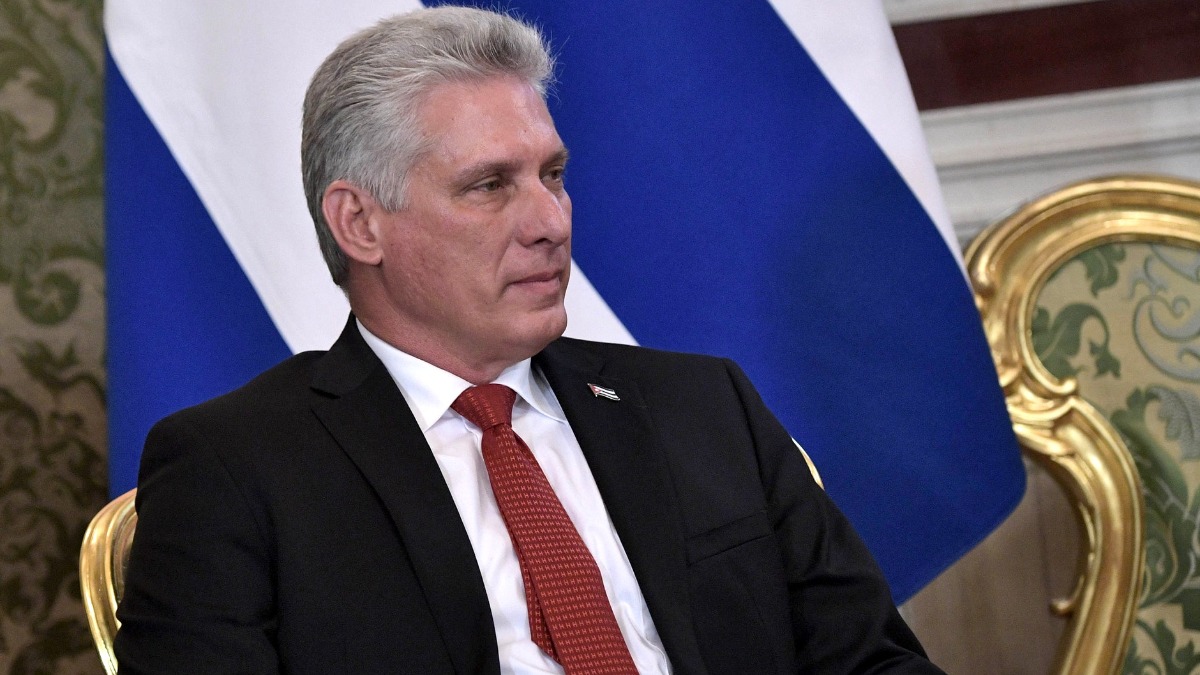

Trump’s administration is currently engaged in talks with Cuba, as confirmed by Cuban President Manuel Díaz-Canel, aiming to address “bilateral differences” and pinpoint “areas of cooperation,” as reported by The Hill. This news comes as a significant development, especially considering President Trump’s past rhetoric and actions regarding the island nation.
President Trump has specifically tasked Secretary of State Marco Rubio with these sensitive discussions, having previously stated his belief that Cuba’s 67-year-long communist rule is on the verge of collapse under U.S. pressure. Díaz-Canel noted that “international factors” have paved the way for these exchanges, a sentiment echoed by Cuba’s Foreign Minister Bruno Rodríguez Parrilla on X.
The Cuban president clarified that the core purpose of these talks is to “identify bilateral issues that require solutions” and actively “find solutions” to existing problems. He emphasized that the objective is to gauge the “willingness of both parties” to take concrete actions, pinpointing areas where cooperation can “address shared threats and ensure the security of both nations.” This is clearly a delicate situation, and Díaz-Canel described the process as “very sensitive,” requiring “seriousness and responsibility.”
It’s a wild turn of events, especially when you remember Trump’s earlier stance with Cuba
Trump previously mused about a potential “friendly” or even “not friendly takeover” of Cuba. This administration has also been actively pressuring Cuba; back in January, Trump imposed a U.S. quarantine on fuel imports, effectively halting Venezuelan energy deliveries to the island. That move followed a surprise military operation that saw former Venezuelan President Nicolás Maduro deposed and transferred to the U.S. to face drug charges.
Reports indicate that the administration might soon unveil an economic deal with Cuba, and some of the potential provisions are quite surprising. One key element could include easing restrictions on Americans traveling to Havana, which would be a huge change for many. Of course, Congress would still need to give its stamp of approval for that particular concession.
Even more eyebrow-raising are the reported discussions about an “off-ramp” for Díaz-Canel and the family of Raul Castro, who is widely seen as the primary power broker in Havana. This arrangement would reportedly allow them to remain on the island. Furthermore, the U.S. is reportedly offering a package of sanctions relief and new deals spanning ports, energy, and tourism.
The broad use of military force by the president has certainly caught the attention of lawmakers. Senate Democrats have already filed legislation designed to prevent the U.S. from deploying military force in Cuba without explicit congressional approval, aiming to spark a debate on Trump’s extensive use of the military.
President Trump has overseen a months-long military assault on suspected drug-trafficking boats in the Caribbean, launched a war in coordination with Israel against Iran on February 28, and conducted coordinated military operations with the Ecuadorian military. He’s also launched strikes against terrorist groups in Nigeria, engaged in a previous round of strikes against Iran alongside Israel in June, and initiated a two-month military campaign against the Houthis in Yemen in March 2025.
Given this backdrop, the prospect of an economic deal with Cuba, complete with significant concessions, is truly something to watch.







Published: Mar 13, 2026 06:45 pm