



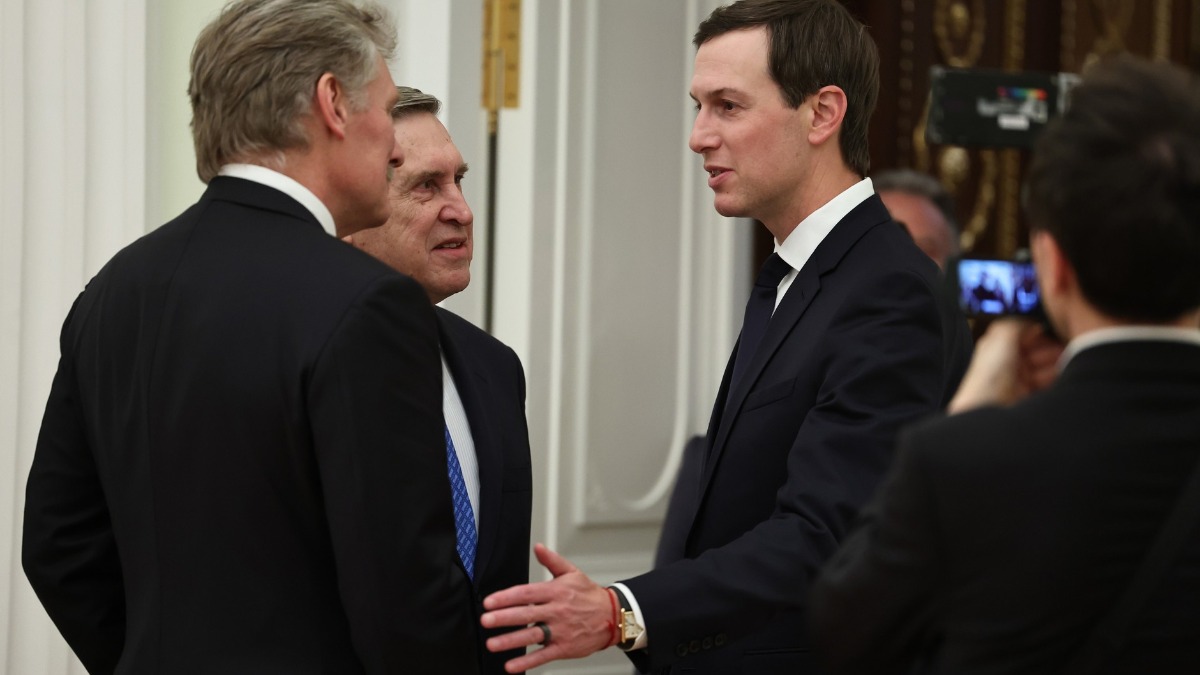

Jared Kushner, President Trump’s son-in-law and a key U.S. government negotiator in the Middle East, is now actively working to raise billions more for his private equity firm, Affinity Partners, from governments in the same region, as reported by The New York Times. This move comes as he simultaneously holds a crucial role as the administration’s chief envoy, blurring the lines between public service and private financial gain.
Sources familiar with the discussions, who weren’t authorized to speak publicly, indicate that Mr. Kushner has been in talks with potential investors recently, aiming to secure $5 billion or more for Affinity Partners. As part of this substantial fundraising effort, Affinity’s representatives have already met with Saudi Arabia’s Public Investment Fund (PIF). PIF, which invests the kingdom’s vast oil reserves, is led by Crown Prince Mohammed bin Salman, a figure who has developed close ties with Kushner and the Trump administration.
It’s worth noting that PIF was already Affinity’s largest and earliest investor, having poured $2 billion into the firm shortly after the first Trump administration concluded. As part of that initial deal, the Saudis must be given the first opportunity to invest in any subsequent fundraising attempts by Affinity. Other Middle Eastern sovereign wealth funds that previously invested in Affinity, including those in the United Arab Emirates and Qatar, are also expected to be approached for additional capital.
This whole situation really highlights the blurring of lines between public service and private profit-seeking during President Trump’s second term
Just a few weeks ago, in his official capacity as President Trump’s “peace envoy,” Mr. Kushner met with Iran’s foreign minister in Geneva. He also spearheaded the Trump administration’s successful efforts to extract hostages from Gaza and engaged in negotiations between Russia and Ukraine to try and end their conflict.
In January, Mr. Kushner was part of the official U.S. delegation at the World Economic Forum in Davos, Switzerland, where he unveiled the Trump administration’s plan for a “New Gaza.” Yet, while in Davos, he also held private meetings with international business leaders to discuss his plans to raise billions in new investments for Affinity.
What’s particularly striking is that as recently as December 2024, Mr. Kushner suggested he wouldn’t seek more money for Affinity during President Trump’s second term. He told podcaster Patrick O’Shaughnessy that he would “pre-emptively try to avoid any conflicts,” adding, “We don’t have to raise capital for the next four years.” Well, that appears to have changed significantly.
Documents provided to potential investors this year show that more than three-quarters of the roughly $5 billion Affinity had raised since its 2021 founding has already been spent on investments. These include stakes in companies like Phoenix Financial, an Israeli insurer, and Revolut, a financial technology startup. Affinity’s preliminary internal projections suggest the firm has earned an estimated 25 percent rate of return since its inception.
Mr. Kushner, 45, comes from a prominent real estate family but is a relative newcomer to the private equity industry, where large investors acquire companies to improve and then sell them. When he launched Affinity, based in Miami, he heavily leveraged his government contacts. During the first Trump administration, Mr. Kushner served as a senior adviser to his father-in-law, often accompanying him on trips to meet with foreign officials.
The approximately $2 billion from Saudi Arabia’s fund, along with hundreds of millions from other parts of the region, have definitely raised concerns from government watchdog groups. Mr. Kushner has frequently dismissed these complaints publicly, challenging critics to identify a specific conflict of interest.





Published: Mar 16, 2026 01:00 pm