



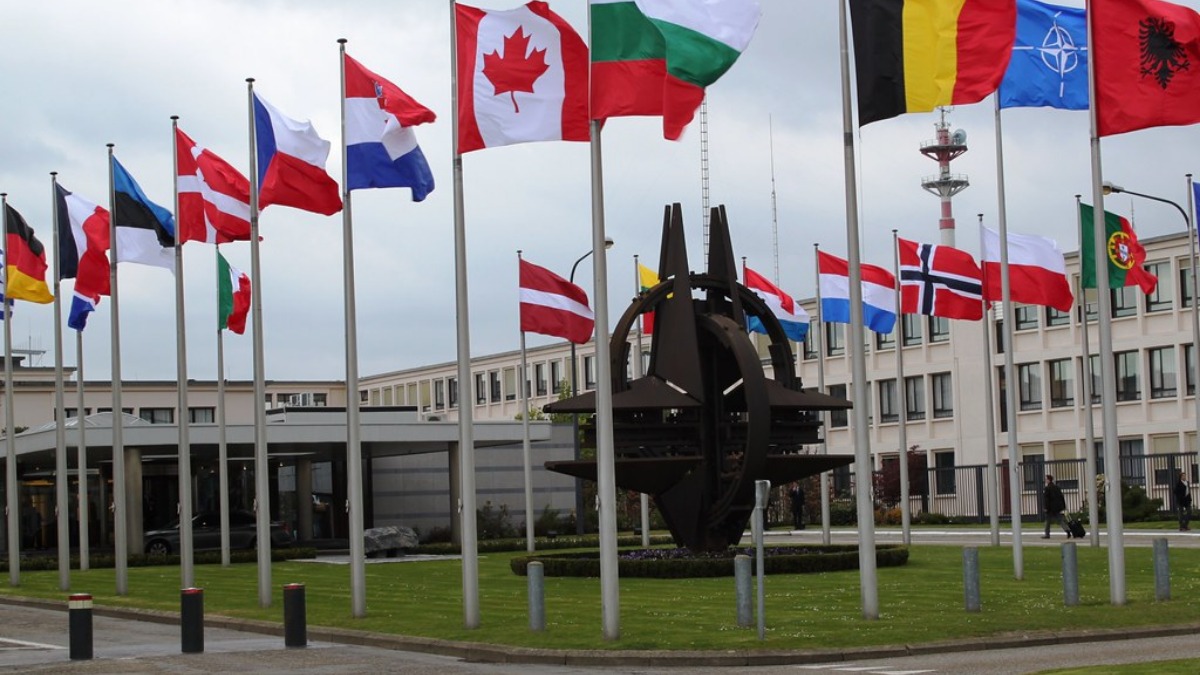

President Donald Trump is reportedly considering a major shake-up for NATO, proposing a “pay-to-play” model that could strip member states of their decision-making power if they don’t hit a new 5 percent defense spending target. This comes after allies rejected his demand to send warships to reopen the Strait of Hormuz.
Under the proposals being considered, any NATO ally that doesn’t meet the new spending goal could be frozen out of key decisions, including votes on NATO expansion, joint missions, and even the triggering of the Article 5 mutual defense clause. This could completely change how the alliance operates.
According to The Telegraph, an administration source close to the president said, “The frustration we’ve had with the Europeans has been very real,” adding, “Any country that’s not paying 5 percent shouldn’t be allowed to vote on future expenditures at NATO.” Another US source echoed this, and also stressed the need to “send the message that what Spain and the UK did is unacceptable.”
The goalposts keep moving, and most NATO allies are nowhere close to 5 percent
Trump had previously pushed for all member states to spend at least 2 percent of their GDP on defense, a goal every nation now meets. However, NATO Secretary-General Mark Rutte confirmed that leaders would need to outline plans for reaching the new 5 percent target at a summit in Ankara later this year.
The UK, for example, spent 2.33 percent of its GDP on defense last year, which is still proportionately less than 13 other NATO allies. Reaching 5 percent will be a serious challenge for most member states. Trump has also been openly frustrated with allies for not sending warships to the Strait of Hormuz, which directly preceded his decision to order thousands of troops to the Middle East in preparation for a possible ground invasion.
He has even threatened to pull the US out of the alliance entirely. The Houthis have also entered the conflict, and their involvement is now putting key global oil shipping routes under direct threat. His relationship with UK Prime Minister Sir Keir Starmer also reportedly worsened after Starmer blocked the US from using Diego Garcia, a military base in the Chagos Islands.
A source close to Trump said, “The American people have been shocked at just how much the British Government has been unreliable. The US Department of Defence has been frustrated that they can’t properly partner with a country that is supposed to be our greatest ally.”
Trump told reporters during a cabinet meeting that he was “very disappointed” in the alliance, calling it a “test for NATO” and warning: “If you don’t do this, we’ll remember. Remember this in a number of months from now. Remember my statements. They have an expression, a great expression: never forget.”
US envoys have not formally presented the “pay-to-play” plans at NATO headquarters in Brussels, though officials have been pushing for the model in various forums. Since NATO decisions require consensus, allies would likely block any such changes, setting up a potential clash with Trump.
Meanwhile, US Secretary of State Marco Rubio reportedly told G7 leaders that the Iran war is expected to last another two to four weeks. Behind the scenes, reports also revealed that the US quietly sent Iran a peace proposal through Pakistan while bombing was still ongoing.






Published: Mar 29, 2026 05:45 pm