



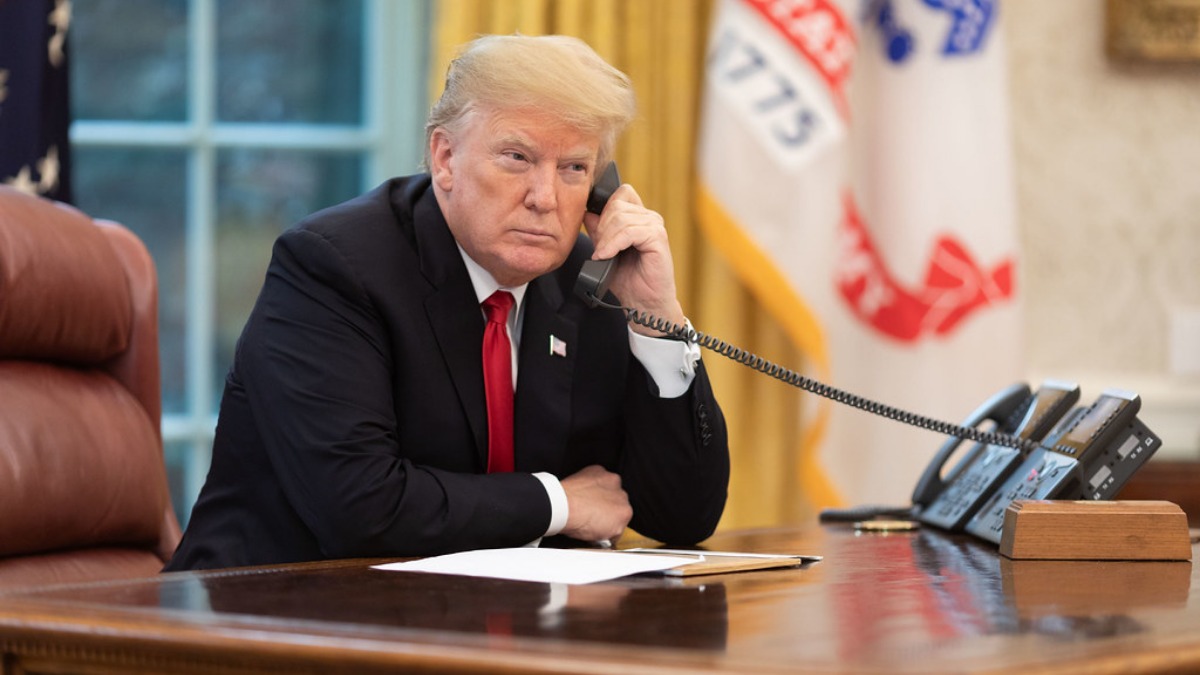

President Trump is pushing back against heavy criticism from both sides of the aisle regarding his administration’s newly established $1.776 billion anti-weaponization fund. The fund, which has sparked significant debate in the Senate and led to delays in a reconciliation package, is being framed by the president as a necessary step to provide justice for those he claims were unfairly targeted by the previous administration.
Trump took to Truth Social to defend the arrangement, asserting that he personally sacrificed a massive financial settlement to ensure this fund became a reality, The Hill reported. “I gave up a lot of money in allowing the just announced Anti-Weaponization Fund to go forward,” Trump wrote in his post. He went on to explain that he could have secured an absolute fortune by settling his personal legal cases, which included the unauthorized release of his tax returns and the 2022 raid on his Mar-a-Lago residence in Florida.
Instead, the president claims he is prioritizing others who were abused by what he characterizes as an evil and corrupt administration. “Instead, I am helping others, who were so badly abused by an evil, corrupt, and weaponized Biden Administration, receive, at long last, JUSTICE!” he added.
This massive $1.776 billion pool of money emerged from a settlement between the Trump family and the IRS
As part of the deal, the president agreed to drop his $10 billion lawsuit regarding leaked tax returns and withdrew two administrative claims related to the Mar-a-Lago search and the federal investigation into the 2016 presidential election. In addition to the fund’s creation, a memo signed by acting Attorney General Todd Blanche ensures that the IRS is now permanently barred from auditing the president’s prior tax returns or pursuing certain claims against his family and business interests.
The Department of Justice has stated that the fund will be used to provide monetary payments and formal apologies to individuals who believe they have suffered from weaponization or lawfare at the hands of the federal government. However, the exact criteria for who qualifies remain unclear.
Acting Attorney General Todd Blanche informed senators on Tuesday that there is no partisan requirement for filing a claim, noting that anybody in this country can apply. This broad interpretation has already attracted attention from various high-profile figures. Michael Caputo, a former spokesperson for Health and Human Services, became the first person to officially seek restitution, requesting $2.7 million. Other individuals, such as MyPillow CEO Mike Lindell, former Proud Boys leader Enrique Tarrio, and former CNN correspondent Jim Acosta, are also reportedly looking into the fund.
This arrangement has triggered a wave of constitutional and legal concerns. Sen. Rand Paul of Kentucky expressed his unease, noting that it seems unprecedented for a person to effectively make a plea bargain with themselves. Meanwhile, other GOP lawmakers are worried about the optics and the potential for the money to reach individuals involved in the January 6, 2021, Capitol attack. Former Senate GOP Leader Mitch McConnell didn’t mince words, calling it utterly stupid and morally wrong to use public money to pay people who may have assaulted police officers.
The backlash isn’t limited to the Senate floor. Rep. Jamie Raskin, the ranking member of the House Judiciary Committee, has been a vocal opponent, describing the fund as a way to bankroll individuals he labeled as rioters and insurrectionists. A group of 93 House Democrats has even filed an amicus brief, arguing that the settlement should be dismissed because the president was leading the federal government when he sued the IRS.
Perhaps one of the most pointed critiques came from Sen. Thom Tillis of North Carolina, who referred to the concept as “stupid on stilts” during an interview. Trump did not take this criticism lightly, firing back on Truth Social by calling Tillis a “nitpicker” and a “quitter.” The president accused Tillis of consistently fighting against the Republican Party and suggested that he was working with others to sabotage the party from within.
The Department of Justice continues to defend the initiative by pointing to historical precedents, such as the Keepseagle v. Vilsack case from the Obama era. However, legal experts have noted that the circumstances surrounding those previous settlements were quite different. As the debate continues, the administration plans to keep the fund operating until December 15, 2028.






Published: May 22, 2026 06:30 pm