



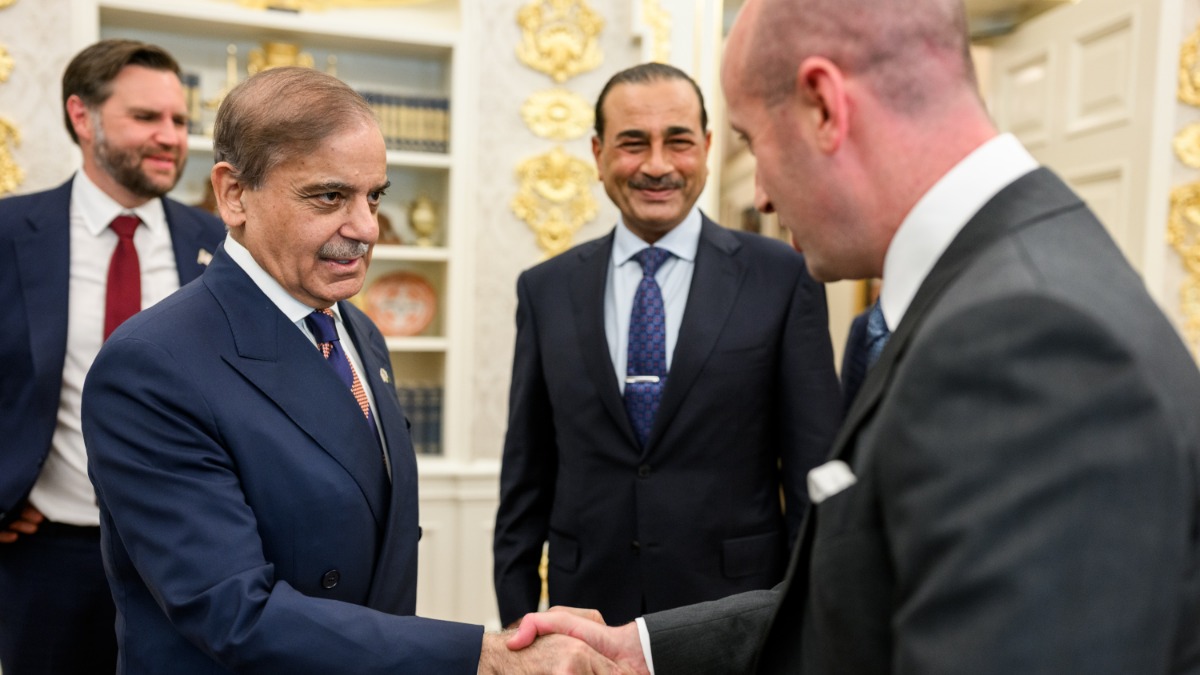

US and Iranian delegations have officially arrived in Islamabad, Pakistan, to begin peace negotiations aimed at solidifying a fragile ceasefire. Vice President JD Vance is leading the American delegation, which includes Special Envoy to the Middle East Steve Witkoff and Jared Kushner. The diplomatic push comes after a week of backchannel mediation efforts hosted by Pakistan to pull both nations back from a regional escalation.
As detailed by Politico, Vance has stated that President Donald Trump provided him with “pretty clear guidelines” for the talks, yet the Vice President declined to share any specifics. This silence underscores the delicate nature of the negotiations, given the history of failed diplomatic attempts and broken trust between the two sides.
Pakistan’s Foreign Minister Ishaq Dar praised the United States for its commitment to regional and global stability, while the Pakistani foreign ministry posted on X reiterating its commitment to helping both delegations reach a lasting solution. Tehran’s team is represented by Foreign Minister Abbas Araqchi and Parliament Speaker Mohammad Baqer Qalibaf, who have already met with Pakistan’s Prime Minister Shehbaz Sharif to discuss the path forward.
Iran’s preconditions are still standing in the way of direct talks
Tehran has set specific preconditions for entering face-to-face talks with the Americans, per the Iranian news agency Tasnim. Those demands include the release of frozen Iranian assets and a ceasefire in Lebanon.
Lebanon remains one of the most contentious sticking points. Tehran insists that ending raids on Lebanon was a core condition of the agreement, while the United States maintains that no such provision was included. Israel launched a major attack on Lebanon shortly after the ceasefire was initially announced, a move that Netanyahu framed as outside the truce. Despite this, both Israel and Lebanon have agreed to hold separate negotiations, with delegations expected to meet in Washington on April 14, 2026.
The current talks mark a sharp contrast to the rhetoric President Trump deployed earlier in the week. Prior to the ceasefire, Trump issued a series of aggressive statements that included threats to target Iran’s energy infrastructure if the Strait of Hormuz was not reopened. On April 6, 2026, he posted on social media that “a whole civilization could die,” reflecting the tone that had defined the lead-up to negotiations.
Vance’s role is notable partly because of how Iranian officials perceive him. Unlike Witkoff and Kushner, Vance had no involvement in the negotiations that preceded the outbreak of hostilities in February. Many analysts believe Iran views him as more open to avoiding a prolonged conflict, a perception reinforced by his past public comments as a senator warning that a war with Iran would not serve American interests.
Inside Iran, the political landscape is complicated by the death of Supreme Leader Ali Khamenei. While the Islamic Revolutionary Guard Corps has gained strength during the war, the government of President Masoud Pezeshkian holds limited authority. Experts suggest that Iran’s acceptance of these negotiations reflects pressure from higher levels of the Iranian system seeking an exit from the crisis. It is worth noting that Trump, amid the ceasefire announcement, also threatened a 50% tariff on nations supplying Iran with military weapons, a measure widely seen as directed at China and Russia.
For Vance, these negotiations also carry domestic political weight. As a potential frontrunner for the 2028 Republican presidential nomination, his ability to navigate the talks could shape his standing as an independent voice within the administration. The current framework reportedly envisions a two-stage process, starting with confidence-building measures before moving toward a formal long-term ceasefire, with both delegations in Islamabad as of April 11, 2026.








Published: Apr 11, 2026 05:30 am