



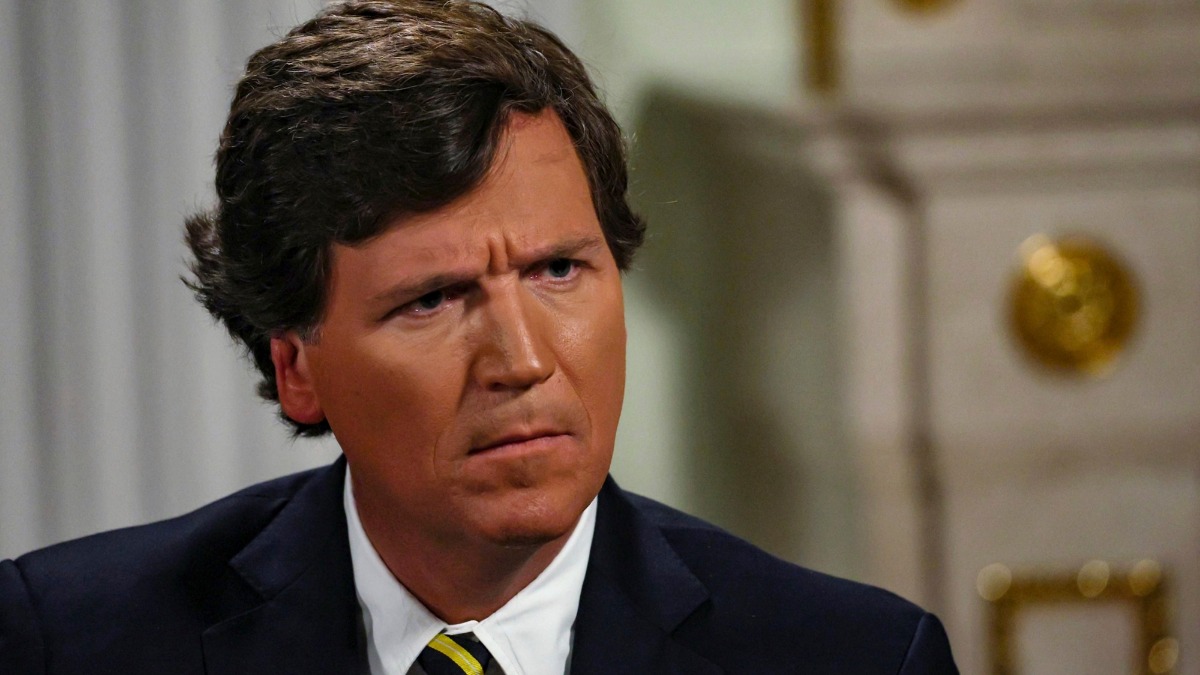

Tucker Carlson appeared on the BBC program Sunday with Laura Kuenssberg, where presenter Victoria Derbyshire challenged him over accusations of antisemitism. Derbyshire pointed out that several elected members of Congress have labeled him an antisemite. Senator Ted Cruz had called Carlson one of the most consequential voices spreading antisemitism, while Congressman Randy Fine called him the most dangerous antisemite in America.
Carlson pushed back against these claims, insisting that he is not an antisemite, according to Mediaite. He argued that the accusations are a tactic used by political opponents to avoid debating his actual policy disagreements over US involvement in the war in Israel. He also stated that he views antisemitism and all forms of racism as immoral and anti-Christian, and that he has consistently opposed such views throughout his public life.
The interview then moved to a more specific issue: Carlson’s decision to host far-right commentator Nick Fuentes on his podcast. Derbyshire noted that Fuentes has a well-documented history of antisemitic remarks, including expressing admiration for Adolf Hitler and claiming that Jewish people are a primary problem. Carlson confirmed that he disagreed with those statements and acknowledged that Fuentes’ comments sounded antisemitic to him.
Carlson’s decision to host Fuentes caused real damage inside the conservative movement
The controversy is not new. Back in October 2025, Carlson’s podcast episode with Fuentes sparked significant backlash from within conservative circles. During that episode, Carlson described Senator Ted Cruz, former president George W. Bush, and ambassador to Israel Mike Huckabee as Christian Zionists who had been seized by a brain virus. F
According to The Guardian, Fuentes used the appearance to claim that organized Jewry holds excessive influence and to voice support for Joseph Stalin. The fallout was immediate. Senator Cruz publicly criticized the appearance, saying that those who sit with individuals who praise Hitler and do not challenge them are complicit in that evil.
Cruz described the rise of antisemitism on the right as an existential crisis for the party. This BBC interview is not the only time Carlson has found himself in public conflict recently, as his ongoing disputes with prominent political figures have kept him in the headlines.
Kevin Roberts, head of the Heritage Foundation, took a different position. He defended Carlson, arguing that Christians should be able to critique Israel without being labeled antisemites. He pushed back against what he called a venomous coalition of critics and suggested that the right should focus on political opponents on the left rather than internal conflict.
During the interview, Carlson tried to redirect the conversation toward what he called more pressing moral concerns. He explicitly accused both Cruz and Fine of defending the genocide in Gaza and the murder of children. He argued that sending financial support to a military he believes is responsible for such actions is a greater moral crime than the offensive rhetoric used by his guests.
As the interview wrapped up, Carlson pointed to the First Amendment as a framework for his approach to open discourse and reiterated that his opposition to antisemitism is sincere. Carlson’s willingness to publicly break with allies has become a pattern, as seen in his criticism of Trump over a controversial social media post.
The debate over the responsibilities of media figures when hosting guests with extremist views clearly remains unresolved, and the friction between Carlson and his critics within the conservative movement shows no sign of going away.






Published: Apr 13, 2026 10:30 am