



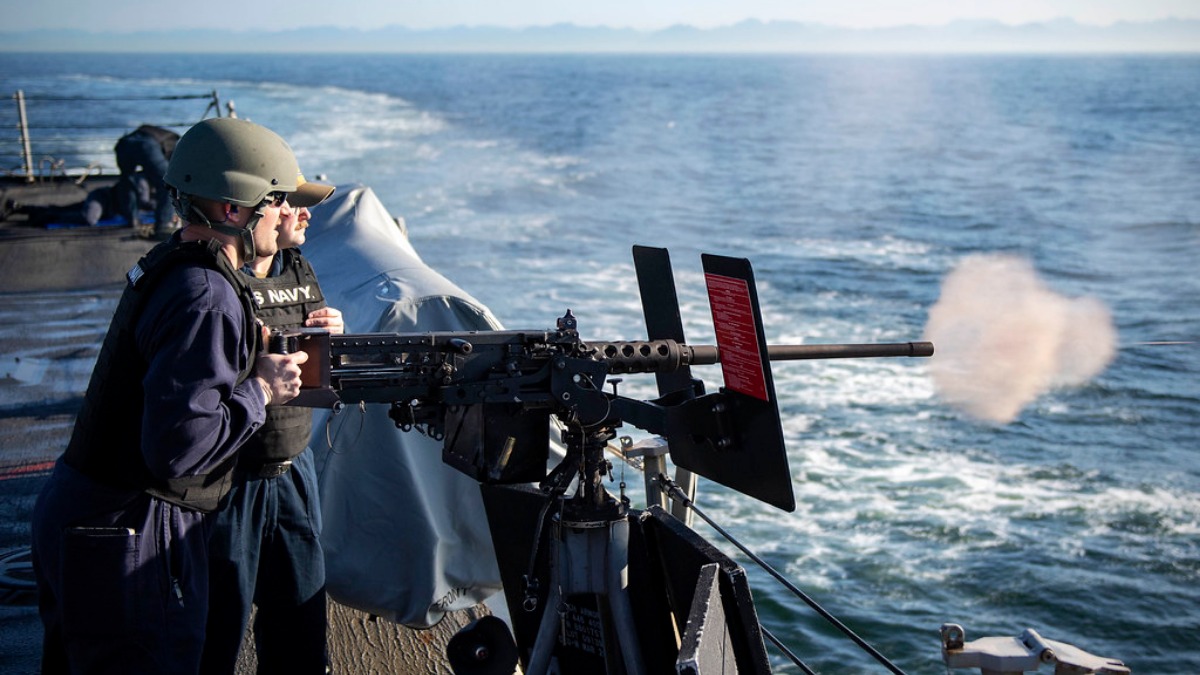

Iran has launched an attack on the U.S. Navy ships in the Strait of Hormuz, according to the U.S. Central Command Chief, Admiral Bradley Cooper. The attack involved drones, cruise missiles, and small boats. In response, the U.S. military destroyed six Iranian small boats using Apache and Seahawk helicopters.
Admiral Cooper stated that the U.S. will continue to act defensively to protect its ships and assets. It remains unclear whether this attack marks the end of the ceasefire between Iran and the United States, but the events of today have put that agreement under serious pressure.
The Strait of Hormuz is a critical waterway connecting the Persian Gulf to the Gulf of Oman. It is one of the most important shipping routes in the world, with a large share of global oil trade passing through it daily. It has long been a point of tension between Iran and the United States, and the latest exchange of fire has made the situation significantly worse, reports Mediaite.
The U.S. military has built a massive presence in the region, but Iran is still not backing down
The U.S. military has been working to establish a large military presence in the Strait of Hormuz in recent weeks. This includes guided missile destroyers, over 100 land and sea-based aircraft, unmanned platforms like Reaper drones, and 15,000 service members deployed to the region.
The goal of this buildup is to deter Iranian aggression and protect commercial vessels passing through the waterway. Despite this show of force, Iran has continued to target commercial ships in the region. Admiral Cooper made clear that the U.S. is not providing direct escorts for these commercial vessels.
Instead, the military is relying on its broader defensive setup to create deterrence across the entire waterway, which Cooper says makes individual ships less vulnerable to attack than a direct escort approach would. Meanwhile, Trump’s ongoing review of Iran’s 14-point peace proposal suggests that further military action has not been ruled out.
Cooper also confirmed the seriousness of the ongoing situation, saying, “The Iranians and the Americans are now trading shots.” This statement signals that the conflict between the two sides has moved well beyond threats and warnings and into direct military exchanges in one of the world’s most strategically important waterways.
The U.S. military destroyed six Iranian small boats during the exchange using Apache and Seahawk helicopters. However, it is not yet clear if further attacks are expected or if both sides will pull back following today’s confrontation. The ceasefire, which had already been described as fragile before today, is now under serious strain.
Officials have not confirmed whether formal ceasefire negotiations are still ongoing or whether today’s events have effectively ended those talks. The attack also raises broader questions about the direction of U.S. foreign policy in the Middle East at this time.
This escalation comes as Rubio’s diplomatic trip to the Vatican adds another layer of complexity to U.S. foreign policy efforts, with American diplomats and military commanders now dealing with multiple high-stakes situations at the same time. Both the safety of U.S. Navy ships and the freedom of commercial shipping through one of the world’s most important waterways are now at serious risk.
The coming hours and days will be critical in determining whether the situation stabilizes or continues to escalate. With 15,000 U.S. service members in the region and Iranian forces continuing to engage, the conditions for a larger conflict are becoming harder to ignore.









Published: May 5, 2026 09:00 am