



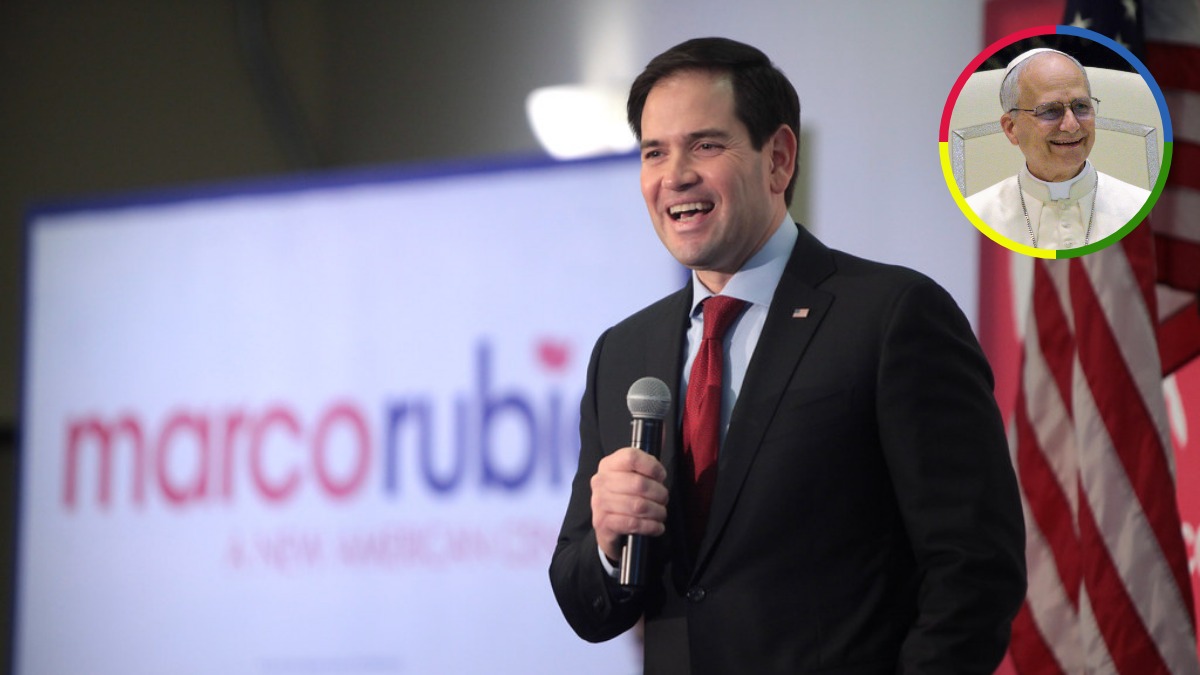

Secretary of State Marco Rubio is heading to the Vatican this week to meet with Pope Leo XIV and various Italian officials, a move that comes at a tense time as the relationship between the White House and the Holy See has hit a significant low point. The trip, which is scheduled from Wednesday through Friday, is expected to focus on the situation in the Middle East and mutual interests in the Western Hemisphere, according to an official State Department statement, as reported by The Hill.
While the secretary works to smooth over diplomatic friction, he will also hold meetings with Italian counterparts to prioritize shared security interests and strategic alignment. The friction between the two leaders reached a boiling point in early April when Pope Leo XIV offered some pointed criticism of the president. The pope publicly called the president’s threats to destroy Iran’s civilization “unacceptable” and urged people to reach out to their political leaders and congressmen to reject war and call for peace.
The situation escalated quickly after the pope’s remarks were compounded by a CBS News 60 Minutes segment that highlighted the pontiff’s earlier critiques of the administration’s mass deportation policies. Following that broadcast, the president took to his social media site, Truth Social, to post a long screed where he described the pope as “WEAK on Crime, and terrible for Foreign Policy.”
This visit is particularly noteworthy because Rubio, who is Catholic, is stepping into a situation defined by a bitter and very public row between President Trump and the American-born pontiff
In a move that caused quite a stir, the president also shared an AI-generated image that appeared to depict himself as Jesus healing a sick man. That post was eventually removed following widespread accusations of blasphemy and general public outrage.
The situation didn’t stay contained to the Vatican and the White House. Italian Prime Minister Giorgia Meloni stepped in to defend the pope, labeling the president’s remarks as “unacceptable.” The president, who had previously viewed the Italian leader as an ally, reacted by saying he was “shocked” by her comments, adding, “I thought she was brave, but I was wrong.”
This clash is especially unique because Pope Leo XIV is the first American pope. And this marks the first time in modern history that a U.S. leader has publicly locked horns with the head of the Roman Catholic Church in such a direct, confrontational manner.
Political strategists have been watching this play out with great interest. T.W. Arrighi, a Republican strategist who is himself Catholic, noted that while the pope is not infallible, attacking the head of the largest Christian denomination in the world is a risky move. He pointed out that politics is a game of addition, not subtraction, and that there is no real gain to be found in such a public feud.
John McCarthy, a former political adviser to President Biden and liaison to the Catholic Church, observed that while previous presidents have had disagreements with popes, those interactions were typically handled with a level of diplomatic restraint that is entirely absent in this case.
Despite the intensity of the past week, the president’s tone toward the pontiff began to shift by the end of the week. Trump eventually told reporters that he was “not fighting” with the pope and clarified that while he respects the pontiff’s right to speak his mind, he also maintains the right to disagree. He even pointed toward the pope’s own family, noting that he is a supporter of the pope’s brother, Louis Prevost.
Some observers, including CatholicVote President Kelsey Reinhardt, have found the cooling of the rhetoric to be a positive step. Reinhardt suggested that once the conversation moves away from personal insults and toward a discussion of policy—such as the president’s focus on the death toll in Iran—the dialogue becomes much more constructive.
This tension comes at a time when the Catholic Church is experiencing a notable resurgence in the United States. Data from the app Hallow shows that the average Catholic diocese in the country saw 38 percent more people joining the church in 2026 compared to 2025, with some areas like the Archdiocese of Pensacola-Tallahassee seeing growth as high as 144 percent.
With a significant number of prominent Catholics in the president’s own inner circle, including Vice President JD Vance and the first lady, the outcome of this diplomatic mission remains a key point of interest for many voters. As Rubio arrives in Rome, the hope is that this trip will help stabilize a relationship that has been anything but quiet over the last several days.

Published: May 4, 2026 03:15 pm