



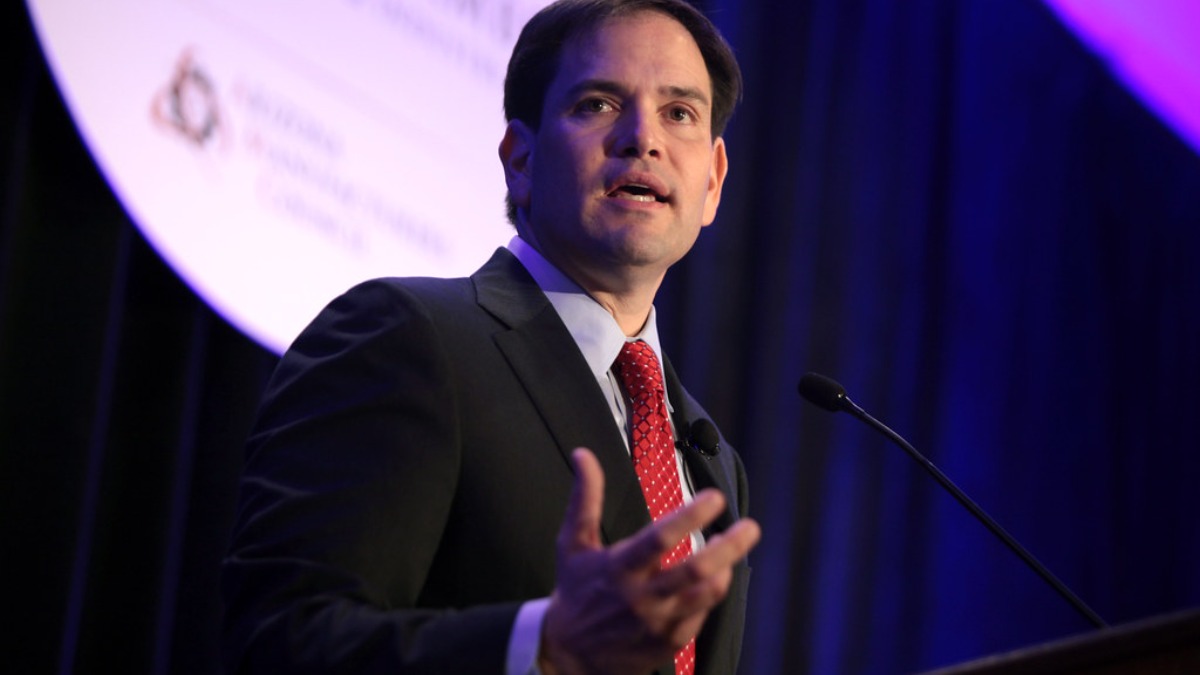

Secretary of State Marco Rubio recently released a rare video message in Spanish, directly addressing the people of Cuba to place the blame for the country’s current hardships squarely on its communist leadership, The Hill reported. This message, which was timed to coincide with Cuba’s day of independence, comes as the Trump administration continues to weigh its options, including the possibility of an invasion, while diplomatic negotiations between the two nations remain stalled.
The situation on the island is incredibly tense, with the country recently announcing that it has completely exhausted its fuel supplies after utilizing the last of the oil provided by a Russian tanker. This development has pushed the nation into further darkness, following weeks of persistent blackouts that have lasted over 20 hours at a time.
Rubio was very clear in his assessment of why these conditions exist. “The reason you are forced to survive 22 hours a day without electricity is not due to an oil ‘blockade’ by the U.S. As you know, better than anyone, you have been suffering from blackouts for years,” Rubio stated in his address. He went on to argue that the scarcity of electricity, fuel, and food is a direct result of the country’s leadership plundering billions of dollars instead of investing in the people.
According to Rubio, this is not a failure caused by external forces, but rather a result of Cuba’s internal corruption and mismanagement
A major focus of Rubio’s criticism was GAESA, a business conglomerate operated by the military that maintains a tight grip on much of the commerce across the island. He suggested that the money meant for maintaining and modernizing the nation’s crumbling power plants is instead being diverted.
“Instead of using the money to maintain and modernize the damaged power plants, they use the money to build more hotels for foreigners and to send their relatives to live in luxury in Madrid and even here in the United States,” he said. He emphasized that President Trump is open to establishing a new relationship with Cuba, but insisted that any such engagement must be directly with the Cuban people, rather than through the military-run conglomerate.
The U.S. has also put forward a $100 million aid package intended to provide necessary food and medicine to the population. Rubio was very specific about the delivery of this aid, noting, “First, we are offering $100 million in food and medicine for you, the people. But they must be distributed directly to the Cuban people by the Catholic Church or other trusted charitable groups. Not stolen by GAESA to sell in one of their stores.”
This condition appears to be a sticking point for the Cuban government, although some diplomats have expressed a willingness to consider aid if it is provided in good faith. Lianys Torres Rivera, a top diplomat for Cuba, noted in an interview that the country is open to aid distributed through churches, provided that the details are clear and not motivated by political manipulation.
The pressure from Washington is mounting on multiple fronts. Beyond the public messaging and aid offers, there are reports that an indictment of former Cuban President Raúl Castro is expected soon. This potential legal action is tied to a 1996 incident involving the shooting down of two small aircraft by a Cuban MiG-29 jet.
The aircraft were operated by a Miami-based organization called Brothers to the Rescue, which was searching for rafters attempting to reach the United States. Four individuals lost their lives in that event. Such an indictment would mark a significant escalation in the ongoing tensions between the two countries.
This diplomatic and legal pressure is happening against a backdrop of severe energy instability. The Cuban government has consistently claimed that it will not negotiate its sovereignty and has blamed the U.S. blockade for the economic crisis. President Miguel Diaz-Canel has described the situation as particularly tense and has pointed to the energy blockade as the primary cause of the suffering.
Meanwhile, CIA Director John Ratcliffe has been involved in high-level discussions in Havana, meeting with Cuban officials to deliver messages from the U.S. government. During these meetings, American representatives have emphasized that the window for meaningful negotiations will not stay open indefinitely and that the U.S. is serious about enforcing its red lines.
The energy crisis has led to real-world consequences for the Cuban people, with hospitals, schools, and government offices struggling to operate normally. As the country faces these challenges, the divide between the official government narrative and the position held by the U.S. remains wide. While the Cuban leadership maintains that the U.S. is responsible for the blockade and the resulting hardship, the U.S. administration is pushing for fundamental changes within the Cuban system.







Published: May 20, 2026 07:15 pm