



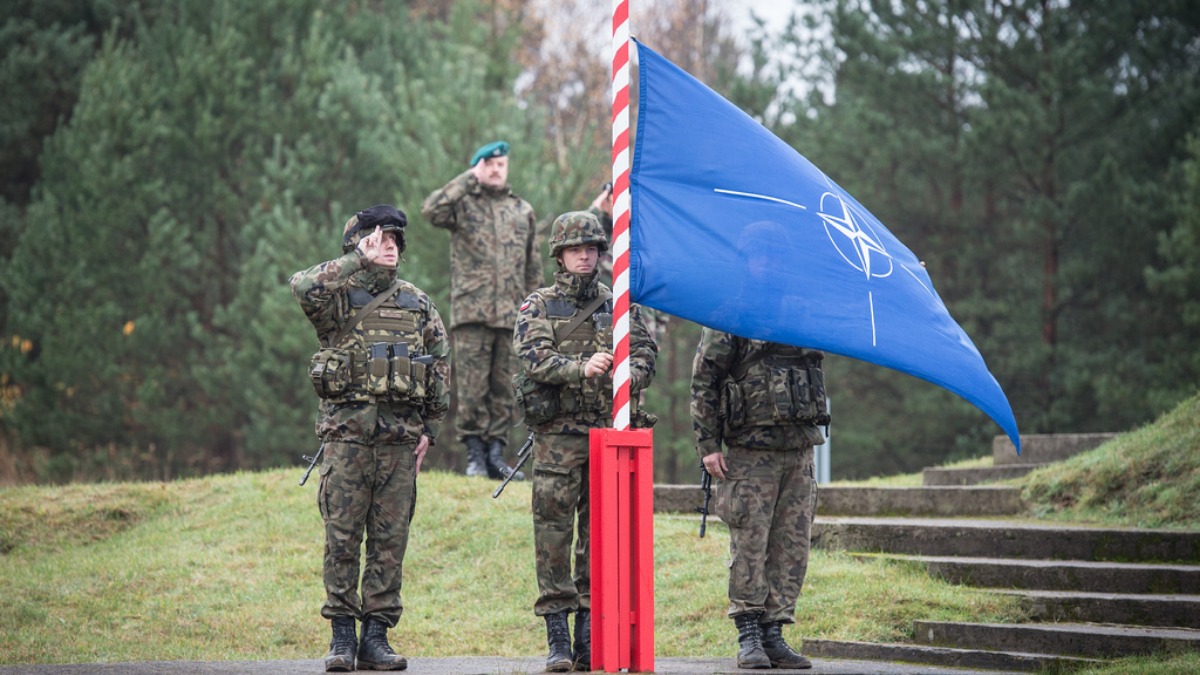

NATO is currently conducting a series of closed-door meetings with screenwriters, directors, and producers throughout Europe and the United States, The Guardian reported. It has sparked a significant amount of controversy among industry professionals.
These intimate conversations have already taken place in Los Angeles, Brussels, and Paris, with another session scheduled for next month in London. This upcoming meeting will involve screenwriter members of the Writers’ Guild of Great Britain, or WGGB, and is intended to focus on the evolving security situation in Europe and beyond.
The nature of these gatherings has led to accusations that the military alliance is attempting to leverage the arts to generate propaganda. Some invitees have expressed strong discomfort with the premise, feeling as though they are being asked to contribute towards propaganda for NATO.
The reaction from some creatives has been sharply critical
The meetings are held under the Chatham House rule, which means that while participants can share the information they receive, the identities of those in attendance are kept private. It is understood that former NATO spokesperson James Appathurai, who currently serves as the deputy assistant secretary general for hybrid, cyber and new technology, plans to attend these sessions alongside other alliance officials.
According to a WGGB email, these interactions have already influenced the development of three separate projects. The email suggested that these projects were inspired, at least in part, by the conversations held during these meetings. The organizers of the event stated that NATO is built on the belief that cooperation and compromise, the nurturing of friendships and alliances, is the way forward. They added that if something as simple as that message finds its way into a future story, that will be enough.
The reaction from some creatives has been sharply critical. Alan O’Gorman, the writer of the film Christy, which secured the best film award at the 2026 Irish Film and Television Awards, described the planned meeting as both outrageous and clearly propaganda. He noted that he found the invitation tone-deaf and crazy, especially when presented as a positive opportunity.
O’Gorman explained that many people, including himself, have friends and family who come from countries that are not part of NATO. He pointed out that these individuals have suffered under wars that NATO has joined and propagated.
O’Gorman expressed his belief that the meetings are a calculated attempt by the alliance to get its messaging into film and television. He highlighted a sense of fearmongering across Europe regarding the state of current defenses. In the Irish context, he observed a push by certain media outlets and government figures to present NATO in a positive light and align the country more closely with the alliance.
He stated that the Irish people, for the most part, do not want to be involved in wars on foreign lands. Public opinion in Ireland seems to reflect this, as an Ipsos poll conducted last year found that 49% of voters in the Republic of Ireland are opposed to joining NATO, even in the event of a united Ireland. Only 19% were in favor, while 22% remained unsure.
Faisal A Qureshi, a screenwriter and producer with over 20 years of experience, initially applied to attend one of the meetings to see the process firsthand before a scheduling conflict forced him to pull out. He raised concerns about the risks for creatives who engage with this world of intelligence or military briefings. He argued that artists could be seduced into thinking they possess secret knowledge, or that they exist in a world where morality is flexible and human rights abuses are acceptable for the greater good.
Qureshi questioned whether a creative would actually challenge or interrogate the information provided to them in such an environment. He noted that the information has a veneer of truth because it comes from an authority that rarely deals with the public, creating a sense of privilege for those who gain access.
Conversely, there are supporters who advocate for stronger ties between NATO and the arts. The Centre for European Reform published a report earlier this year calling on governments to engage with cultural leaders to build public support for increased defense spending and to better tell the story of why these investments are needed.
In 2024, a group of eight screenwriters, including those who have worked on Friends, Law and Order, and High Potential, visited NATO headquarters in Brussels. They were hosted by the Washington-based Center for Strategic and International Studies and met with the alliance’s then-general secretary, Jens Stoltenberg.
A NATO official stated that this initiative is the fourth in a series of sessions for writers of fiction in the entertainment industry. The official claimed that the events follow interest expressed by members of the industry to understand what NATO is and how it functions. A spokesperson for the WGGB clarified that as a trade union, they receive invitations to events that may be of professional interest to their members.
They emphasized that these interactions do not represent an endorsement of the organizations involved. The spokesperson added that the invitation was for a two-way conversation where writers could ask their own questions and take whatever they felt was useful. They maintained that their members are free thinkers who bring a vital skill to their craft.






Published: May 4, 2026 06:45 pm