



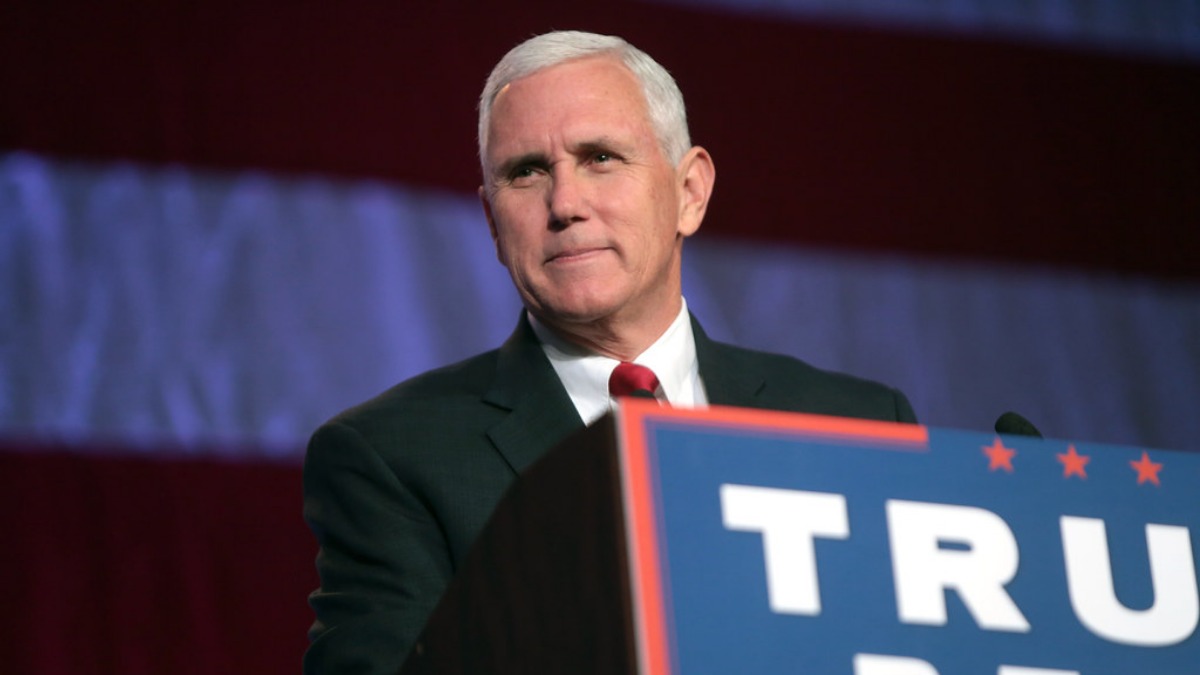

The conflict between the United States and Iran has officially stretched into its third month, and the debate surrounding the military operation is growing more intense by the day. Former Vice President Mike Pence recently weighed in on the situation, stating that the intervention was an unavoidable necessity. During an appearance on the program One Nation, Pence spoke with Brian Kilmeade and explained his perspective on the long history of tensions between the two nations, The Hill reported.
“It had to happen. Iran has been at war with America and our most cherished ally, Israel, for 47 years. They’ve claimed the lives of American service members all the way back to the attack on the Marine Corps barracks throughout the Iraq War through their proxies,” Pence said. It is clear that Pence views this as a culmination of decades of friction rather than a sudden or impulsive decision.
Despite this stance from the former Vice President, the American public seems significantly more skeptical about the entire endeavor. A survey conducted by Washington Post-ABC News-Ipsos, which questioned 2,560 U.S. adults between April 24 and April 28, reveals that 61 percent of respondents believe the Trump administration made a mistake by launching the military operation in late February.
Pence is firmly positioning the current military actions as a corrective measure against years of perceived aggression
Only 36 percent of those surveyed felt that starting the conflict was the right decision. These figures are particularly striking, as pollsters have noted that these opinions mirror the public sentiment observed during the wars in Iraq and Vietnam.
The economic impact of this conflict is also hitting home for many Americans. The Iranian military has actively throttled shipping lanes through the Strait of Hormuz, which has caused a noticeable ripple effect on global markets. This disruption has driven up oil and gas prices significantly. According to data from AAA, the average price of a gallon of gas in the U.S. reached approximately $4.46 on Monday. This is a sharp increase from the $3.17 average recorded just last year. It is a tough reality for many families who are feeling the pinch at the pump while the geopolitical situation remains unstable.
President Trump has addressed the shipping crisis directly, announcing that the United States intends to assist in freeing vessels trapped in the region. “For the good of Iran, the Middle East, and the United States, we have told these Countries that we will guide their Ships safely out of these restricted Waterways, so that they can freely and ably get on with their business,” Trump wrote on Truth Social.
This initiative, which has been dubbed Project Freedom, received public support from Pence. In a post on X, Pence lauded the effort, writing, “Strong Move Mr. President. God Bless All Our Troops Engaged in Project Freedom.”
The origins of the current conflict trace back to February 28, when the U.S. and Israel launched joint strikes on Iran. This followed the Trump administration’s assertion that Tehran was refusing to meet specific demands regarding a new nuclear agreement. The influence of foreign partners on U.S. military policy is clearly on the minds of voters as well. The survey found that 52 percent of respondents believe Israel has too much influence on the decisions made by the Pentagon. Only 37 percent of people felt that the level of influence was just right.
Confidence in a diplomatic resolution also appears to be quite low. Approximately 65 percent of those surveyed expressed that they are not confident that any potential agreement to end the conflict will actually prevent Iran from developing a nuclear weapon. This skepticism is reflected in the split opinions on how the administration should proceed with negotiations.
While 48 percent of respondents said the U.S. should accept a peace agreement even if it results in a poorer deal, 46 percent would prefer that officials push for a better outcome, even if it means risking further military action. With talks mediated by Pakistan currently appearing to be stalled, the path forward remains uncertain for everyone involved.
As the conflict enters its third month, the tension between military strategy and public opinion remains a significant hurdle for the administration.







Published: May 4, 2026 05:15 pm