



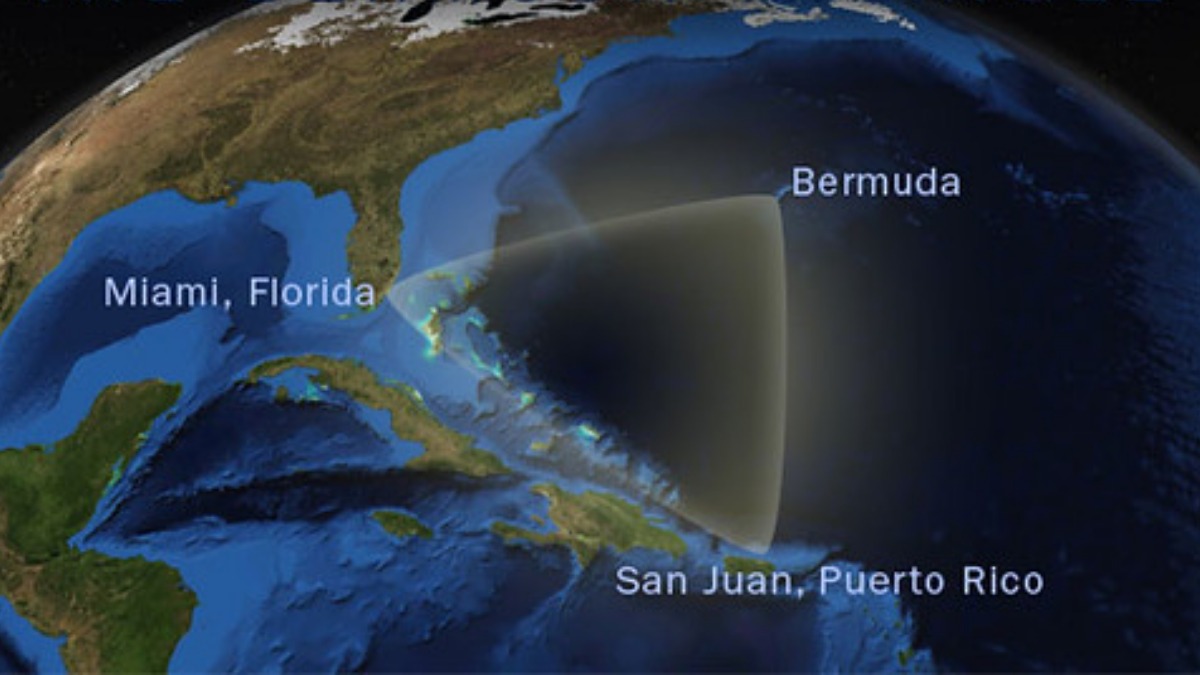

Researchers from the Carnegie Institution of Washington and Yale University have figured out why Bermuda remains sitting high above the surrounding ocean floor. As detailed by Carnegie Science, a massive hidden slab of rock about 12 miles thick has been keeping the island elevated for over 30 million years. The discovery reshapes how scientists understand geological structures, particularly since most islands require active volcanoes to stay afloat.
Bermuda is a small group of islands in the North Atlantic Ocean, sitting about 650 miles east of North Carolina and home to roughly 64,000 people. As highlighted by the Daily Mail, for decades, scientists were genuinely puzzled about why the island stays so elevated above the surrounding deep ocean floor. Islands like this typically require regular infusions of volcanic heat to remain raised, and once tectonic plates move away from a volcanic source, these areas usually sink. Bermuda defied that pattern entirely, as its last eruption occurred over 30 million years ago.
The team, led by seismologist William Frazer and researcher Jeffrey Park, discovered a hidden structure sitting directly beneath the island’s normal ocean crust. The slab is roughly the same distance tip to tip as Manhattan Island. Because the rock is lighter than the surrounding mantle rock, it acts as a natural floatation device, keeping the entire area lifted.
The answer was locked in earthquake data the whole time
To find something this deep without new drilling, the scientists used more than 20 years of natural earthquake vibrations recorded by a single seismic listening station on the island. They tracked how earthquake pressure waves changed when hitting the boundary between different rock layers. By processing hundreds of signals through specialized tools and high-frequency filters, they mapped every rock layer down to more than 25 miles below the surface.
The team determined that this rock is about 1.5 percent less dense than the surrounding material. That density difference creates enough buoyancy to hold the Bermuda area 1,300 to 2,000 feet higher than the normal deep ocean floor. The phenomenon is known as underplating, and it likely formed when carbon-rich molten mantle rock rose from deep inside Earth, spread under the crust, and cooled in place. This material may have originated hundreds of millions of years earlier during the formation of the supercontinent Pangea.
This discovery also helps clarify long-standing anomalies associated with the Bermuda Rise, a giant underwater plateau that keeps the seafloor around the island roughly 1,600 to 3,300 feet higher than normal. Because the hidden rock is lighter and more buoyant, it creates a gravitational anomaly where the pull of gravity is slightly weaker than expected. That weaker gravity causes the ocean surface to sit slightly higher over the rise, resulting in a small bump in the natural sea level. Amid wider research into unusual planetary magnetic fields, the mechanics behind localized magnetic anomalies like the ones at Bermuda are drawing renewed attention from geophysicists.
Frazer noted the significance of the findings in a statement: “Bermuda is an exciting place to study because a variety of its geologic features do not fit the model of a mantle plume, the classic way for deep material to be brought to the surface.” He added that the findings suggest other convective processes within Earth’s mantle have yet to be well understood.
The high-amplitude magnetic anomalies long associated with the Bermuda area are caused by iron and titanium-rich rocks left over from the island’s ancient volcanic past. These signals can cause compasses and navigation gear to show larger changes than usual, but they are entirely natural and harmless. Scientists have confirmed that navigation equipment behaving strangely in the area has always had a perfectly geological explanation. The deep ocean remains poorly understood in many of its physical processes, and the Bermuda findings are a reminder that some of the most significant geological structures on Earth have gone undetected for decades simply because the tools to find them did not exist. Frazer is now searching for similar features beneath other islands around the world to determine whether this is a unique formation or part of a broader, undiscovered geological pattern.









Published: May 12, 2026 07:45 pm