




The price tag for the futuristic Golden Dome missile defense system has officially ballooned to an estimated $1.2 trillion, according to the nonpartisan Congressional Budget Office, the BBC reported. This massive figure covers the development, deployment, and operation of the system over the next two decades.
It is a staggering leap from the initial $175 billion estimate that had been previously earmarked for the project. When you look at the acquisition costs alone, the number sits at over $1 trillion, which includes the necessary interceptor layers and a complex space-based missile warning and tracking system.
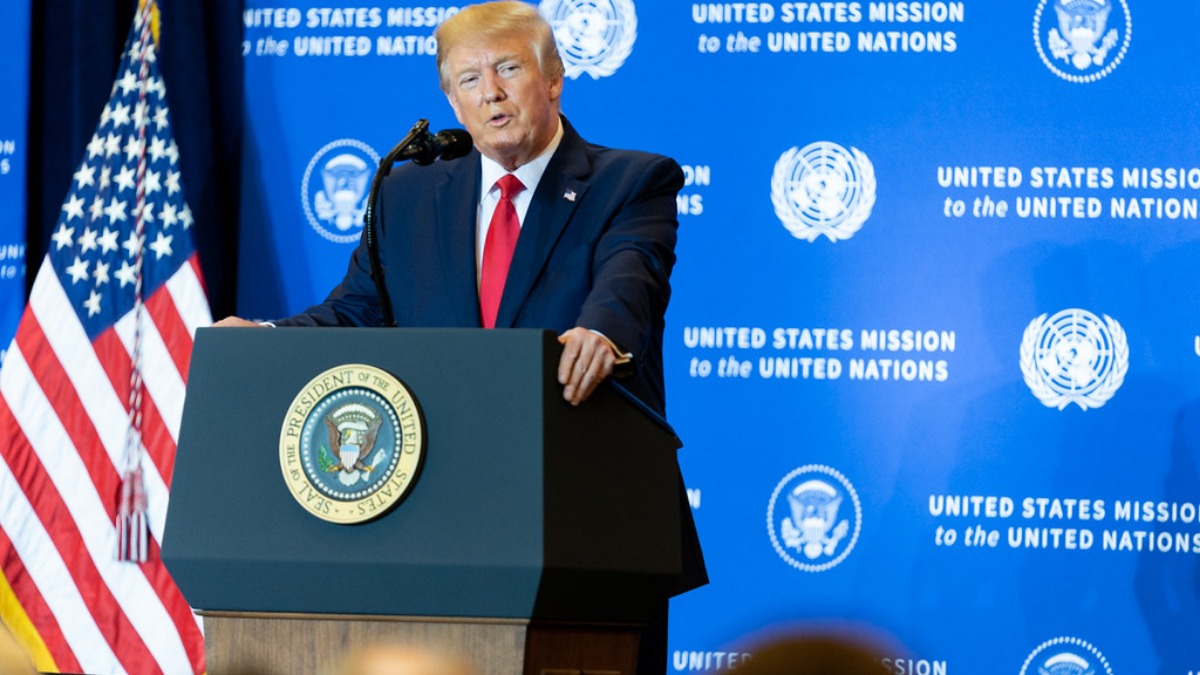
This project, which Donald Trump unveiled just days after returning to the White House in January, was designed to shield the United States against ballistic and cruise missiles. The executive order that set this plan in motion pointed to the threat of next-generation weapons becoming more intense and complex, labeling the potential for aerial attacks a catastrophic scenario for the country. It is clear that the administration is prioritizing these defenses, as Trump ordered the Defense Department to submit plans for the system just a week into his second term.
The sheer scale of the project is where things get complicated
To protect the continental United States, along with Alaska and Hawaii, the Congressional Budget Office analysis indicates that four separate layers of defensive assets would be required. This would involve a massive infrastructure undertaking, including a half-dozen radar and missile sites to engage intercontinental ballistic missiles, plus 35 new regional sites specifically aimed at defending against hypersonic and cruise missiles.
Perhaps the most ambitious part of the plan involves space-based interceptors, which are essentially satellites armed with missiles orbiting the planet. According to the report, these space-based assets would consume about 60 percent of the total cost.
The technical requirements for this portion of the system are incredibly demanding. The Congressional Budget Office assumed that to counter as many as 10 enemy intercontinental ballistic missiles in space at the same time, the United States would need a constellation of roughly 7,800 armed satellites. There is also a significant maintenance hurdle here.
These interceptors would need to be placed in a low orbit to be effective, but at that altitude, they would be subject to drag from the atmosphere. Over a five-year span, this drag would cause the satellites to lose altitude, eventually burning up and requiring complete replacement. It is a constant, expensive cycle of maintenance that adds to the long-term fiscal burden.
While the engineering ambition is high, the effectiveness of the system remains a major point of contention. The Congressional Budget Office warned that the Golden Dome could be vulnerable to a full-scale attack by Russia or China. Even if the system is fully constructed, the report concluded that an adversary with a large arsenal of nuclear weapons could potentially overwhelm it, meaning some missiles would still hit their targets.
This reality has drawn sharp criticism from lawmakers. On Tuesday, Democratic Senator Jeff Merkley, who requested the estimate for the report, said: “The President’s so-called ‘Golden Dome’ is nothing more than a massive giveaway to defense contractors paid for entirely by working Americans.”
Experts also highlight the complexity of trying to defend such a vast land mass. Tom Karako, a missile defense expert at the Center for Strategic and International Studies, noted that the Congressional Budget Office report makes several assumptions regarding the project, specifically about the number and types of interceptors that would be needed.
As Karako put it: “They don’t know what Golden Dome will cost, and to their credit, they say so.” He also pointed out that no air defense system can protect the entire country all the time. Instead, the government would likely have to rank critical assets to determine which ones require the highest level of protection.
Despite these concerns, the government is moving forward with the initial phases. SpaceX and Lockheed Martin won contracts last month worth up to $3.2 billion to develop space-based missile interceptor prototypes. Trump previously stated that the system would consist of next-generation technologies across land, sea, and space, claiming it would be “capable even of intercepting missiles launched from the other side of the world, or launched from space.”
The primary goal of the Golden Dome, according to Karako, is to address the advent of precision-guided conventional weapons capable of hitting strategic targets within the United States. In the past, only nuclear-tipped weapons had intercontinental ranges, and their use would almost certainly trigger a nuclear counterattack. Conventional guided weapons could theoretically achieve a similar strategic effect without necessarily inviting nuclear retaliation, creating a gap in current defense capabilities that the Golden Dome is intended to fill.
While the project focuses on the main U.S. territory, the report also mentioned other regions. Guam is slated to receive an extensive system of integrated defenses separate from the Golden Dome, while American Samoa, the Northern Mariana Islands, Puerto Rico, and the U.S. Virgin Islands could potentially be protected by separate regional missile defense sites.
There is also the geopolitical side of the equation. In December, the Congressional Research Service noted that some lawmakers are concerned that building the Golden Dome could provoke Russia and China into increasing their own nuclear arsenals in response.







Published: May 13, 2026 10:15 am