



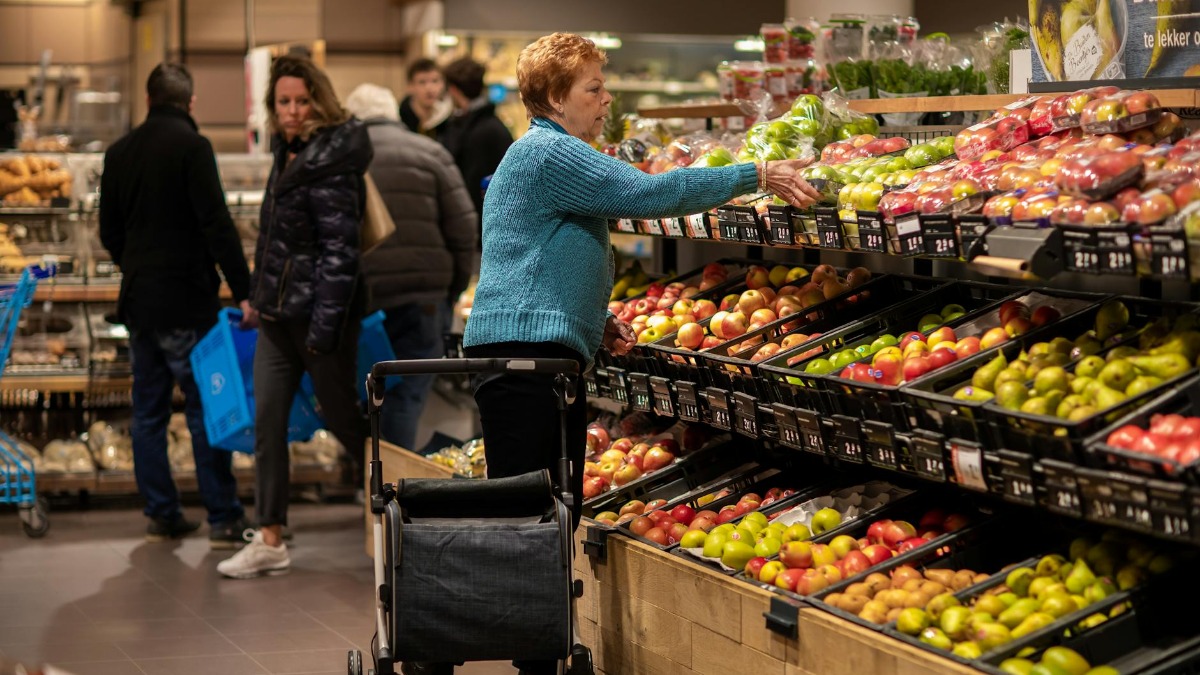

Grocery prices shot up more in April than they have in nearly four years, leaving many Americans feeling the heat as they navigate the aisles. According to data released by the Bureau of Labor Statistics, the cost of food at home rose 0.7% in April, NBC News reported. This represents a significant reversal from March, when prices actually dipped by 0.2%. Over the past year, grocery store prices have climbed by 2.9%, creating a persistent financial burden for households everywhere.
The recent price surges are being driven by a variety of factors, ranging from severe weather patterns to the ongoing conflict in the Middle East. Fresh vegetables have seen some of the most dramatic increases, with annualized prices now more than 44% higher than they were just three months ago. Other staples aren’t faring much better. Bread and milk prices have risen by 8% and 5% respectively over the same timeframe.
Coffee and beef are also facing intense pressure. For coffee, the issues are largely tied to supply shortages caused by harsh weather in major producing countries like Brazil and Vietnam. Combined with rising shipping costs and strong global demand, coffee prices at the grocery store are rising at a pace that works out to more than 22% annually over the last three months.
The pressure is disproportionately felt more on low-income households than on high-income ones
Beef and veal prices have similarly surged due to record-low cattle numbers and years of ranchers leaving the industry. Farmers are also struggling with higher operating costs, particularly for diesel, which is essential for transporting cattle and operating farm equipment.
Will Harris, a fourth-generation cattle farmer based in Bluffton, Georgia, noted that the price of beef he sells directly to consumers is about 20% higher than it was two years ago. “It’s unprecedented for us,” he said. “This is the first time we’ve ever gone up that much, that fast.”
Harris expressed concern about how much more consumers can realistically pay for these products. “I think that I can produce it as cheap as anybody else, but I don’t know where consumers draw their lines,” he added. Regarding the future of his farm, Harris admitted, “Things are just different now, and we don’t quite know how this is going to work out. It’s new territory for us.”
While consumer spending has remained surprisingly resilient for the time being, the data paints a complicated picture. A recent report from Bank of America showed that total credit and debit card spending per household rose 4.8% in April year-over-year.
However, this figure masks a deepening K-shaped economic disparity. While higher-income households continue to drive overall spending, lower-income consumers are increasingly struggling. With inflation currently running at 3.8%, it is officially outpacing the 3.6% wage growth seen in April, which means rising costs for essentials are hitting lower-income Americans the hardest.
Bank of America economists noted that this divide is quite clear. “The ‘K’ shape in spending and wage growth persists, with higher-income households faring better than other cohorts,” they wrote. “And we see signs of this particularly with lower- and middle-income households easing back on discretionary spending in April, while their higher-income counterparts continued to power forward.”
This disparity is also evident in how different groups manage energy costs. Research from the Federal Reserve Bank of New York regarding the energy price shock triggered by the Iranian closure of the Strait of Hormuz in March 2026 shows a clear K-shaped pattern at the pump.
High-income households largely maintained their driving habits despite rising fuel prices, while lower-income households were forced to cut back their consumption more sharply by carpooling, driving less, or switching to public transit. The gap in these consumption trends is now even larger than it was during the 2022 energy shock that followed the Russian invasion of Ukraine.
Wealthier Americans are currently benefiting from record-high stock prices and rising home equity values that have climbed steadily since the pandemic. In contrast, many lower-income households no longer have the benefit of post-pandemic supports like stimulus checks. This environment creates a difficult balancing act for the Federal Reserve.
If they keep interest rates high for a longer period to prevent the economy from overheating, it will continue to put pressure on the very businesses and consumers already struggling with these costs. For farmers like Harris, these supply chain and operational pressures mean that retail prices will likely stay elevated for the foreseeable future as they attempt to make ends meet in an unpredictable market.








Published: May 13, 2026 08:15 am