



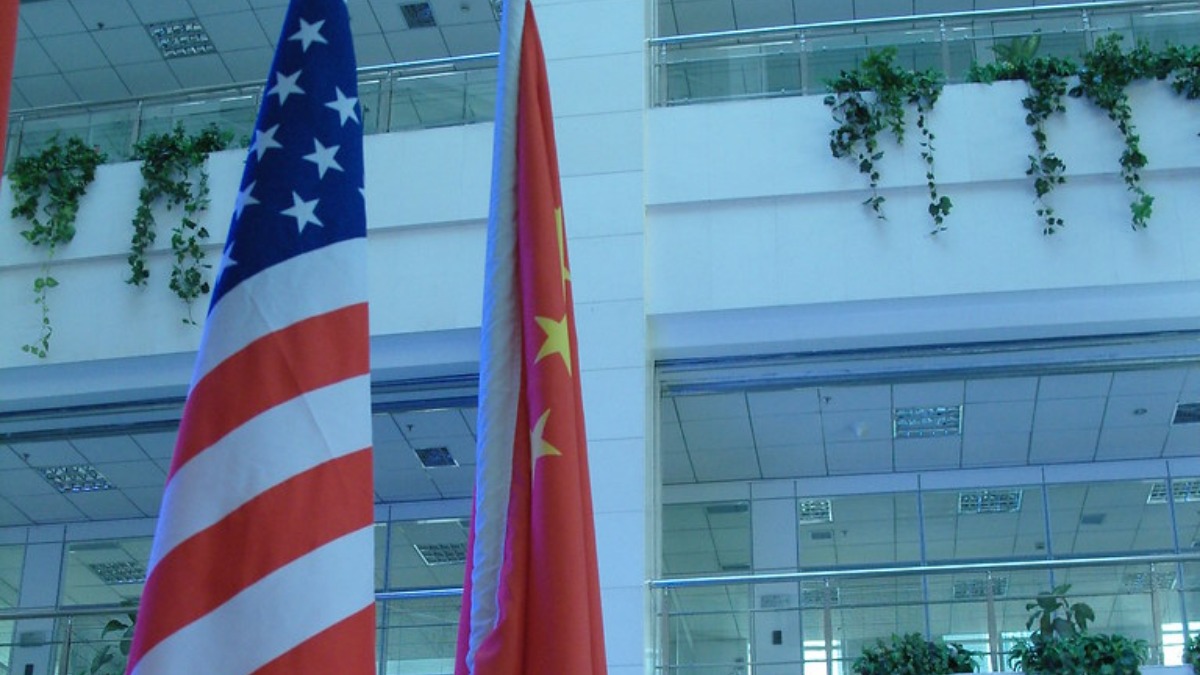

Chinese President Xi Jinping raised the prospect of war between the United States and China during a high-stakes summit with Donald Trump at the Great Hall of the People in Beijing, framing it around the concept known as the Thucydides Trap. As first highlighted by LADbible, the meeting, which marks their first face-to-face encounter since the Iran war began on February 28, also covered trade disputes and the situation involving Taiwan. The agenda reflected the full weight of current US-China tensions.
The Thucydides Trap is a theory developed by Harvard political scientist Graham Allison, drawing on ancient Greek history to argue that when a rising power threatens to displace an established ruling power, the resulting structural stress makes conflict highly probable. Allison’s research, detailed at the Belfer Center, found that 12 out of 16 such shifts over the last 500 years ended in violence. The theory takes its name from the historian Thucydides, who attributed the outbreak of the Peloponnesian War to the rise of Athens and the fear it generated in Sparta.
During the summit, Xi asked Trump “whether the two countries can transcend the Thucydides Trap and forge a new model for relations between major powers.” He emphasized that “Cooperation benefits both sides, while confrontation harms both,” and stressed the importance of the two nations being partners rather than rivals. Xi also described Taiwan as “the most important issue in China-US relations,” reiterating that China would use force if the region moved permanently beyond Beijing’s reach, while the US continues to support Taiwan politically and militarily under the Taiwan Relations Act.
History says rising powers and ruling powers almost always go to war
Despite the weight of the theory, experts including Allison himself argue that war is not inevitable. In four of the 16 historical cases studied, conflict was averted through what Allison describes as imaginative statecraft. The goal of invoking the framework is not to predict violence but to highlight the structural risks that Washington and Beijing are currently navigating, and the active effort required to avoid them.
Trump struck a notably optimistic tone throughout the meeting. He referred to Xi as a friend and said, “You’re a great leader. Sometimes people don’t like me saying it, but I say it anyway, because it’s true.” He also called the reception he received in Beijing “an honor like few have ever seen before” and promised the bilateral relationship would be better than it has ever been.
The delegation Trump brought to Beijing underscored the economic stakes. Tech executives including Elon Musk, Nvidia CEO Jensen Huang, and Apple head Tim Cook were in attendance, alongside major Wall Street figures. Trump posted on Truth Social ahead of the talks, writing that he would ask Xi “to open up China so that these brilliant people can work their magic.” Xi, whose public statements on Taiwan have drawn renewed attention amid Trump’s shifting stance on US-China foreign policy, responded by saying that China’s doors to the outside world would continue to open wider and that American companies could expect stronger prospects in the Chinese market.
The presence of Musk, whose AI and tech ventures have a significant footprint in both countries, added a separate dimension to the summit, amid a broader conflict between tech expansion and public infrastructure that has drawn scrutiny stateside, including a utility firm prioritizing AI data centers over residents. The two-day summit is set to continue on Friday before Trump returns to Washington.









Published: May 14, 2026 06:30 am