




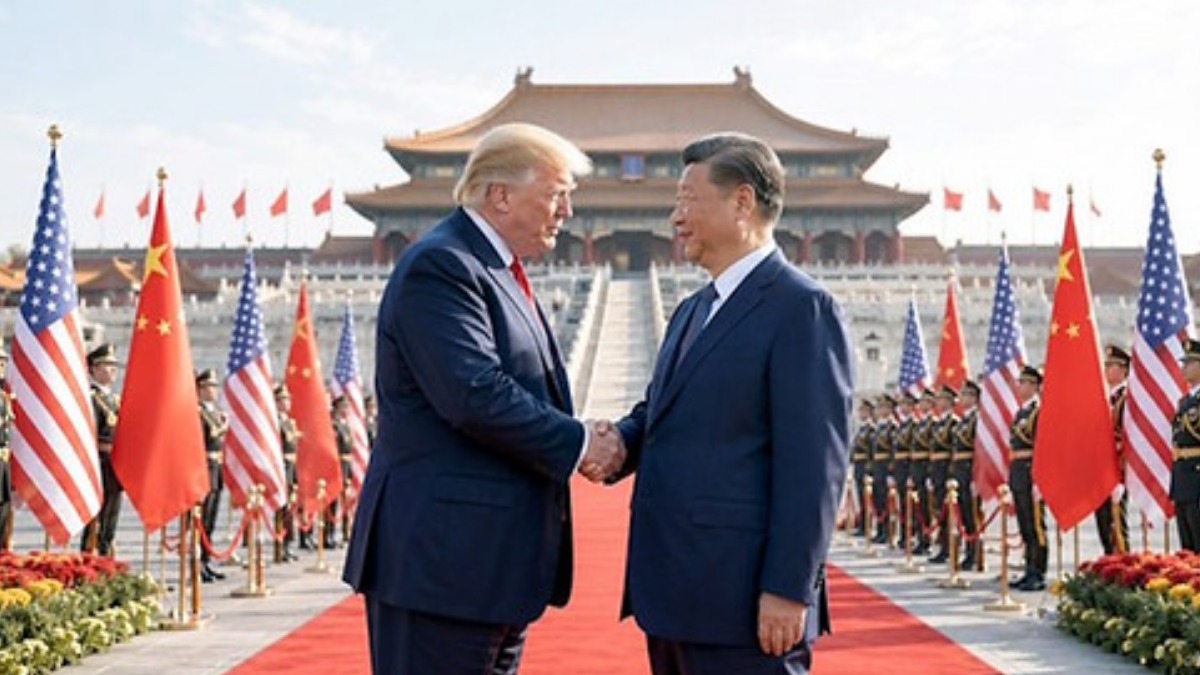
President Donald Trump has downplayed China’s cyberattacks on U.S. infrastructure, saying that the U.S. does the same thing to China. He made these comments after a conversation with Chinese President Xi Jinping on Air Force One, where he told Xi about U.S. cyber operations targeting China. The remarks have drawn significant attention from cybersecurity experts and lawmakers alike.
“I did. And he talked about attacks we did in China,” Trump said, according to The Daily Beast. “You know, what they do, we do too. We spy like hell on them, too.” When asked to explain further, Trump said that both the U.S. and China are targeting each other’s critical infrastructure, telecommunications, and government agencies through cyber espionage. His tone was casual, which many found alarming given the seriousness of the topic.
The U.S. intelligence community has long warned that China is one of the most serious cyber threats in the world, with state-sponsored hackers targeting critical infrastructure, telecommunications, and government agencies. Trump’s comments have left many in the security community taken aback, as they appear to contradict the official stance that U.S. agencies have maintained for years.
Trump’s remarks come as Chinese hackers grow more active against U.S. targets
In recent months, there have been several high-profile cases of Chinese hackers targeting U.S. companies and government agencies, using advanced methods to break into security systems and steal sensitive data. These attacks have grown bolder and more frequent, putting pressure on U.S. officials to respond more aggressively. Trump has faced scrutiny on other fronts too, including how his family benefits from airport naming deals.
One notable case is a recent cyber espionage campaign in which Chinese hackers used an AI chatbot called Claude to target around 30 organizations around the world. The hackers tricked the chatbot into carrying out automated tasks under the cover of cybersecurity research, which allowed them to break into security systems and steal sensitive data. It was a sophisticated operation that showed how far attackers are willing to go, per BBC.
The makers of Claude, Anthropic, said they caught the hackers and informed the affected companies and law enforcement agencies. However, the incident has raised serious concerns about the growing threat of AI-powered cyberattacks. Many experts are now warning that such technology is becoming more advanced and harder to detect, making it a serious challenge for cybersecurity teams across both the public and private sectors.
The U.S. intelligence community has been raising the alarm about China’s increasingly bold cyberattacks for some time now. Several government reports in recent years have pointed to China as a top-tier cyber threat, capable of disrupting power grids, financial systems, and military communications. Despite this, Trump’s latest comments suggest a relaxed approach to the issue at the highest level of government.
As one security expert noted, “The very fact that Trump is downplaying China’s cyberattacks suggests that the U.S. is not taking the threat seriously enough.” Trump has a history of downplaying the severity of cybersecurity threats facing the nation, and his latest comments follow that same pattern.
Meanwhile, attention is also turning to who may lead the Republican ticket in 2028, with Trump himself floating ideas about a possible future lineup. The U.S. continues to deal with the growing threat of China’s cyberattacks, and many believe that more needs to be done to protect critical infrastructure, telecommunications, and government agencies.
Cybersecurity professionals argue that a clear and firm national strategy is needed, one that does not treat cyber espionage as a simple case of both sides doing the same thing. The stakes are too high for a casual response, and experts say that the government must treat this as a top national security priority going forward.








Published: May 16, 2026 04:15 pm