



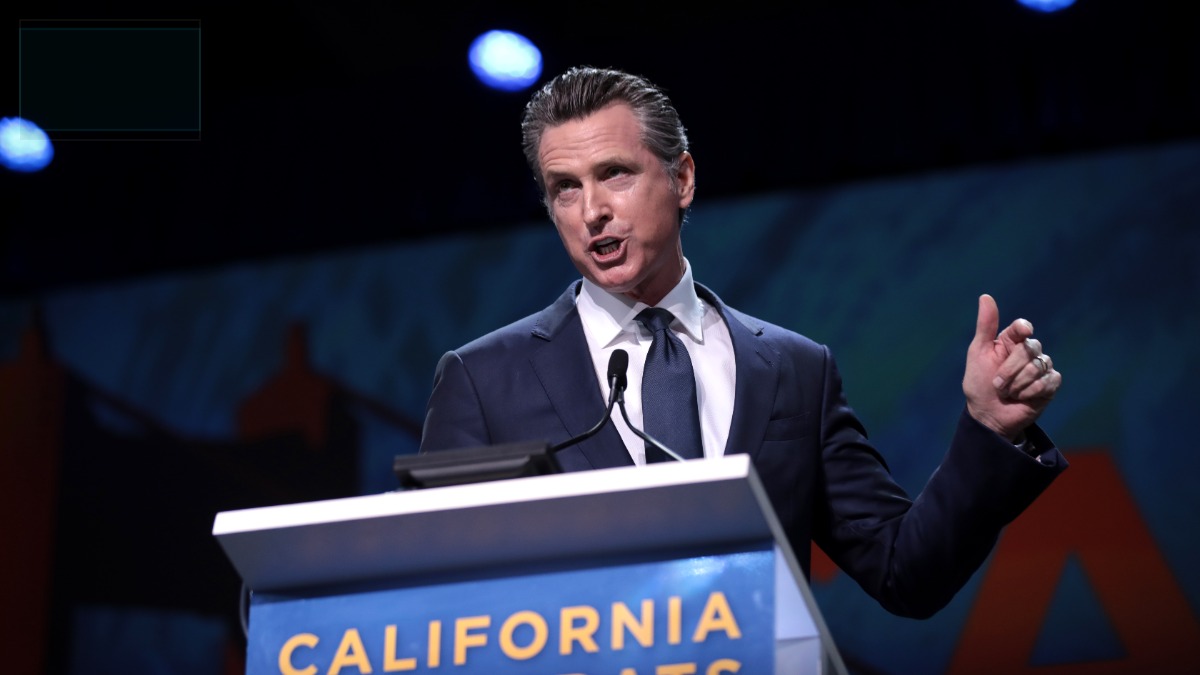

Top Democrats are shifting their political strategy by urging the party to move away from abstract arguments and instead focus on naming specific villains as they look toward future electoral success. During the 2026 IDEAS conference hosted by the Center for American Progress, high-profile figures argued that the path to victory lies in embracing a more direct, aggressive, and clarified approach to messaging, The Hill reported.
This gathering, held at a hotel just blocks from the White House in Washington, D.C., served as a critical platform for party leaders to debate how they should position themselves as they look past the current administration. California Governor Gavin Newsom was one of the most prominent voices advocating for this change in tone. He argued that the American public is looking for fighters who can articulate their vision with total clarity.
Newsom, who is widely seen as a front-runner for the 2028 Democratic presidential nomination, suggested that the party needs to be more precise when identifying the sources of public frustration. He noted, “I don’t think we are well served by tearing other people down. But calling out the villains on the tax code, calling out the villains as it relates to monopolization of capital … I think we would do very well.”
President Trump remains a central figure in the minds of many within the party, as he was a frequent target of criticism during the conference
Speakers repeatedly characterized the president as a significant threat to democracy. However, there was a palpable sense that the party must also look beyond the current occupant of the White House and develop a robust policy agenda that resonates in a post-Trump era. Newsom suggested that the Democratic Party should focus on being a party that builds, offering a sharp contrast to what he described as the destruction of institutions, allies, and trust coming from the other side.
He also pointed out that the feeling of a broken government is what drives support for populist figures, stating, “They’re both right on the diagnosis. We can’t, with respect, fail more efficiently by managing, more effectively, the decline.”
The urgency of this moment was echoed by other party leaders who are pushing for more practical and immediate results. New Jersey Governor Mikie Sherrill emphasized that the party needs to stop relying on slow, bureaucratic responses to the pressing concerns of voters. She remarked, “We cannot be the party of strongly worded letters. We can’t settle for 10-year studies.” Sherrill focused her own remarks on the realities of affordability, particularly regarding utility costs, while others like Senator Elizabeth Warren championed universal childcare.
Senator Raphael Warnock took a different, though equally urgent, approach by calling for a renewed struggle for voting rights, specifically in the wake of recent Supreme Court rulings. Warnock also made it clear that he believes the Senate filibuster is an obstacle to progress, stating, “No arcane Senate procedure should block people’s rights to have their voices heard. That is my position.” Representative Lauren Underwood went even further on that front, declaring that the filibuster has got to go because this is a survival moment for the nation.
This internal debate over tactics comes at a complicated time for Democrats. While recent polling shows that the president’s approval ratings are at the lowest levels of his second term, the Democratic Party itself is struggling with its own image.
A recent poll from The Economist and YouGov showed that the party is viewed unfavorably by 56 percent of registered voters and favorably by only 40 percent. This creates a difficult dilemma for a party that is trying to prove it can fight hard enough to satisfy its progressive base while simultaneously trying to avoid being labeled as too extreme by centrist voters.
House Minority Leader Hakeem Jeffries attempted to bridge some of these gaps by urging his colleagues to remain focused on cost, care, and combating corruption. He expressed confidence that Democrats would take control of Congress in November, emphasizing that the party must show they truly feel the pain of everyday Americans who are struggling to survive.
One of the most telling moments of the conference involved the question of impeachment. Representative Robert Garcia expressed significant hesitation about pursuing a new impeachment drive if Democrats win the House, even while he was highly critical of the president. When pressed on whether this stance was because the party believes messaging impeachment does not actually help win votes, Garcia indicated that he agrees.
He noted, “I think that spending all of our time on impeaching a president that is not going to get impeached … it’s happened already two other times. It’s not the best use.”








Published: May 20, 2026 04:00 pm