



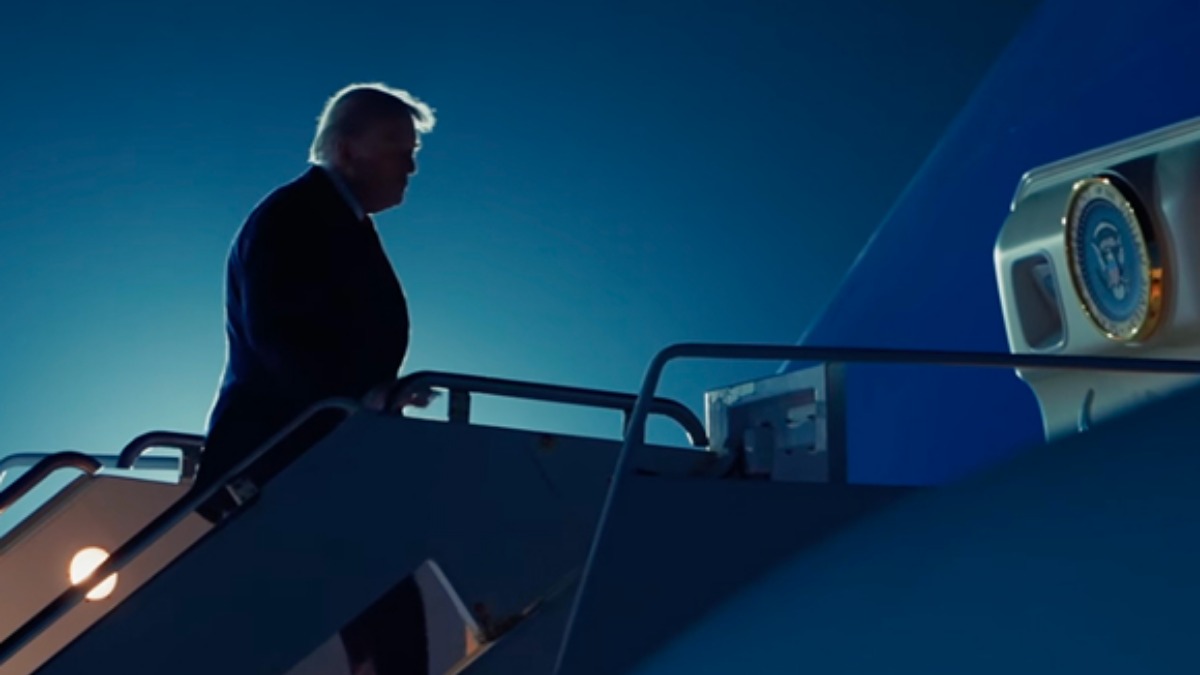

The fight over the administration’s controversial $1.8 billion anti-weaponization fund reached a boiling point early Friday morning. In a high-stakes legislative showdown, six Republican senators joined forces with Democrats to support an amendment aimed at blocking the fund, which was designed to provide payments to MAGA allies who claim they were prosecuted by the Justice Department.
Despite this bipartisan push, the measure ultimately failed to clear the 60-vote threshold required to overcome a procedural hurdle. The motion to waive the budgetary point-of-order objection ended with a vote of 52 to 47, leaving the future of the fund in a state of uncertainty, The Hill reported.
The amendment was sponsored by Sen. Bill Cassidy of Louisiana, who has emerged as one of the most vocal critics of the proposal since acting Attorney General Todd Blanche first introduced it shortly before Memorial Day. Cassidy’s plan was to strip the funding away from the proposed anti-weaponization project and instead redirect $100 million toward law enforcement officers who were injured or faced financial losses while protecting the United States Capitol on January 6, 2021. To cover these costs, the proposal would have reduced appropriations for Immigration and Customs Enforcement, capping individual payments to eligible officers and their families at $1 million.
Cassidy’s frustration with the fund has been clear from the start
The drama unfolded over a grueling 14-hour period as part of a marathon session known as a vote-a-rama. Cassidy spent much of Thursday working behind the scenes, repeatedly redrafting his language in hopes of securing a ruling from Senate Parliamentarian Elizabeth MacDonough. He was looking for a way to classify his amendment as compliant with the Byrd Rule, which would have allowed it to pass with a simple majority rather than the typical 60 votes.
This process, often referred to by lawmakers as a Byrd Bath, is crucial for determining what can be attached to a budget reconciliation package. Throughout the day, the parliamentarian consistently signaled that the proposals would likely require the higher 60-vote threshold, which made the path to victory incredibly difficult.
Bill Cassidy has publicly questioned the legal standing of the entire concept. Back on May 18, he told reporters, “I don’t actually see any legal precedent for that. We are a nation of laws, you can’t just make up things whole-piece.” He even compared the setup to a bizarre legal scenario, noting, “Somebody explained it to me this way, an attorney. … It is as if somebody sued themselves and agreed upon a settlement with themselves that’s going to be funded by the rest of us. If that’s the case: What?”
The political pressure was palpable throughout the session. Earlier in the day, a separate motion from Senate Democratic Leader Chuck Schumer attempted to send the entire reconciliation package back to the Judiciary Committee with instructions to bar the fund. While that measure failed 49 to 50, it highlighted the deep divisions within the Republican caucus.
Senators Susan Collins of Maine, Lisa Murkowski of Alaska, Dan Sullivan of Alaska, Jon Husted of Ohio, and Thom Tillis of North Carolina joined Cassidy in the final vote, signaling that even within the GOP, there is significant resistance to the administration’s plan.
The confusion surrounding the fund’s status only added to the tension. While acting Attorney General Blanche recently told House lawmakers that the administration had abandoned the idea, President Trump later undercut those comments. When asked about the proposal in the Oval Office on Wednesday, he refused to declare it dead and suggested he would “have to ask the lawyers.” He even defended the concept, stating, “The weaponization fund, as far as I’m concerned, was a beautiful thing.”
For Cassidy, the goal has been to maintain a delicate balance. He has expressed support for the primary objective of the reconciliation package, which is to fund border control and operations for Immigration and Customs Enforcement through 2029, but he remains adamant about stopping the anti-weaponization fund. As he noted during the negotiations, “I would like to fund control of the border but also do something about the weaponization fund. I’m trying to strike that balance.”
Even with the amendment failing to pass on Friday, the intensity of the debate shows that this issue is far from settled, and the administration’s insistence on keeping the fund on the table ensures that the friction between the White House and these GOP senators will continue to impact the legislative agenda.




Published: Jun 5, 2026 05:45 pm