



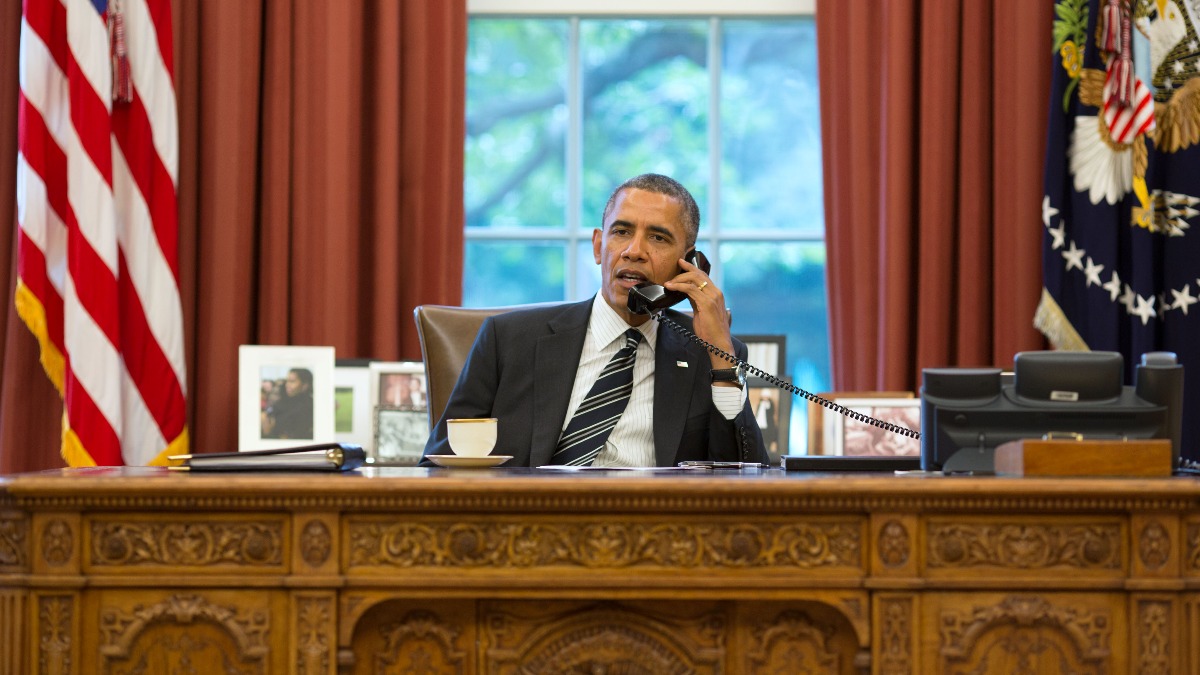

Former President Barack Obama has expressed skepticism about the Trump administration’s ongoing nuclear negotiations with Iran, saying he doubts any new deal will offer meaningful progress over the 2015 agreement his administration helped build. Obama shared these views during an interview with ABC News’s Robin Roberts at the Obama Presidential Center in Chicago.
The interview took place just one day before President Donald Trump announced that the United States and Iran had reached a deal to reopen the Strait of Hormuz and end the naval blockade. Obama told Roberts that he was “doubtful” any deal put forward by the Trump administration would be “significantly different” from the 2015 nuclear agreement.
“It is doubtful that any agreement that arises is going to be significantly different or a significant improvement from the deal that we had in the first place and had worked for, for a long stretch of time before we, the United States, pulled out of it,” Obama told Roberts. Trump had withdrawn the United States from that 2015 agreement eight years ago, famously calling it the “worst deal ever.”
Trump pulled out of the 2015 deal, and now the new agreement may end up looking a lot like it
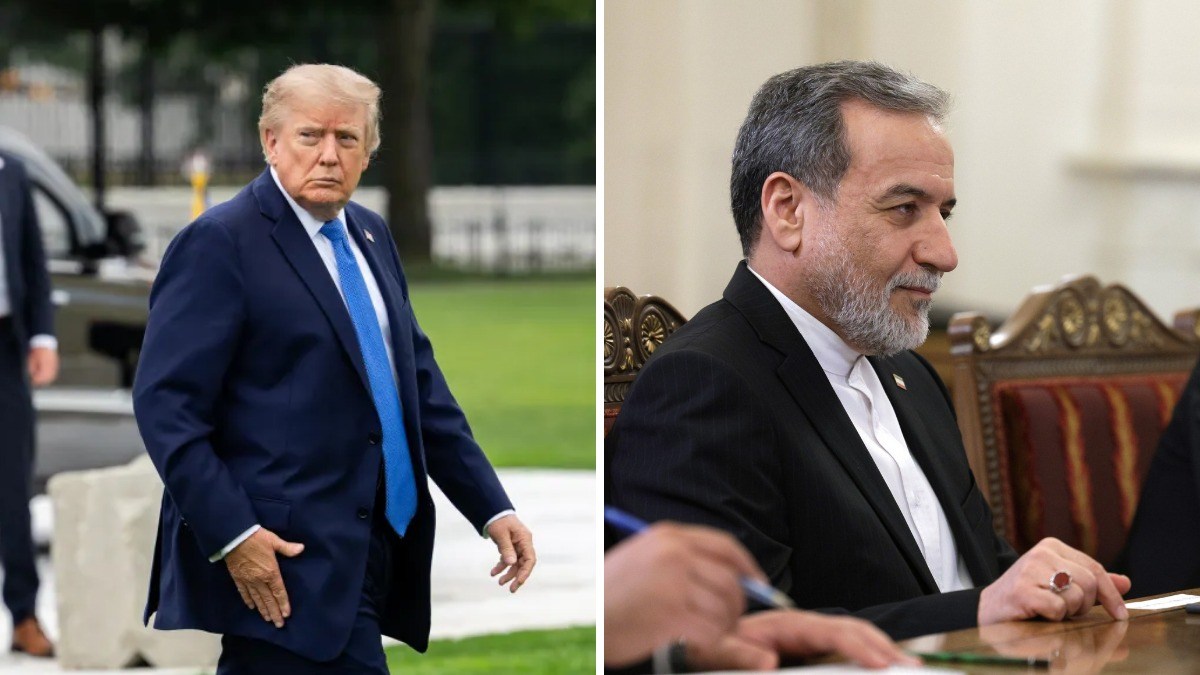
A senior administration official said on June 12, 2026, that the new deal would facilitate the dismantling of Iran’s nuclear program and secure Iran’s highly enriched uranium for the United States. Following Trump’s official announcement on social media on June 14, 2026, Iranian Deputy Foreign Minister Kazem Gharibabadi confirmed the deal had been finalized, adding that it is expected to be signed in Switzerland on Friday.
“All of our positions and important issues are included in the draft understanding,” Gharibabadi said. The deal comes amid broader regional financial maneuvering, including reports of a UAE agreement to release billions to Iran that the Gulf state has denied.
Beyond the specifics of the agreement, Obama used the interview to make a broader case for diplomacy over military force. “I’m hopeful that bombing stops and ordinary people are no longer suffering as a consequence of the war,” he said.
Obama argued that using force to resolve complex foreign policy problems is often a short-sighted approach. He has consistently backed diplomatic solutions over military action with Iran, pointing to the 2015 nuclear deal as evidence that negotiation can work.
“Then in retrospect it’s a reminder that on a lot of difficult foreign policy problems – the notion that we can just bully our way or bomb our way to solutions – may sometimes seem appealing, but the fact of the matter is that taking the time to explore diplomacy and exhaust the possibilities of coming up with deals that don’t solve 100% of the problem but solve 80%, 90% of the problem while avoiding the necessity of going to war,” he explained.
This conflict has been unfolding since President Trump announced major combat operations against Iran on February 28, 2026, which included joint U.S. and Israeli strikes on military and government infrastructure. After an initial ceasefire and a failed round of talks in Pakistan in April, negotiations eventually resumed and led to the current agreement.
Obama closed his remarks by reflecting on what he sees as a recurring difficulty in drawing lessons from these situations. “You’d think we would’ve learned that lesson by now. But it seems like every so often we have to relearn that lesson again,” he said.





Published: Jun 16, 2026 08:45 am