



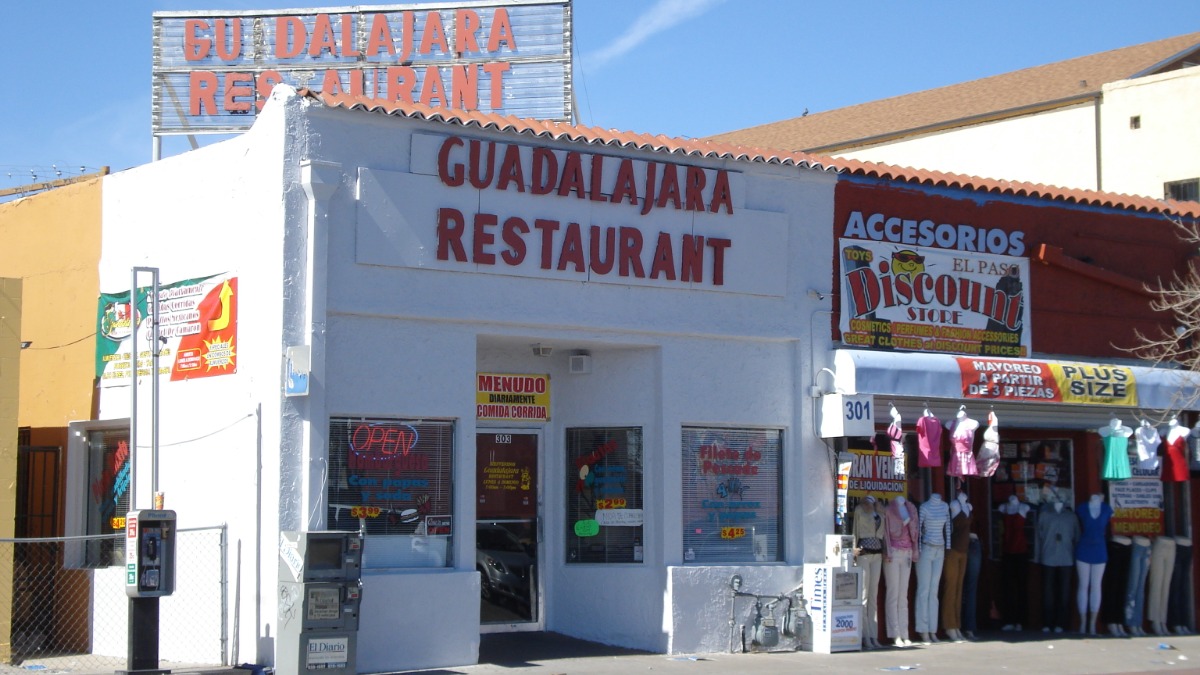

It’s been over a year since the Trump administration launched an aggressive effort to curb cartel money laundering near the US-Mexico border, but the reality on the ground looks a lot different than the government’s stated goals. Instead of catching major criminal syndicates, a new policy from the US Treasury Department’s Financial Crimes Enforcement Network, or FinCen, has placed a massive, unintended burden on small, family-run shops.
The policy, which first rolled out in April 2025, forces businesses offering financial services in specific border regions to report cash transactions over a certain amount. Initially, the threshold was set at a measly $200, a significant drop from the previous $10,000 requirement. While the limit was eventually bumped to $1,000 in September 2025, business owners say the damage is already done. For many of these mom-and-pop stores, as reported by The Guardian, the constant paperwork and the fear of hefty fines for simple errors have made keeping these services afloat nearly impossible.
Take Nachita’s, a long-standing grocery store in El Paso, Texas. For generations, the store has served as a vital hub for a working-class community where many residents don’t have bank accounts. Locals would stop by to pay bills, pick up money orders for rent, or wire cash to family members in Mexico. Often, those errands turned into other purchases, like a quick burrito or groceries. Now, that ecosystem is falling apart. Owner Evangelina Ornelas says the requirement to collect Social Security numbers and other sensitive personal data has scared off her customers.
Many are worried that this information will be used for government surveillance or by immigration authorities
The result is that the long lines of people waiting to send money home have largely vanished. Ornelas noted that she’s seeing regular people struggle to pay their basic bills rather than stopping illicit activity. She said, “I don’t think it was to prevent money laundering. It didn’t look like it from what I was seeing. I was seeing a lot of people who were just not able to pay their bills or not able to send money to their families.”
Legal experts are pushing back hard against these measures, calling them arbitrary and a potential violation of the Fourth Amendment. Rob Johnson, a senior attorney at the Institute for Justice, has been vocal about the overreach. He pointed out that $1,000 is a standard amount for ordinary people to pay for things like monthly rent, not a sum that suggests criminal activity. “It’s invasive and it’s unconstitutional,” he said.
The situation has sparked multiple lawsuits, including one filed by the Institute for Justice and the Texas Association of Money Services Businesses. While some federal judges have blocked the policy’s implementation in parts of California, Arizona, and Texas, the government is fighting back through the appeals process.
Meanwhile, businesses like Kiosko Multiservicios in Phoenix are warning that they simply don’t have the staff to handle the massive influx of reporting requirements, which the government estimates takes 24 minutes per transaction to complete.
As of February 23, 2026, a total of 86 businesses covered by the order had filed 700,000 reports. Critics argue this is creating a massive, opaque database of ordinary citizens. Saira Hussain, a senior attorney with the Electronic Frontier Foundation, suggested this feels like a targeted surveillance program designed to squeeze undocumented people out of the financial system.
For business owners like Ornelas, the human cost is the hardest part to swallow. She is preparing to shut down her money services entirely, leaving her elderly neighbors with few options for managing their daily finances.





Published: Aug 11, 2026 02:45 pm