



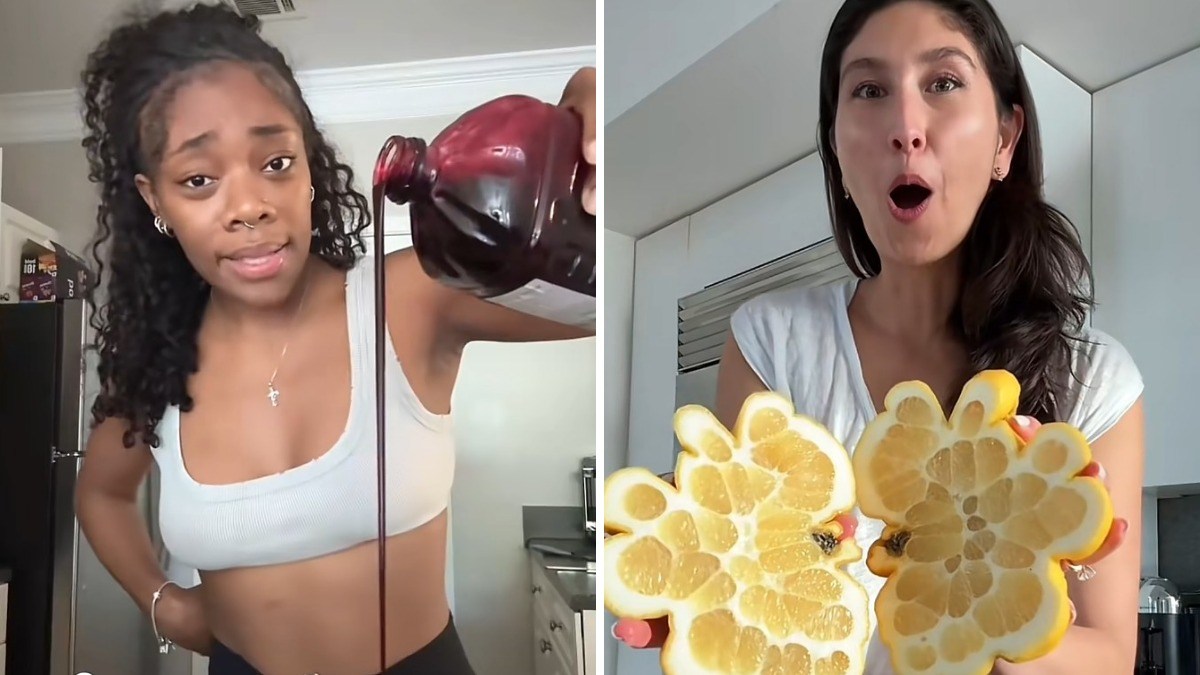

A TikTok compilation showing food with bizarre textures is currently causing a massive stir online, leading thousands of people to question the quality of their grocery store staples, Daily Dot reported. The video, which was posted by the account @sceneunlocked001, has already racked up more than 104,000 likes. It features a series of clips displaying items that look far from normal, including a beet and carrot juice that pours out as a semi-solid, jelly-like substance you can actually pick up with your fingers.
Beyond the strange juice, the video showcases a watermelon with a rubbery texture, a banana that bends in ways a normal piece of fruit simply should not, and cheese that stretches into long, plasticky strands. There is even an onion that looks almost translucent and refuses to cook or melt when placed in water, along with a citrus fruit that has a completely distorted shape.
The reaction on X has been intense, with many users jumping to conclusions about the state of the food industry. One commenter asked, “Is America poisoning Americans?” This sentiment reflects a growing anxiety about what exactly is in our food supply. Some people are pointing fingers at food companies, questioning the rise of lab-grown alternatives, or blaming the use of harsh chemicals. Others have noted that regulations in places like Europe and Africa appear to be more stringent than what we see here.
There is some scientific backing behind some of the odd food textures here
While it is easy to get caught up in the alarm, some of these strange textures actually have logical, scientific explanations. Research from the Postharvest Research and Extension Center at the University of California, Davis, which is backed by the U.S. Department of Agriculture, points out that improper storage often causes these issues.
For instance, watermelons can suffer from chilling injury if they are kept at temperatures below approximately 45 degrees Fahrenheit. This can make the flesh mealy and water-soaked, which might explain that rubbery feeling. Bananas are similarly sensitive and can suffer from chilling injury if stored below 56 degrees Fahrenheit, affecting both their quality and how they ripen.
The distorted citrus fruit also has a specific cause. According to UC Agriculture and Natural Resources, the citrus bud mite can feed on developing buds, which leads to severely misshapen fruit. As for the cheese, it is worth noting that products like the pasteurized processed American cheese used by McDonald’s contain ingredients like milk, cream, water, sodium citrate, and cheese cultures. These ingredients are designed for specific melting properties, which might explain the plasticky stretchiness that looks so strange on camera.
Even with these explanations, it is impossible to ignore the uncertainty surrounding these specific items. We do not know where this food came from, how it was transported, or how it was stored before it hit the camera lens. Because the origin and handling of these items remain a mystery, it is impossible to judge whether they are safe to consume or if they represent a larger trend.
These scientific explanations provide context for documented phenomena, but they are not assessments of the specific items shown in this video. It is a good reminder that while some food oddities have clear, natural explanations, it is always a smart move to pay attention to how your groceries look and feel before you start cooking.









Published: Aug 20, 2026 07:00 pm