



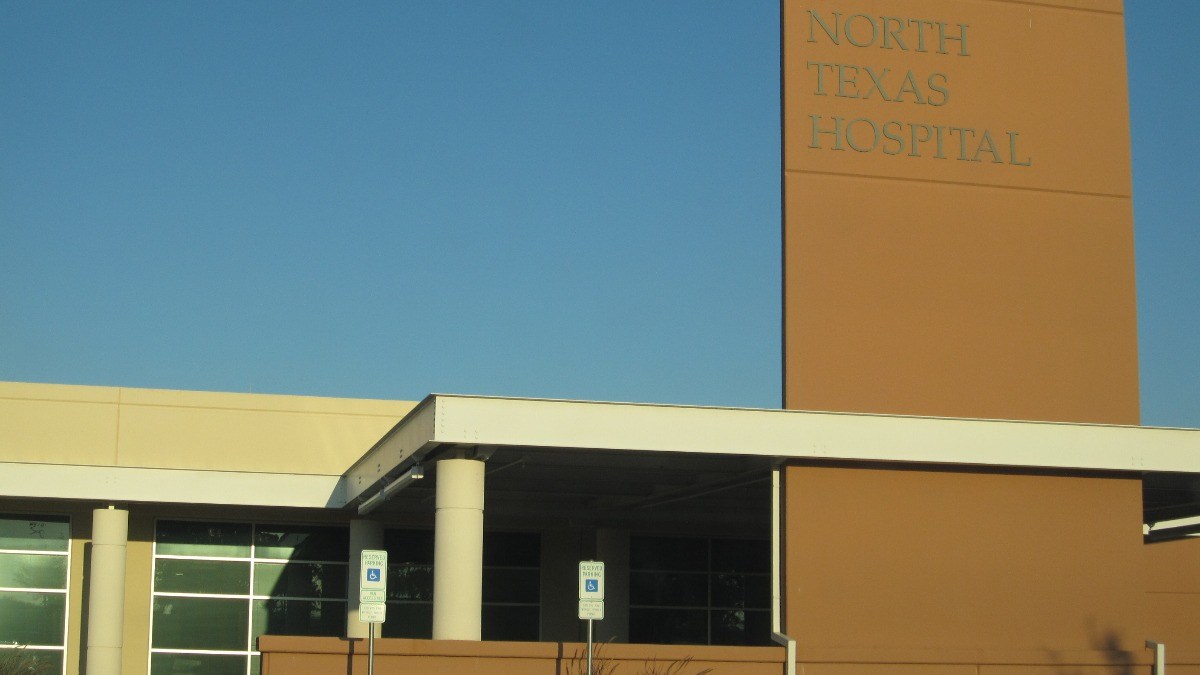

Texas hospitals expect to lose $27 million a day in extra Medicaid funding when the state’s new fiscal year begins on Tuesday, according to the Texas Hospital Association and hospital leaders, cited by The Texas Tribune. The shortfall stems from a decision by the Trump administration to withhold approval for about $9.8 billion over the next year from three programs. Most of that money is tied to the Comprehensive Hospital Increase Reimbursement Program, or CHIRP.
CHIRP is designed to give hospitals extra payments that cover the gap between standard Medicaid rates and the actual cost of treating Medicaid patients. Hospitals often receive less than they spend because state payment rates have not kept pace with costs. Officials said hospitals would lose that extra reimbursement for 2027.
Local governments collect about $4 billion a year in taxes from hospitals, the Texas Hospital Association has said. Under CHIRP, the federal government matches those funds, allowing hospitals to cover the full cost of Medicaid care. Hospital officials have said those CHIRP dollars are critical and that losing them would likely force cuts in services.
Abbott said the state’s hospital tax structure already complies with federal law
Four million low-income Texans are enrolled in Medicaid, most of them children. Sara González, a Texas Hospital Association vice president of advocacy, public policy, and political strategy, said, “It is impossible for a hospital to take a huge loss on a Medicaid side of their portfolio and not have that impact services across the board, regardless of what type of insurance a patient has.”
In Houston, the impact could mean at least $258 million less for Harris Health and up to $1.4 billion less for the region overall next year. Dr. Esmaeil Porsa, president and CEO of Harris Health, said, “The impacts would be catastrophic for Texas’ safety-net healthcare system.”
He added, “We are carefully monitoring every dollar and would be forced to make difficult decisions about maintaining critical services if this impasse continues.” Texas’s policy decisions have drawn scrutiny, such as when the state mandated Bible reading for millions of kids.
Federal officials are withholding the money because they have questioned how local jurisdictions in Texas calculate taxes collected from hospitals. Robert Fries, chief financial officer for Children’s Health in Dallas, said this type of funding is crucial for children’s hospitals such as Children’s Medical Center.
“Delays and uncertainty threaten access to critical pediatric specialty care, behavioral health services and the workforce needed to deliver that care,” Fries said. “If these delays continue, it will become increasingly difficult to maintain the health care safety net that Texas children and families depend on every day.” This standoff highlights broader tensions between Texas and the federal government, such as when Trump dangled his endorsement over the Texas Senate runoff to leverage a voting bill.
The impasse began quietly last December and later escalated. Gov. Greg Abbott sent a letter on Aug. 7 to U.S. Health Secretary Robert F. Kennedy Jr. stated that nothing is wrong with the way Texas hospitals’ local taxes are collected. In the letter, Abbott referred to the funding holdup as an economic “gun to the head.”
“The tax structure previously enacted by the Texas Legislature, and being implemented daily by local governments, fully complies with federal law,” Abbott said in the letter. “What CMS is requesting does not.” He wrote that if the federal government insisted that Texas restructure how local governments tax hospitals, the federal government must first guarantee that Texas would not be penalized later.
“Any voluntary change that the State makes should be understood as the product of a desire to work collaboratively with CMS and not as any kind of admission about a legal defect in Texas’ broad-based healthcare-related taxes,” Abbott wrote, adding that the state estimates the anticipated loss could be as much as $12 billion in 2027.
The Centers for Medicare and Medicaid Services, the Texas Health and Human Services Commission, and the governor’s office did not offer comment by Monday on the nearly $10 billion loss or on whether the parties were closer to a resolution.
Even if an agreement were reached by Tuesday, the anticipated funding would still be delayed for months, Texas Hospital Association officials said. Anna Stelter, the association’s vice president of policy, said, “Even if we get an approval soon, there will be a claims backlog that takes at least 90 days to clear. And the bigger the claims backlog, the longer it takes to catch up.”
When H.R. 1, the One Big Beautiful Bill Act, passed a year ago, it included $900 billion in nationwide cuts to Medicaid funding by 2034, according to the Texas Hospital Association. Officials at the association said the law effectively froze Texas’s hospital taxing structure so that states that did not expand Medicaid could keep the status quo rather than face a sudden cutoff of extra funding.
Many Texas officials had believed the state was shielded from the bill’s larger cuts because it did not expand Medicaid. Texas, Florida, and eight other states have refused to expand coverage under the Affordable Care Act since 2013. Texas A&M’s Bush School of Government and Public Service estimates Texas loses more than $5 billion in new federal funding each year because it opted out.
Florida resolved a similar delay after 11 months. The Texas Health and Human Services Commission website shows 11 rounds of questions between CMS and the state agency about how local governments tax hospitals. In the latest round, CMS sought assurances that none of the nearly $10 million would pay for non-citizen healthcare.
On Aug. 17, the commission stated, “The state confirms and assures CMS that the state directed payment does not include, nor direct plans to make, payments to providers for costs or utilization for individuals who have not demonstrated satisfactory immigration status.”
Texas had previously won legal fights with CMS over this funding in 2023, before the One Big Beautiful Bill Act passed. Carrie Kroll, the Texas Hospital Association’s senior vice president of advocacy and public policy, said hospitals are aware there is no extra state money to offset the federal hit. “I think that we… are under no assumption that there is a large amount of money in GR (general revenue) ready to save us from the situation,” she said.







Published: Sep 1, 2026 01:30 pm