



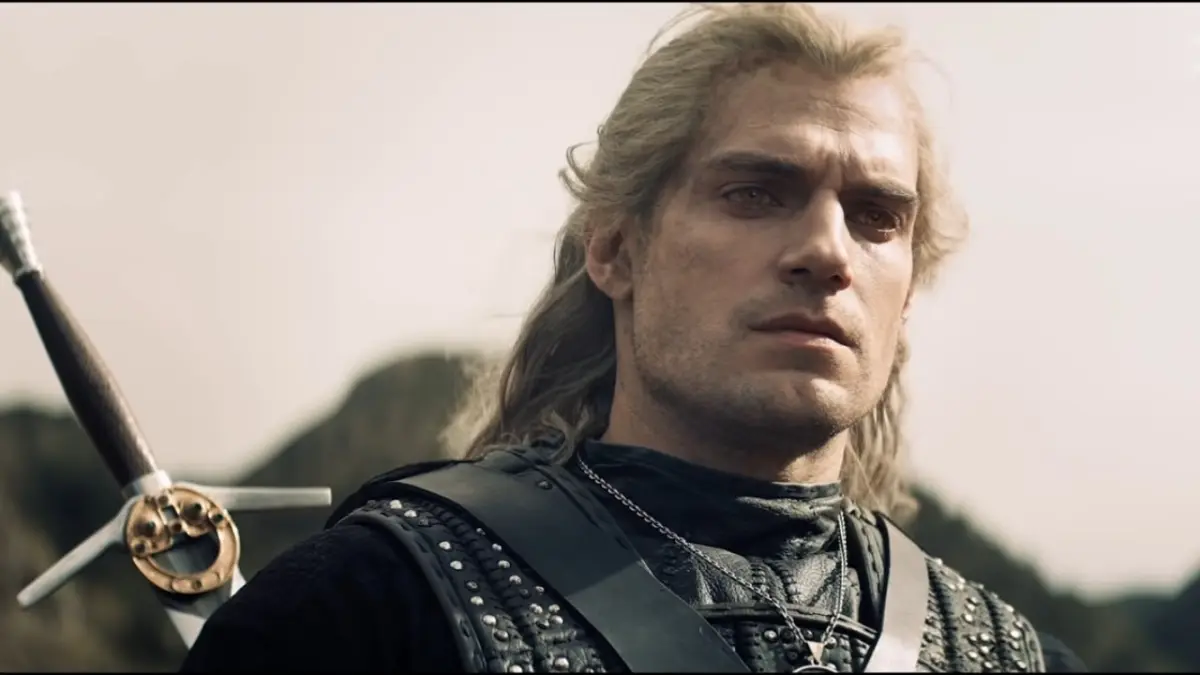
The transition of the lead role in Netflix’s The Witcher from Henry Cavill to Liam Hemsworth represents a pivotal moment in contemporary fantasy television. While the series originally premiered on December 20, 2019, to massive viewership, the announcement on October 29, 2022, regarding Cavill’s exit after Season 3 sparked intense debate regarding adaptation fidelity and creative direction. Understanding this shift requires a deep dive into the technical production requirements, the literary evolution of the Continent, and the strategic narrative pivots implemented for the final seasons.
Creative Divergence and the Pursuit of Lore Fidelity
The departure of Henry Cavill was a symbiotic decision influenced by a growing friction between the lead actor’s commitment to the source material and the writers’ room’s looser adaptation style. Cavill, a documented enthusiast of Andrzej Sapkowski’s novels and the CD Projekt Red video games, often advocated for a version of Geralt that reflected the intellectual, philosophical nature of the literary character. This frequently led to Cavill personally adjusting scripts while in the makeup chair to ensure Geralt appeared more three-dimensional within the established plot.
Specific instances of this creative autonomy include the Season 2 vision scene on Sodden Hill. Cavill performed a fragment of dialogue taken directly from the short story Something More in the collection Sword of Destiny that was not in the original script. He spoke the lines: Enjoy your last walk across the meadow and through the mist. Be not afraid of her for she is your friend. He later admitted that he performed the lines in front of the camera without prior permission, ready to face the consequences because the words were so wonderfully Sapkowski.
Reports from former production staff, including writer Beau DeMayo, suggested that several members of the writing team actively disliked or even mocked the books and games. This atmosphere contrasted sharply with Cavill’s professional standards, leading to his eventual decision to step down once his initial three-season contract concluded. Since his exit, Cavill has reportedly instituted a three-strike rule for lore accuracy on his upcoming Warhammer 40,000 project to prevent similar creative breakdowns.
Technical Production Trivia and Physical Preparation
The authenticity of the White Wolf required extreme physical and technical dedication. For the famous dehydration protocol used to achieve a ripped aesthetic for shirtless scenes, Cavill gradually reduced his water intake over four days, culminating in zero water for 24 hours before filming. This process made him so sensitive to hydration that he claimed he could actually smell water nearby on set.
Technical adjustments were also made to Geralt’s equipment. While most background actors used rubber or light metal props, Cavill utilized a real steel sword that he helped design. He requested the hilt be angled downward to facilitate the twirling, fluid fighting style required for the choreography. The original flat hilt design used in the early Blaviken market brawl proved difficult to rotate during complex wrist movements, leading to the modification seen in later episodes.
The broader chronology of the Continent provides a necessary roadmap for understanding how these production cycles align with the literary saga.
| Year (In-Universe) | Narrative or Historical Event | Media Release or Production Milestone |
|---|---|---|
| 786 | Birth of the mage Stregobor | N/A |
| 1160 | Birth of Geralt of Rivia | N/A |
| 1173 | Birth of Yennefer of Vengerberg | N/A |
| 1229 | Events of Crossroads of Ravens prequel | Released September 30, 2025 |
| 1231 | The Lesser Evil incident in Blaviken | Season 1 Premiere (Dec 2019) |
| 1250 | Birth of Princess Cirilla (Ciri) | N/A |
| 1263 | Fall of Cintra and Battle of Sodden Hill | Season 1 Finale |
| 1267 | Formation of the Hanza in Riverdell | Season 4 Premiere (Oct 30, 2025) |
| 1268 | The Battle of Brenna | Season 5 (Expected Fall 2026) |
Narrative Framing and the Liam Hemsworth Era
To facilitate the recasting in Season 4, showrunner Lauren Schmidt Hissrich utilized a meta-narrative framing device. The season opens 100 years in the future with a storyteller named Stribog recounting the legend of Geralt to a group of children. When a listener named Nimue points out discrepancies in the description of the Witcher, Stribog notes that it was a century ago and there is no right or wrong. This suggests that the different faces of Geralt are merely variations in an evolving legend.
Season 4 marks a shift toward an ensemble dynamic, moving away from the lone wolf archetype. As Geralt recovers from the shattered bones he suffered against Vilgefortz at Thanedd, he becomes more reliant on his fellowship, known as the Hanza. This group acts as a dysfunctional found family that frequently challenges Geralt’s authority.
The composition of this unit is vital for the emotional stakes leading into the final season.
| Character | Role and Lore Background | |
|---|---|---|
| Geralt of Rivia | The wounded, more talkative White Wolf | Liam Hemsworth |
| Emiel Regis | A higher vampire and barber-surgeon | Laurence Fishburne |
| Milva | An expert archer from the Brokilon Forest | Meng’er Zhang |
| Cahir aep Ceallach | A disgraced Nilfgaardian seeking redemption | Eamon Farren |
| Jaskier | The loyal bard and companion | Joey Batey |
| Zoltan Chivay | A dwarf warrior and close friend | Danny Woodburn |
Crossroads of Ravens and Modern Witcher Lore
A major source of information gain for the franchise arrived with the 2025 release of the prequel novel Crossroads of Ravens. The prequel novel fills in lore gaps that even the The Witcher: Blood Origin prequel miniseries only touched on briefly. Set in 1229, the book depicts an 18-year-old Geralt who is naive and impulsive, a stark contrast to the seasoned hunter seen on screen. The novel clarifies that Geralt names his horses Roach because it refers to a common, unassuming fish, reflecting his early desire to remain unnoticeable.
The prequel also introduces a grizzled mentor named Preston Holt, who teaches Geralt survival lessons Kaer Morhen did not provide. Holt emphasizes that Witchers should avoid drawing swords on humans, advocating for other methods instead. Furthermore, the book details specific Witcher anatomy drills, targeting the bregma, sphenoid bone, and mastoid process to achieve psychological dominance in combat. For more context on why these character shifts were necessary, you can read why Henry Cavill left The Witcher to see how the production friction developed over time.
The Road to Season 5 and the Battle of Brenna
Season 5 is currently in post-production and is slated for a release in late 2026. This final chapter will adapt the remaining novels, The Tower of the Swallow and The Lady of the Lake, culminating in the massive Battle of Brenna. While the series has introduced original elements like the monoliths and the Voleth Meir, the final episodes are expected to return to the core political and personal conflicts of the saga.
The addition of Ellie Taylor as Anna Henrietta, the Duchess of Toussaint, and the return of Paul Bullion as Lambert suggest that the series will attempt to weave together all remaining lore threads. Despite the initial divisiveness of the lead actor change, the focus on the Hanza and the integration of new literary details from the 2025 prequel provide a comprehensive conclusion to the legend of the White Wolf.




Published: Apr 21, 2026 05:39 pm