



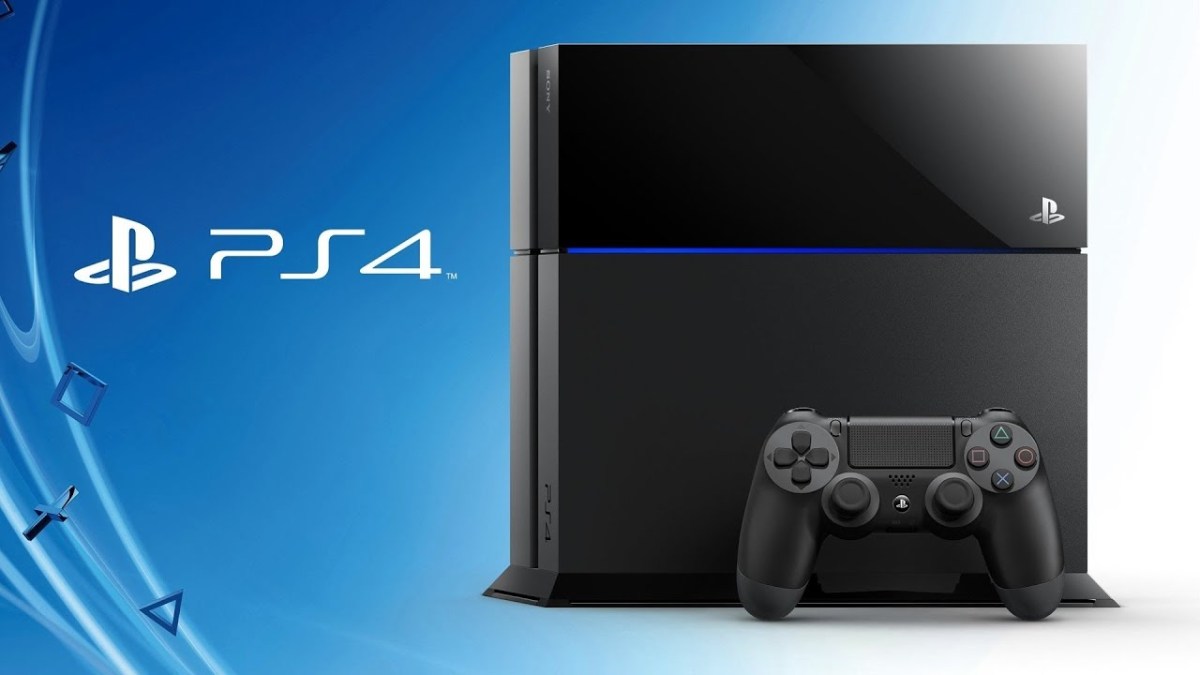
When I look back at the eighth generation of gaming, I realize the PlayStation 4 was more than just a successful console: it was a total comeback story. I remember the hype in 2013 when Sony promised to put gamers first, and looking at the numbers today, they clearly delivered. The PS4 eventually became the highest selling home console of its era, only sitting behind the legendary PS2 for the all time crown.
In my experience, what made the PS4 special was not just the games, but the technical and economic strategy behind the scenes. Whether you are a collector or just a fan of gaming history, I want to walk you through the real story of how this machine conquered the world.
The official PS4 release dates for every region
The road to launch actually started years earlier in 2008 when Mark Cerny began architecting a system that would not be a puzzle for developers to solve. By the time we hit 2013, the world was ready. I have tracked the exact dates for every major region so you can see how the rollout happened:
- North America: November 15, 2013, was the big day for the US and Canada.
- Europe and Australia: Most PAL regions saw the console hit shelves on November 29, 2013.
- South America: Brazil also received the console on November 29, 2013, though the price there was a whole different story.
- Asia: South Korea, Hong Kong, and Taiwan joined the party on December 17, 2013.
- India: The official launch for India landed on December 18, 2013.
- Japan: In a move that surprised me at the time, Japan actually waited until February 22, 2014, to get the hardware.
- China: The PS4 finally officially entered mainland China on March 20, 2015.
The Time to Triangle: Why developers loved the PS4
I have always found Mark Cerny’s approach to hardware design fascinating because he focused on a metric called Time to Triangle. This is essentially the time it takes a developer to get a single triangle rendered on the screen when they first get their hands on a new console. I have seen the internal data on this, and the results explain why the PS4 library grew so quickly:
- PlayStation 1: 1 to 2 months.
- PlayStation 2: 3 to 6 months.
- PlayStation 3: 6 to 12 months.
- PlayStation 4: Less than 1 month.
By moving to an x86-64 architecture, Sony got the required learning back to PS1 levels. Cerny realized that the PS3’s Cell processor was a nightmare because of its asymmetric SPU management. For the PS4, he surveyed over 30 global teams and found they wanted unified memory and a design that was not too exotic. This led to the creation of the(https://attackofthefanboy.com/guides/best-ps4-games-of-all-time/) that we still play today.
The Bill of Materials: Why Sony only made 18 dollars on your console
I have always found console economics fascinating because companies usually lose a fortune at the start. With the PS3, Sony was bleeding nearly 240 dollars per unit at launch. But for the PS4, they got smart. My research into the initial teardowns by IHS Markit shows a much tighter ship:
- The total cost to build a PS4 in 2013 was roughly 381 dollars.
- Since the retail price was 399 dollars, Sony was only making a tiny 18 dollar margin on each box.
- The most expensive part was the monster AMD processor, which cost about 100 dollars on its own.
- Memory was the next big hit: the 8GB of GDDR5 RAM cost around 88 dollars, which was a massive jump from the 10 dollars Sony spent on PS3 memory.
- I noticed they saved money on the optical drive, which dropped from 66 dollars in the PS3 era to just 28 dollars for the PS4.
The Brazil Price Anomaly: Why a PS4 cost 1800 dollars
If you think 399 dollars was a lot to ask, I have to tell you about the situation in Brazil. When the console launched there, it cost 3,999 Brazilian Real, which was about 1,850 dollars in US currency. I looked into why this happened, and it comes down to a policy called Import Substitution Industrialization:
- About 63 percent of that massive price tag was just import taxes and fees.
- The IPI, which is a tax on industrialized products, added a 50 percent burden because video games were considered luxury items.
- For the average Brazilian gamer in 2013, the console cost more than two months of their entire salary.
- Sony eventually fixed this by building a manufacturing plant in Manaus, Brazil, to avoid those import tariffs entirely.
I have found that the Manaus facility, located in the Manaus Free Trade Zone (ZFM), allowed Sony to get a 0% IPI rate by complying with the Basic Production Process (PPB). It is the same strategy they used for the(https://attackofthefanboy.com/gaming/ps5-brazil-manufacturing/) more recently.
The Kisarazu Robot Army: How Sony builds a PS4 every 30 seconds
One of the coolest things I discovered in my research is how these consoles are actually made today. On the outskirts of Kisarazu, Japan, there is a factory that feels like it is straight out of the future. It is run almost entirely by robots:
- A 103 foot assembly line uses 32 different articulated Mitsubishi Electric robots to put the consoles together.
- This setup is so efficient that it can churn out a finished PS4 every 30 seconds.
- I was surprised to find that only four humans are actually on the line: two to feed motherboards to the robots and two to package the finished units.
- The robots handle the super finicky stuff that used to require human hands, like attaching flexible flat cables and applying tape with the exact right amount of pressure.
The factory uses RV-FR series 6-axis robots and RH-FRH series SCARA robots. Watching two robot arms coordinate to twist and insert a flexible cable with sub-millimeter precision makes me realize why the failure rate on these units is so low compared to the early PS3 days.
Mathematical performance: teraflops and shader counts
I know specs can be confusing, but the math behind the PS4’s power is actually pretty simple once you see the formula. To calculate the peak theoretical performance of a GPU in TeraFLOPS, we use:
To calculate Performance in Teraflops, multiply the Shader Count by the Clock Speed in Gigahertz and then by two operations per clock cycle.
For the original PS4, you take one thousand one hundred fifty-two shaders, multiply them by zero point eight gigahertz and then by two, which equals one point eight four three Teraflops.
For the more powerful PS4 Pro, you multiply two thousand three hundred four shaders by zero point nine one one gigahertz and then by two, resulting in a significantly higher four point one nine seven Teraflops.
This extra power is exactly why games like God of War look so much better on the Pro.
Deep technical lore: God of War and the Decima Engine
I have spent a lot of time digging into how developers actually squeezed this performance out of the hardware. For example, in the 2018 God of War, Santa Monica Studio used the GPU for tasks the CPU usually handles. A typical frame starts with these exact compute dispatches:
- Wind Simulation: A 3D texture volume represents 1 cubic meter per pixel to calculate how foliage and hair should move.
- GPU Particles: Nearly all particles are simulated via compute and stored in 256×4096 R8_UNORM textures.
- Snow Deformation: A compute pass processes a 384×384 target to smooth character tracks in the snow.
Then there is the Decima Engine used in Horizon Zero Dawn. To populate that massive world, they used GPU based procedural placement. Populating a 2×2 km map with 0.5m density grass requires 16 million instances. If they stored that transformation data statically, it would eat up 1024 MB of VRAM. Instead, they use spatial chunking, where the world is divided into a grid of chunks that only generate object pointers as you walk toward them.
Hardware revisions: finding the best PS4 model
Sony maintained a rigorous revision cycle, and I have found that which model you own matters for noise and heat. I have categorized the CUH-series taxonomy for you:
- CUH-10xx: The launch model with the glossy HDD cover and touch sensitive buttons.
- CUH-12xx: Known as the C-Chassis, this one replaced touch buttons with mechanical ones and dropped power draw by 8%.
- CUH-20xx: The PS4 Slim, which is 40% smaller and moved to a 16nm FinFET process for the APU.
- CUH-72xx: The third version of the PS4 Pro, which is the quietest model and has a updated 2-pin power connector.
If your console sounds like a jet engine, it is likely a CUH-10xx or early CUH-70xx Pro. In my experience, upgrading to the CUH-72xx is the only way to play demanding games in total silence.
Firmware 4.50 and the secret Boost Mode
If you own a PS4 Pro, there is a setting you absolutely must turn on. Introduced in firmware 4.50 (codenamed Sasuke), Boost Mode allows games that never got a Pro patch to run at higher clock speeds. I have tested this myself, and here is how you enable it:
- Navigate to the Settings menu from the main UI.
- Select System.
- Check the box for Boost Mode.
In Bloodborne, this does not give you 60 FPS because the game is hard capped, but it eliminates the mid-20 FPS dips in Yarnham, making the frame pacing much more stable. For games like Project Cars, I have seen frame rate improvements as high as 38%.
The CBOMB and the future: keeping your console alive forever
As we move further away from the PS4 era, I have become really concerned about game preservation. There was a scary issue known as the CBOMB where a dead internal CMOS battery could actually brick your console’s ability to play games offline. Luckily, Sony listened to the fans:
- Firmware update 9.00, which launched in late 2021, quietly fixed the verification logic for trophies.
- Before this update, if your battery died and you were not connected to PSN, you could not even play physical discs.
- Now, I can confirm that even with a dead battery, your God of War or Uncharted 4 discs will boot up just fine.
Looking back at milestones like the release of The Last of Us Remastered or the stunning world of Horizon Zero Dawn, it is clear the PS4 earned its place in history. Even as we move into the next generation, this console remains a workhorse that I still keep plugged in today.







Published: Apr 23, 2026 03:19 pm