



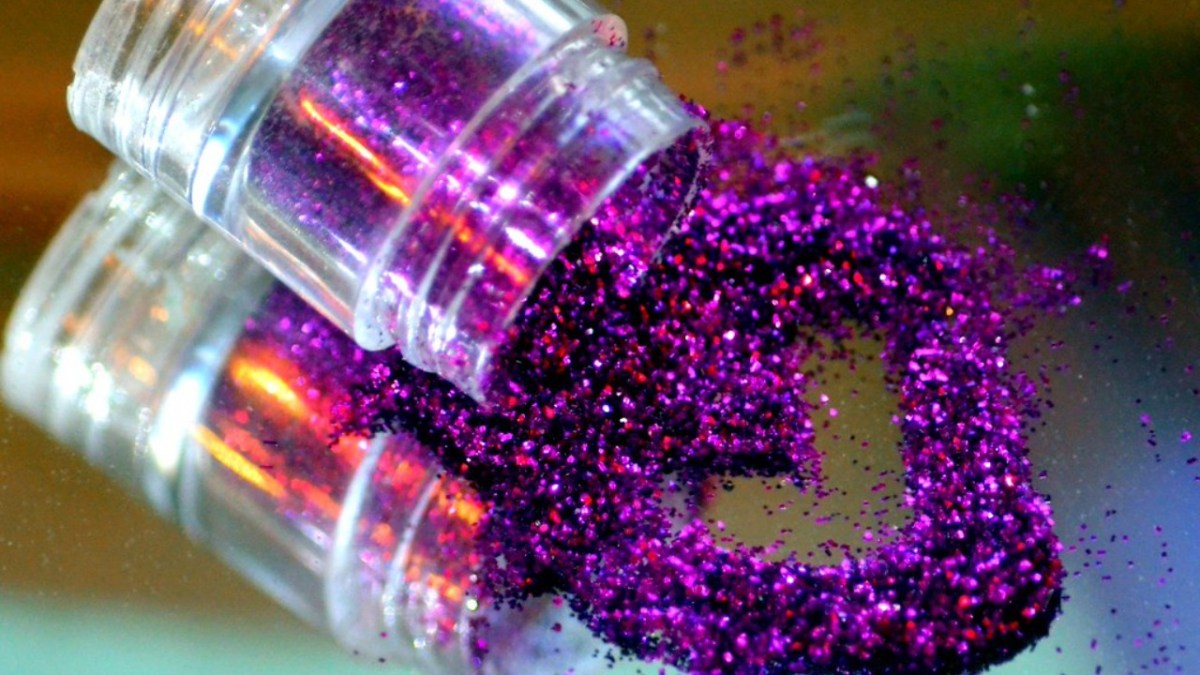

A TikTok video posted by a woman from the account D1 Instigator (@racqmoney) has drawn about 1.8 million views and almost 2,400 comments. On-screen text in the video reads, “you would never guess glitter’s biggest buyer.” She said she remembered an interview from a few years ago with an executive at a glitter company.
She stated that when the executive was asked who the biggest buyer was, the executive refused to answer and said, “You would never guess it.” She said the interviewer asked, “Why won’t you answer?” and that the executive replied, “Oh, they don’t want anyone to know that their product is glitter.” The poster said the way the question was handled still bothered her.
She said, “Like, you can’t possibly know that this sh-t is glitter.” She added that people seemed to move on too quickly and asked, “What the f–k is it?” She called the answer “low-key disturbing” and said people would be outraged if they knew a product contained glitter. She then asked, “B–ch, are we eating glitter? B–ch, am I drinking glitter?” The caption on the post reads, “this sht genuinely still haunts me and i need to know.”
A 2018 New York Times visit left Glitterex’s top customer unnamed
Those lines closely match remarks published in a Dec. 21, 2018, New York Times article by Caity Weaver titled What Is Glitter? Weaver wrote that she visited Glitterex, a glitter maker founded in 1963 and based in a beige business park in New Jersey. She wrote that president and CEO Babu Shetty, who joined the company in that role in 1999, would not let her see or hear glitter being made and that even clients were not allowed to watch production.
Weaver wrote that company manager Lauren Dyer would not name Glitterex’s biggest market. According to the article, Dyer said, “No, I absolutely know that I can’t.” Weaver wrote that Dyer then said, “And you would never guess it. Let’s just leave it at that.”
When asked why she could not say, Dyer said, according to the article, “Because they don’t want anyone to know that it’s glitter.” Weaver wrote that Dyer would not identify the industry even off the record and then steered the conversation toward automotive-grade pigments. The pressure to maintain corporate secrecy can have personal costs, as when a Netflix executive said his openness at a retreat cost him his job.
Shetty told Weaver that most Glitterex glitter is made from polyester film, the same polymer used in water bottles, and that the film is often metalized by evaporating aluminum onto it in a vacuum chamber. He said some glitter is made from other sources, including aluminum. Weaver wrote that staff said silver is always the biggest seller. Shetty said the finest cosmetic glitter is used in products meant for lips, that most glitter particles are hexagonal, and that the average American sees glitter every day.
Weaver wrote that glitter can appear in credit-card designs, N.F.L. helmets, and jet-ski paint jobs. She wrote that researchers and zookeepers have mixed glitter into animal feed to track animals through sparkly waste, that plywood makers have used hidden glitter layers to fight counterfeiting, and that the F.B.I. once asked Glitterex to catalog samples for possible use as crime-scene evidence.
Shetty said the smallest glitter the company made was 50 by 75 microns and that a 10-pound order, priced near $1,000 at the high end, could supply sparkle for about half a million bottles of nail polish. The company offered more than 10,000 varieties. Revlon was the one major client Weaver wrote had agreed to be named.
Weaver wrote that Shetty and Dyer said client confidentiality was required so rivals could not copy exact formulas. Materials scientist Victoria Miller of North Carolina State University told Weaver that the plastic film used in most glitter takes about 1,000 years to biodegrade and that the particles fall under the National Oceanic and Atmospheric Administration’s definition of microplastic.
A later Reddit post on r/EndlessThread by user polyworfism pointed to an episode of the podcast Endless Thread called The Great Glitter Mystery. The poster wrote that the hosts spoke with sources at Glitterex and that the company’s biggest purchaser of glitter is the boat and marine industry.
The post said cruise ships and shipping boats need large amounts of paint, that salty air makes chips and scratches need quick touch-ups, and that those companies mix large amounts of glitter into that paint.
In the TikTok comments, some viewers offered other guesses. One commenter wrote, “I heard that glitter is used in the military to interfere with radar detection.” Another wrote, “If I recall, there was a journalist that figured it out, it was the military.” A third wrote, “i think it’s car paint.”
Other commenters raised different possibilities. One wrote, “I hope it isn’t a SEASONING!” Another wrote, “better question what is glitter made of.” One commenter wrote, “Call me crazy but I believe glitter biggest buyer is the funeral companies our ashes look like glitter.” Another wrote, “It’s bombs. Glitter is precision cut plastic. Bulbs contain precision cut metal.”







Published: Sep 23, 2026 06:45 pm