


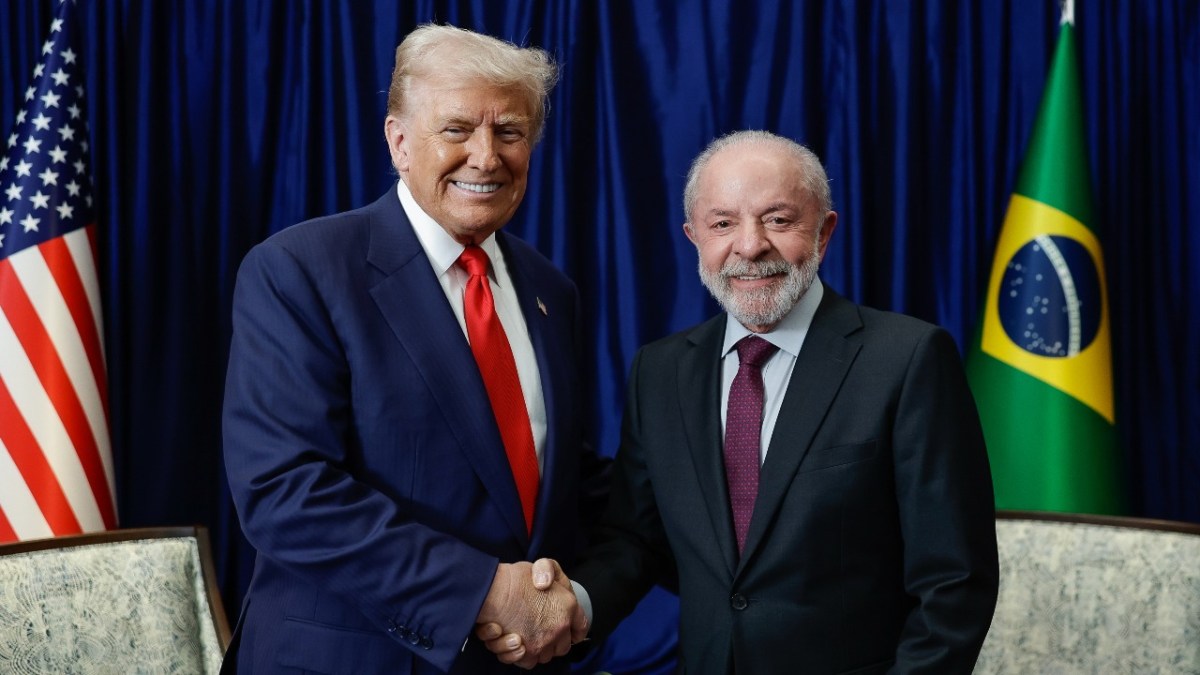

President Luiz Inácio Lula da Silva secured a fourth term after capturing 51.76 percent of the vote in Sunday’s runoff. Senator Flávio Bolsonaro received 48.24 percent with more than 99 percent of ballots counted. In his victory remarks, Lula stated, “This country doesn’t accept being anybody’s colony,” according to Politico.
Crowds on São Paulo’s Paulista Avenue broke into the chant “Olé olé olé olá, Lula” as the totals crossed the 50 percent mark. Lula told supporters, “People went to vote because we convinced them it was important to preserve democracy.” He added, “I never imagined that a person could lie so much. As if there wasn’t a shred of humanity in him.”
The result is the first time since Brazil restored democracy that a candidate has won a runoff after finishing second in the opening round. It also interrupts a stretch of right-leaning victories in the region’s last seven general elections. The race included claims of U.S. involvement, accusations of restricted voter access, and heavy activity on messaging apps and social platforms.
Extension of voting hours follows claims of blocked access
Supreme Court Justice Cristiano Zanin directed officials to keep polls open until 7 p.m. instead of the scheduled 5 p.m. close after Lula’s campaign reported that some mayors aligned with Bolsonaro had limited transportation.
Zanin previously served as Lula’s personal lawyer. Campaign staff said officials in roughly nine states cut or interfered with public transit routes that voters used to reach polling stations. André Janones, the campaign’s social media lead, labeled the reported steps a “coup attempt.”
Voting had not been extended past the official deadline since 1994. Rogério Marinho, who heads the Bolsonaro campaign, called the order “a judicial coup.” The contest matched Lula against the son of former President Jair Bolsonaro, who is under house arrest after authorities determined he directed a coup attempt that included a plot targeting the Workers’ Party leader.
The candidates offered opposing approaches on crime, foreign relations, and the role of democratic institutions. Flávio Bolsonaro pledged to free his father and to pursue the impeachment of Supreme Court Justice Alexandre de Moraes, who oversaw the conviction.
He also said Brazil would join Washington’s Shield of the Americas effort and step up action against crime, supporting the U.S. decision to label two Brazilian gangs as terrorist groups. President Donald Trump did not issue a formal endorsement, though he described Bolsonaro’s first-round edge as a “close, but a very, very big victory.”
The Trump administration last year placed tariffs on Brazil, imposed travel restrictions on certain officials, and sanctioned Moraes over what it termed a political “witch hunt” tied to the earlier case. Lula centered his campaign on national sovereignty. Brazil has also denied visas to two U.S. officials over election interference concerns.
Lula centered his campaign on national sovereignty. In a Saturday opinion piece in the newspaper Folha, he wrote that “truly patriotic Brazilians” had joined large recent gatherings “to defend what is ours: our sovereignty, our rare earth resources, our oil and our Amazon.”
After trailing by two points in the first round, Lula’s side increased social media activity and introduced a debt-relief step for small business owners. Large rallies followed. Engineering student Hector San Martin said at one gathering, “Brazil has a long history of U.S. political interference throughout its entire history. And for the first time in a long time, we have a chance to push back against it.” He added, “Electing Lula is important, not only for the sake of upholding our Constitution and our rights, but also for the sake of our sovereignty.”
Julio García, a 38-year-old finance worker who backed Bolsonaro, said, “The first thing we have to do to make Brazil a first-world country is to extinguish the PT and communism from this country.” He said a closer link with the United States would bring “prosperity.”
Online exchanges ran alongside street events. A WhatsApp group named “Lula’s army,” referencing the student group in the Harry Potter books, drew more than 10 million followers and was suspended twice after the head of the electoral court, an ally of Bolsonaro, said it spread false information.
Other judges reversed both suspensions. Lula’s team also filed a complaint accusing Meta of limiting its posts while boosting Bolsonaro’s. Meta rejected the claim and attributed the issues to “technical incidents.”
Veronyka Gimenes, director of the digital rights group Código Não Binário, said outside Meta’s São Paulo office, “We have no way of proving that Meta is acting on [the White House’s] instructions, but put two and two together.” She added, “Meta has a lot to gain from Flávio Bolsonaro’s election. And so does Trump.” A former senior official close to the Lula campaign compared the contest to “playing chess with pigeons.”
Lula turns 81 on Tuesday and has said this will be his final term. The Liberal Party of the Bolsonaro family holds the largest share of seats in Congress after the first round.
PT lawmaker Reginaldo Lopes said at campaign headquarters, “Congress is an enemy of the people.” Michael Ahn Paarlberg, who advised the 2020 Bernie Sanders campaign on Latin America, said Lula stands as “symbolic as a bulwark against the general trend towards the global shift to the right, certainly in Latin America.” He noted the setting differs from Lula’s earlier years and expected more focus on China, the European Union, and Africa.



Published: Oct 26, 2026 07:30 am