


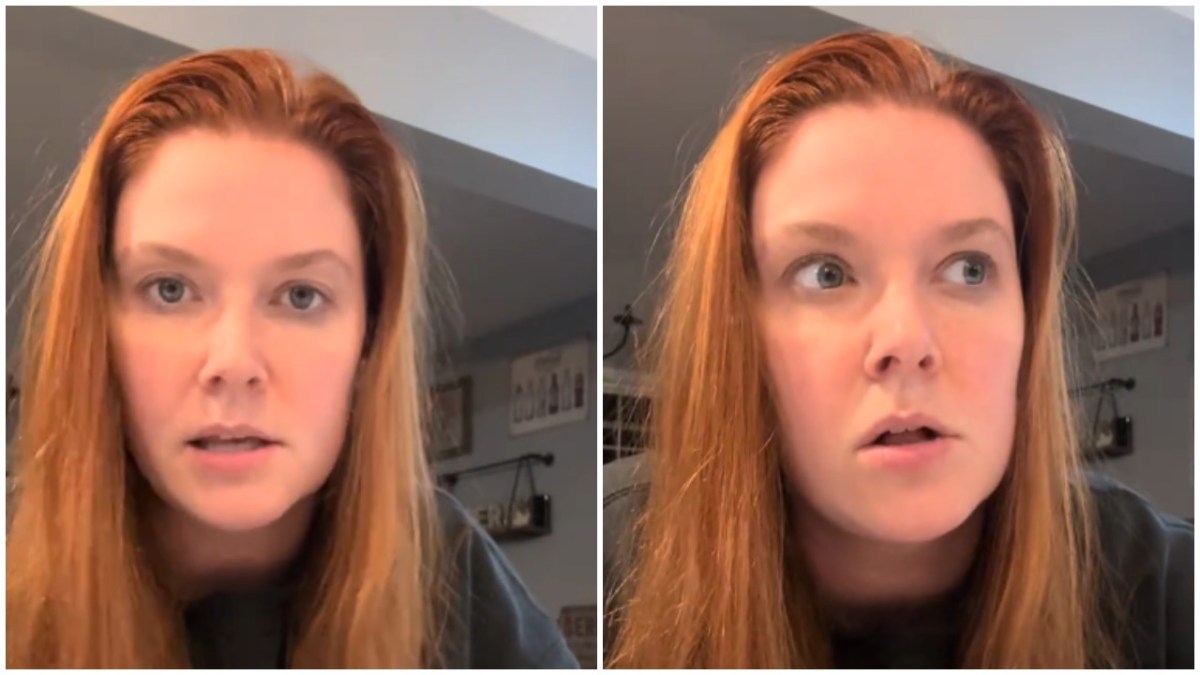

Homeowners in some areas have reported sharp jumps in their property tax bills even as overall tax collections have grown more slowly than home values. One such case appeared in a recent TikTok video posted by Jenna LaBarre, who sat at a marble table in a kitchen-style setting and held up a white bill for the camera. The post carried the caption, “Uncle Sam’s cousin getting a little too greedy over here…”
Jenna said she and her household pay property taxes twice a year. She stated that the bill in her hand covers six months and lists an amount due of $6,266. She told viewers the previous six-month payment had been about $4,900. By her count, that works out to an annual increase of roughly $2,500, or about 25 percent.
She lowered the paper, placed both hands on her head, and called the rise “insane.” Jenna said she is able to pay the bill and intends to do so. She added that other households may struggle with an increase of that size. She argued that property tax bills should face a limit on how much they can rise and stated, “This feels criminal.”
Property tax rules differ widely from state to state
National data indicate that home prices climbed faster than property tax bills in recent years, according to the Lincoln Institute of Land Policy. From the start of 2020 through mid-2025, housing prices rose about 51 percent while property taxes per person increased roughly 26 percent, a pace close to inflation.
Local governments often adjust tax rates downward when assessed values go up, which can keep individual bills from matching the full rise in home prices.
Most states already place some form of limit on property taxes. These rules can cap the tax rate, restrict how much assessed values may grow, or limit the total revenue a local government may collect. The goal is generally to prevent bills from climbing too quickly. The exact rules vary by state and can depend on the type of property or the size of the local government involved.
Even where limits exist, individual homeowners can still see sizable increases. A cap that applies in one state may not cover every property or every type of tax bill in the same way. Different states set different ceilings, allow different exceptions, and give local officials different options to override the limits.
As a result, two homeowners facing similar home-value growth can end up with very different tax outcomes depending on where they live. Disputes over new taxes can also end up in court, as when a Staten Island judge canceled second-home tax notices that the city had mailed out.
Limits can also affect the money available for local services, the report states. Restrictions on property taxes can make it more difficult for cities and towns to fund schools, public safety, and other municipal functions. State-level rules reduce the flexibility local governments have to change budgets based on local needs. The same framework often applies across large and small communities even though their circumstances differ.
Jenna did not identify the state where she lives or say whether any existing limit applied to her bill. Viewers who watched the clip described a range of experiences with their own property taxes. Some viewers said they had seen even larger jumps. One wrote, “Ours went up 152%. Seriously.” Another stated, “$1000/month. Just for taxes. That is insane.” At the same time, other commenters described far lower bills.
One person in Central North Carolina said they live on 18 acres with an old farmhouse and pay $650 a year. They added, “Everyone is going to hate me.” A reply to that comment noted, “That’s very low. Our assessment is 2% property value.”









Published: Nov 23, 2026 05:30 pm