



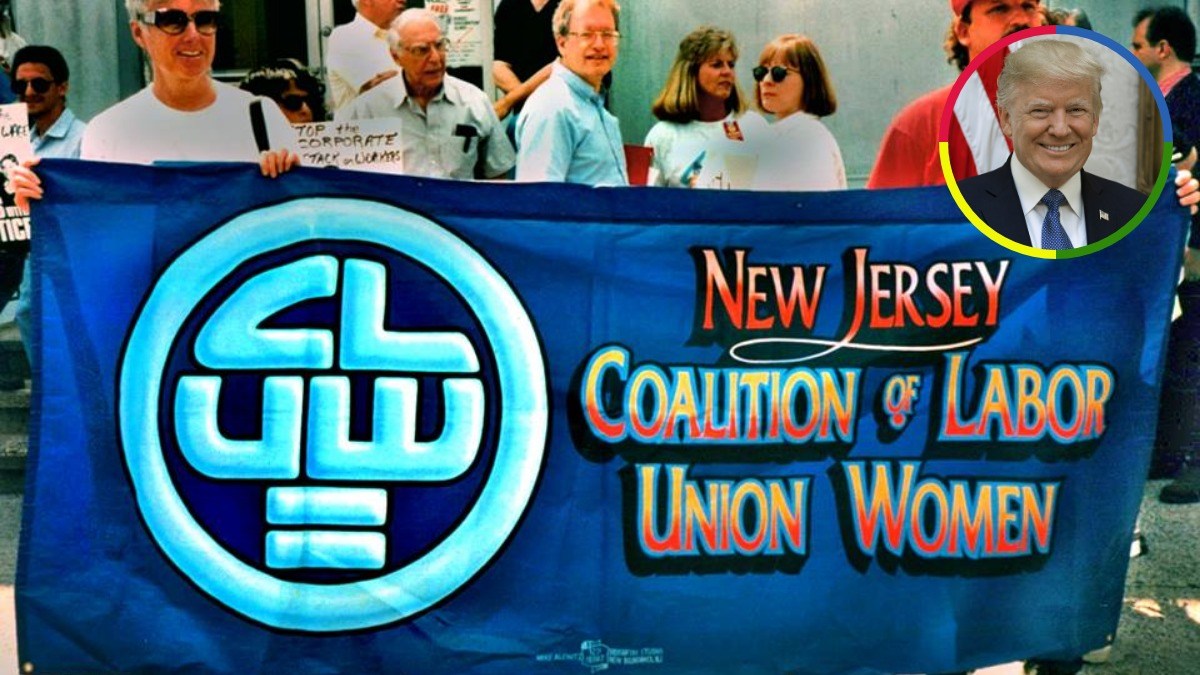

Donald Trump returned to the White House promising to put American workers first. But one year later, labor leaders and worker advocates are pointing to a growing list of policies and actions they say have weakened unions and worker protections.
The Guardian reports that the Occupational Safety and Health Administration cut workplace inspections by 20% compared with the final year of Joe Biden’s presidency. Trump’s administration has also repeatedly delayed a rule limiting silica dust exposure, prompting the United Mine Workers union to call for its immediate enforcement.
The administration has also proposed removing federal minimum-wage and overtime protections for roughly 3 million homecare workers. Meanwhile, Trump has pushed to strip numerous federal employees of collective-bargaining rights, including workers at agencies such as the Transportation Security Administration, Department of Veterans Affairs and Environmental Protection Agency.
The unions aren’t exactly buying Trump’s pitch to workers
The most striking criticism is coming from inside organized labor itself. AFL-CIO President Liz Shuler described the effort against federal collective bargaining as “the largest single act of union-busting in our history,” while Association of Flight Attendants President Sara Nelson called Trump “by far the most anti-union president in our modern history.”
Trump’s administration has also targeted the structure of the National Labor Relations Board. Trump fired Gwynne Wilcox, the board’s pro-union chair, in what was described as the first time a president had fired an NLRB member. The administration has since appointed multiple officials viewed as pro-business.
The White House strongly rejects the criticism. Spokesperson Taylor Rogers said Trump has prioritized American workers through middle-class tax cuts, investments and trade agreements intended to bring manufacturing back to the United States.
Trump has also delivered some policies aimed at workers, including tax changes eliminating taxes on tips and reducing taxes on overtime pay. But labor advocates argue those measures do not offset what they see as a broader rollback of worker protections.









Published: Sep 8, 2026 03:30 pm