



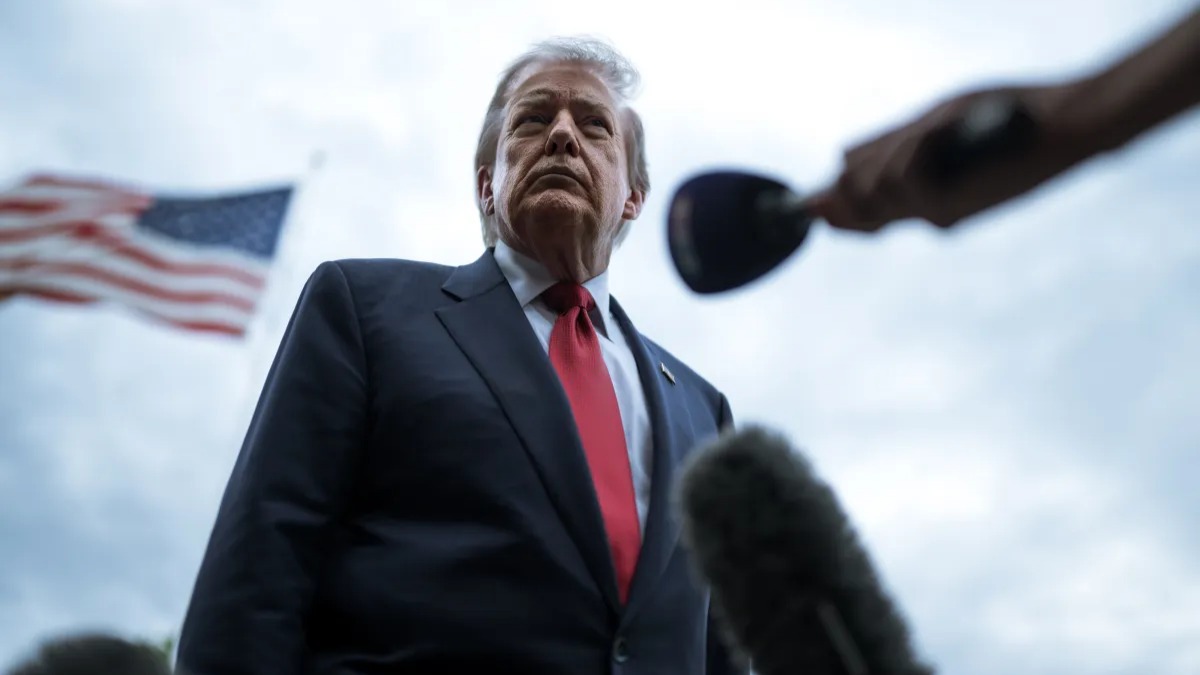

A federal judge has extended an existing block on the Trump administration’s controversial anti-weaponization fund, signaling a major standoff over the transparency of the project, NBC News reported. Judge Leonie Brinkema of the Eastern District of Virginia made the call on Friday, expressing clear frustration that the Department of Justice has failed to confirm under the penalty of perjury that the fund is officially dead. This move keeps the $1.776 billion fund from moving forward while the court demands more concrete answers from the government.
The core of the issue lies in the conflicting messages coming from the top. Earlier this month, acting Attorney General Todd Blanche told House lawmakers that the administration was not moving forward with the fund, period. However, the very next day, President Donald Trump told reporters he did not know if the fund was on hold or eliminated entirely. Judge Brinkema noted that none of these statements from either the president or the acting attorney general have been made under the penalty of perjury.
During the hearing, Judge Brinkema pressed Justice Department attorney Andrew Block on why the department has not formally rescinded the memo that initially established the fund. When Block stated that he did not have the ability to speak directly to the attorney general, the judge pushed back hard. She stated that there is a huge gap in the record if the government cannot provide a definitive answer on the status of the fund. She also emphasized that when the president says he will be upset if something does not happen, that serves as a powerful incentive for his staff.
The fund was originally announced in May as part of a settlement involving the president and his family
The administration planned to set up the $1.776 billion fund to pay individuals who claimed they suffered weaponization and lawfare at the hands of the federal government. This massive amount was based on the projected valuation of future claims. The Justice Department had previously stated the fund was a way to make right the wrongs that were previously done, though critics quickly labeled it a “slush fund.”
There are significant concerns regarding who might benefit from this money. If allowed to proceed, the fund could potentially be used to pay those who were charged and later pardoned by the president for their actions at the U.S. Capitol on January 6, 2021. In an interview last week, the president did not rule out the possibility of paying those who were later charged with assaulting law enforcement.
Judge Brinkema described the idea of diverting $1.7 billion in taxpayer dollars to individuals who committed crimes against law enforcement as problematic. She also shared that her court in Alexandria actually received an application for the fund, which had to be returned to the sender.
The judge has now given the government a one-week deadline to provide a declaration from both Blanche and Treasury Secretary Scott Bessent. This declaration must state under the penalty of perjury that the fund is truly dead. Brinkema is concerned that without such a formal step, the fund could simply return in a different form.
The lawsuit originally stems from a move by the president to drop a $10 billion lawsuit against the IRS regarding leaked tax returns. That case was closed in May after the president and his co-plaintiffs, including Donald Trump Jr. and Eric Trump, moved to dismiss it. Legal experts had previously raised concerns about that case, noting that it was unprecedented for a sitting president to seek damages from an executive agency he controls.
Following Friday’s injunction, those challenging the fund expressed relief. Skye Perryman, president and CEO of Democracy Forward, said that the court’s order ensures taxpayer dollars cannot be distributed through this unlawful scheme while the courts consider the serious constitutional issues at stake. Omar Noureldin, senior vice president for policy and litigation at Common Cause, called the ruling a massive win, stating that they have successfully locked the president’s personal slush fund for now.
Former federal prosecutor Andrew Floyd, who is part of the litigation, added that he is heartened the injunction continues to prevent nearly $1.8 billion in taxpayer money from being used to pay off those who attacked the democracy.
For now, the fund remains blocked while the government faces the clock to provide the legal certainty the court is demanding.






Published: Jun 12, 2026 03:30 pm