



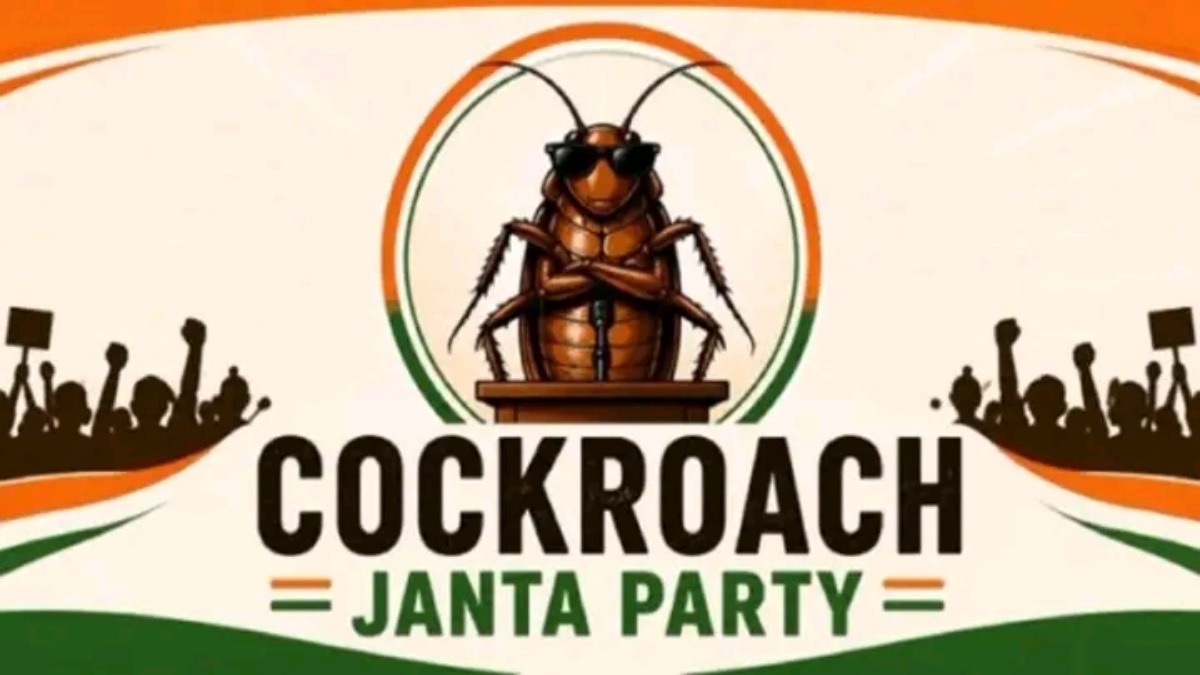

Hundreds of supporters of the Cockroach Janta Party (CJP) gathered near India’s parliament in New Delhi on June 6, 2026, wearing cockroach masks and demanding the resignation of Education Minister Dharmendra Pradhan. As reported by Al Jazeera, the demonstration centred on alleged irregularities in major national examinations that had already sparked widespread student frustration in May.
The party’s name traces back to a court hearing the previous month, during which India’s Chief Justice Surya Kant reportedly likened young people critical of the government to “cockroaches” and “parasites.” Kant later said his remarks were taken out of context, but Abhijeet Dipke, a political communications strategist and Boston University student, had already seized on the insult to launch a parody political party. The CJP name is a direct play on Prime Minister Narendra Modi’s Bharatiya Janata Party, or BJP.
The movement’s growth has been rapid. Within a week of launching a website and social media accounts, CJP’s Instagram page had amassed more than 22.2 million followers by the time of the June 6 protest, operating under the slogan: “A political front for the youth, by the youth, for the youth.” Its rise echoes similar social media-driven youth movements that have gained traction in Sri Lanka, Bangladesh, and Nepal.
India’s youth are running out of patience with the political establishment
During the march, demonstrators chanted slogans including: “Cockroaches are coming, Dharmendra Pradhan is going!” Organisers urged participants to remain peaceful, avoid confrontations with police, and bring India’s national flag and a book as symbols of the right to education and equal opportunity. Indian police tightened security at the Jantar Mantar protest site and the local airport, installing steel barricades at key locations ahead of the event.
The frustration driving the march is tied to broader economic pressures facing young Indians. While youth make up more than a quarter of the country’s population, data from India’s Periodic Labour Force Survey Annual Report for 2025 shows the youth unemployment rate for those aged 15 to 29 declined to 9.9 percent in 2025 from 10.3 percent in 2024, though the urban youth unemployment rate remained higher at 13.6 percent. About 25 percent of people in the 15 to 29 age group were estimated to be not in employment, education, or training.
The same report shows self-employment still accounts for a significant share of work, declining from 58.2 percent in 2023 to 56.2 percent in 2025, while regular wage or salaried employment rose modestly to 23.6 percent.
Amid Senate Republicans clashing over a stalled US political fund, youth disillusionment with political institutions has emerged as a theme beyond India’s borders as well. Agriculture remains India’s largest employer, though its share of the workforce declined from 44.8 percent in 2024 to 43.0 percent in 2025.
Some supporters of Modi’s BJP have dismissed the CJP as a social media gimmick, arguing that online follower counts do not necessarily translate into sustained street mobilisation. For the hundreds who marched on June 6, however, the protest represented a push for accountability in the education system, amid broader political unrest that has seen displacement orders renewed in Lebanon following continued ceasefire violations. Organisers have maintained that the CJP is a legitimate political front, even if it originated as a response to a single remark from a judge.








Published: Jun 6, 2026 06:00 am