



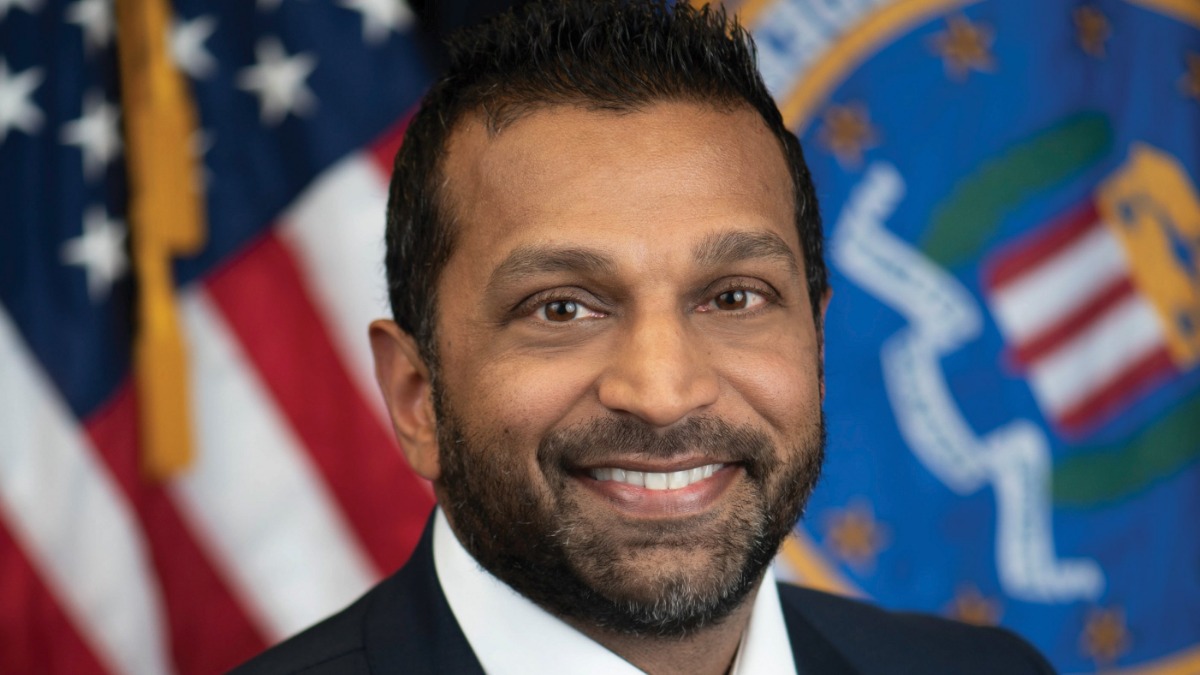

FBI Director Kash Patel filed a $250 million defamation lawsuit against The Atlantic in federal court in Washington, D.C. on Monday, April 20, 2026. The 19-page complaint challenges a report about his job performance and personal conduct. But the filing itself quickly became a story for the wrong reasons.
According to Newsweek, the complaint contains several basic spelling errors, including “feable” instead of “feeble,” “politices” instead of “policies,” and “dicussed” instead of “discussed.” This is a notable problem for a legal case that is built around accusing a major publication of being careless with facts.
Jesse R. Binnall, a partner at the Binnall Law Group representing Patel, pushed back on the criticism, saying, “If three typos in a 19-page complaint filed just days after The Atlantic’s bogus story is the best a left-wing publication can muster, we feel pretty great about our case.”
Patel’s public denial directly contradicts what his own lawsuit says on paper
The lawsuit alleges that The Atlantic used anonymous sources to publish false information about Patel’s alcohol use and job performance. Patel had previously warned the publication, “Print it, all false, I’ll see you in court – bring your checkbook.”
A spokesperson for The Atlantic responded by saying, “We stand by our reporting on Kash Patel, and we will vigorously defend The Atlantic and our journalists against this meritless lawsuit.” Things got more complicated at a Department of Justice press briefing where Patel appeared alongside acting U.S. Attorney General Todd Blanche.
Journalists asked about specific claims in the lawsuit, particularly a report that Patel had a “freak-out” during a technical issue with an internal computer system, during which he believed he had been fired. The Atlantic’s report had already put serious pressure on Patel’s standing at the FBI.
Patel’s own lawsuit includes the line: “Director Patel had a routine technical problem logging into a government system, which was quickly fixed.” Despite this being written in his own court filing, Patel appeared to deny the incident when questioned by NBC News correspondent Ryan Reilly, asking the room, “Let’s have a survey. How many of you people believe that’s true?”
When Reilly pointed out that the computer glitch was mentioned in Patel’s own lawsuit, Patel did not back down. He told the reporter, “The simple answer to your question is, ‘You are lying.’ I’ve answered your question, it’s simply as follows… I was never locked out of my systems.” Patel then stepped away from the microphone, leaving Blanche to handle the rest of the questions.
Blanche, who admitted he had not read the report he was defending Patel against, stepped in and told Reilly he was being “extraordinarily rude.” The exchange made clear that there is a disconnect between what Patel’s legal team filed in court and what he is saying publicly. Critics have also pointed out that Patel’s alleged drinking habits pose a national security risk, a concern that figures like AOC have raised publicly.
Adding to Patel’s legal troubles, a federal judge in Houston dismissed a separate defamation lawsuit he had filed against former FBI official Frank Figliuzzi on the same day, April 21, 2026. The judge ruled that Figliuzzi’s comments about Patel appearing at nightclubs were “rhetorical hyperbole that cannot constitute defamation.” With the Atlantic case now in its early stages and a loss already on the books in a different court, Patel faces a difficult road ahead.






Published: Apr 22, 2026 09:30 am