



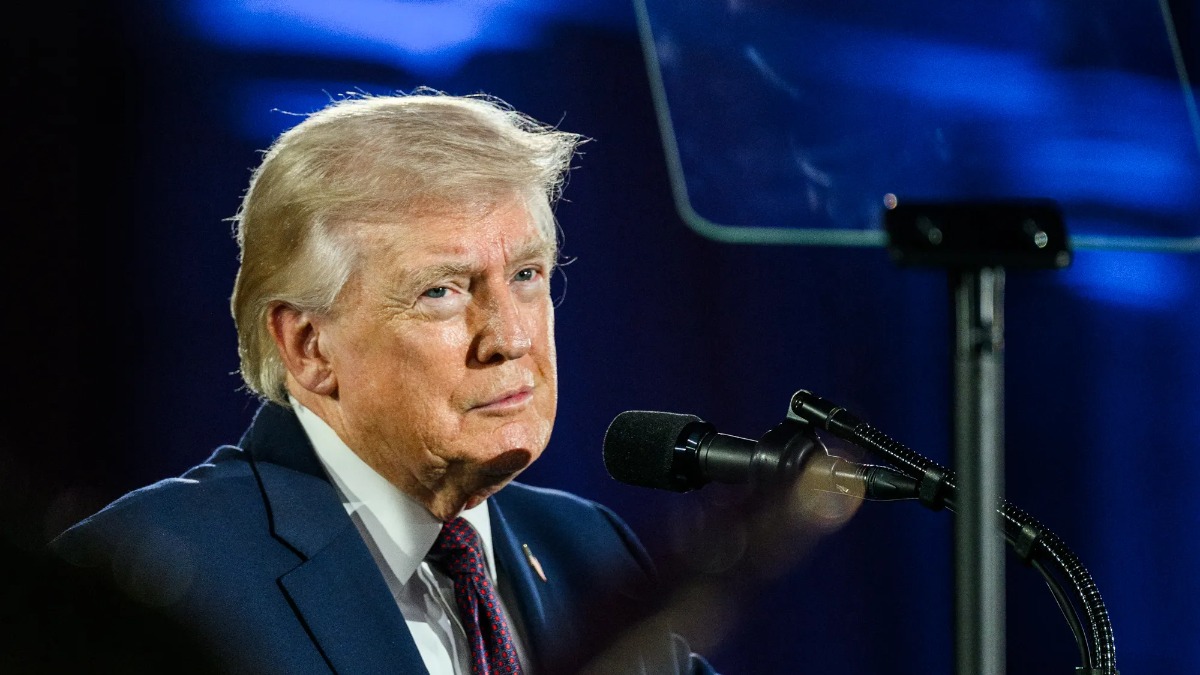

President Donald Trump has paused his initiative known as Project Freedom, just 36 hours after the operation began. The sudden stop came after the administration faced strong pushback from key Gulf allies, particularly Saudi Arabia. The operation was designed to provide military protection for ships passing through the volatile Strait of Hormuz.
The chaos began when Trump announced the project on social media, catching several regional partners completely off guard. Saudi Arabia was reportedly frustrated by the lack of prior coordination and took drastic action in response. According to two U.S. officials, the Kingdom told the United States that it would no longer allow the U.S. military to use Prince Sultan Airbase southeast of Riyadh, or permit aircraft to use Saudi airspace to support the mission.
According to NBC News, this was a major problem for the Pentagon. Military aircraft, including fighter jets and refueling tankers, depend heavily on access to bases and airspace agreements to maintain a presence in the region. Without the ability to fly over or operate out of Saudi territory, the U.S. military could not provide the defensive coverage needed for merchant ships passing through the strait.
The breakdown in coordination goes deeper than just the Saudi Arabia dispute
Even a phone call between Trump and Saudi Crown Prince Mohammed bin Salman failed to resolve the tension, leaving the president with little choice but to pause the operation. The lack of communication extended beyond Saudi Arabia.
Trump did not speak with Qatar’s leadership until after the operation was already underway, and a Middle Eastern diplomat noted that the U.S. failed to coordinate with Oman until after the public announcement was made. While a White House official claimed that regional allies were notified in advance, the reality on the ground suggests a far more disjointed process.
Project Freedom was intended to break the blockade Iran has effectively maintained in the Strait of Hormuz. U.S. Central Command confirmed that two U.S.-flagged ships had successfully passed through the strait under the program’s protection. However, with Iranian forces continuing to threaten ships and launching attacks on targets in the UAE, the effectiveness of the project was already being questioned by experts, reports BBC.
Reports suggest that the U.S. and Iran were nearing a peace agreement even as the military operation was still active. The focus has now shifted toward the possibility of a diplomatic deal. Trump stated that the operation is paused for a short period to see if a peace agreement with Iran can be finalized and signed.
Speaking to reporters from the Oval Office on Wednesday, he said there had been “very good talks over the last 24 hours.” He also warned that if a deal isn’t reached, the U.S. might have to “go back to bombing the hell out of them.” The White House is reportedly looking at a potential one-page memorandum that could end the conflict, lead to the unblocking of the Strait of Hormuz, and address Iran’s nuclear ambitions.
Trump’s decision to halt Project Freedom over near-complete Iran talks has drawn significant attention from analysts and foreign policy watchers. However, skepticism remains high, as Iranian parliamentarian Ebrahim Rezaei has already dismissed the reported proposal as a “wish list,” and experts have pointed out that previous attempts at negotiations have collapsed at the last minute.
For now, the ships are waiting, the military remains on standby, and the world is watching to see if this latest diplomatic push leads to a signed agreement. If the deal falls through, Trump has made it clear that the intensity of the military campaign could increase significantly.









Published: May 7, 2026 01:15 pm