



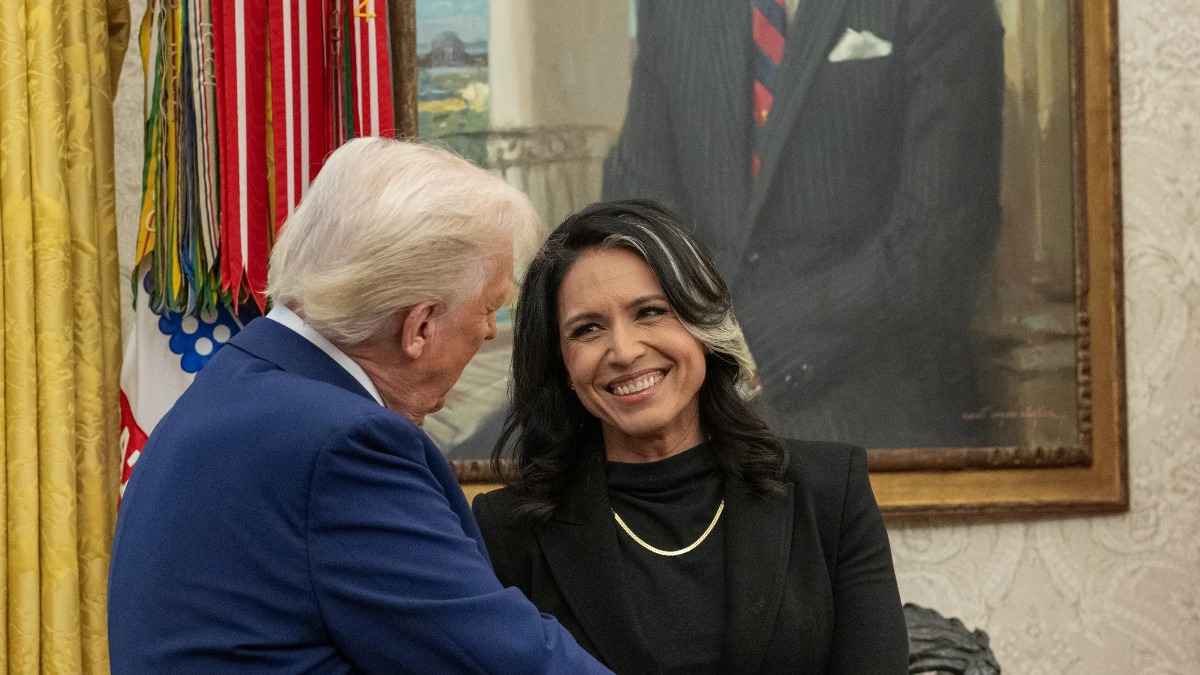

According to a recent Washington Post report, leaked memos and internal documents suggest that for years, Tulsi Gabbard’s political career was guided by a secretive religious leader, a claim her team is firmly denying. The files, which include hundreds of pages of directions and policy advice, reportedly show that Gabbard’s actions in Congress were often directed by Chris Butler, the founder of the Science of Identity Foundation.
The discovery began after Rebecca Saltzburg, a former congressional staffer and member of Butler’s group, shared a large collection of emails and documents. Saltzburg said these files came from a domain called Nine Isles, which she identified as an email hub for Butler’s office.
According to her, Butler does not use computers himself. Instead, his secretaries would write down his spoken instructions in memos before sending them by email to a select group of followers, which included Gabbard’s parents and her close aides.
Memos reportedly criticized Gabbard’s tone and performance
As described in the Washington Post report, these memos often sound like orders, frequently criticizing Gabbard’s performance or tone. In one memo from 2015, an unnamed speaker reportedly criticized Gabbard’s response to a State of the Union address, saying, “In the first place, nobody gives a s— what you think about his State of the Union speech, unless you’re going to say something of interest.”
Other documents said to have described her as “chickenshit” or “mealymouthed” when the speaker felt she wasn’t following a specific plan. The similarities between these memos and Gabbard’s actual political record are hard to ignore.
In 2014, a memo allegedly told her to introduce legislation about the Islamic State, instructing her to “get it started in the morning” and “don’t dick around.” Records show she released a statement the next day and introduced a bill shortly after.
In another case, she seems to have used talking points from a memo almost word-for-word during a 2015 CNN appearance, even repeating a specific line about not saying “boohoo” about a debate invitation.
Butler’s reach apparently extended into social media as well. Documents reveal a coordinated effort by Butler’s followers to use fake social media profiles to defend and support Gabbard’s image online. These “pseudonym profiles” were often managed by followers who were given instructions on how to hide their locations and keep up the appearance of real, independent support.
Gabbard’s team has repeatedly pushed back against these reports. When asked about Butler’s influence in 2019, she firmly denied it, saying, “No, no, not at all.” More recently, her staff called the reporting “a blatant example of anti-Hindu bigotry” and described the documents as part of a failed extortion attempt by Saltzburg.
Sunil Khemaney, a longtime adviser to Gabbard, also said that he, not Butler, was behind most of the memos, though he did not give specific details when asked to separate his advice from Butler’s. This is not the only controversy surrounding Gabbard, who in her current role as Director of National Intelligence has condemned protesters who disrupted a church service, drawing both support and criticism for her response.
She has also faced separate, unrelated allegations regarding her handling of classified intelligence material, which her office has likewise denied. Despite the denials tied to the leaked memos, the large amount of material, over 25,000 pages, points to a highly organized effort to guide Gabbard’s career.







Published: Jun 22, 2026 09:15 am