



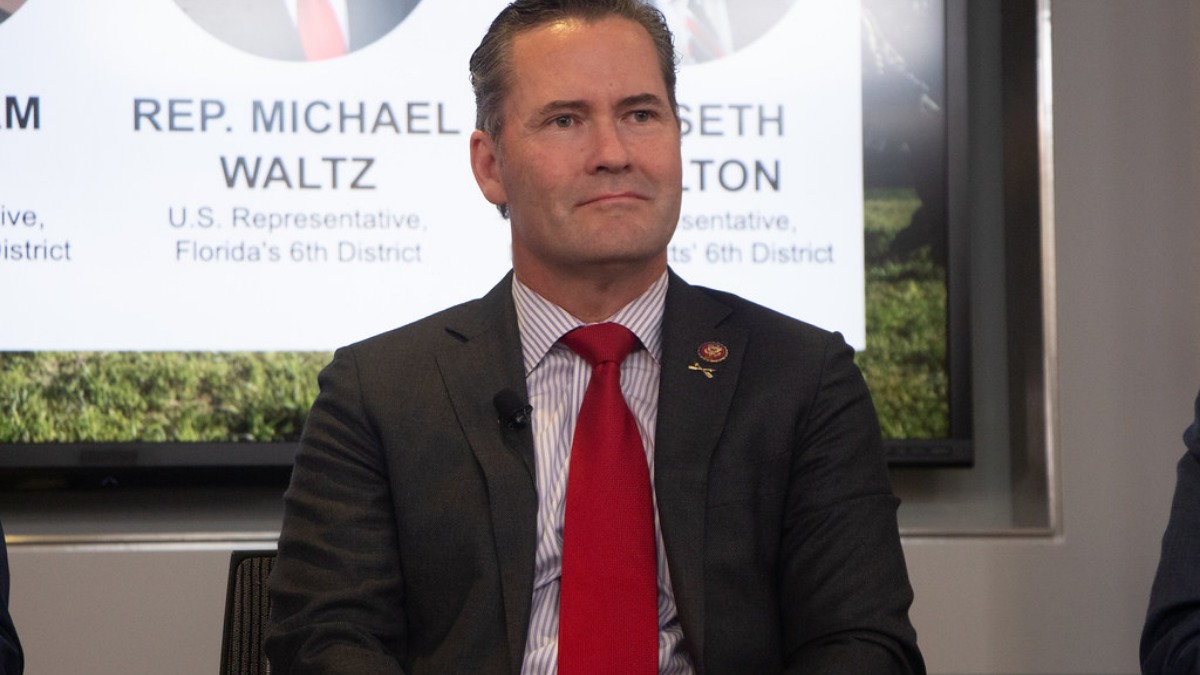

U.N. Ambassador Mike Waltz said the civil nuclear agreement signed between the United States and Saudi Arabia does not include any transfer of uranium enrichment technology, in an interview on CBS’s Face the Nation. Waltz said all enrichment work tied to the deal would be carried out in the United States, not in Saudi Arabia.
The ambassador’s remarks came after what host Margaret Brennan described as significant public pushback this week following news of the commercial agreement, which would allow the U.S. to help build a civilian nuclear power program on Saudi soil. Waltz said he believed the criticism stemmed from a misunderstanding of what the deal actually contains
Brennan also pressed Waltz on reports that President Trump added a new condition to the agreement a day after it was signed, tying it to Saudi Arabia joining the Abraham Accords, a term she said was not part of the original signed agreement. Waltz defended the addition and said it should not surprise anyone, given the president’s history of raising the Abraham Accords in connection with Saudi Arabia.
Enrichment clause allows for future discussion, ambassador says
“Doesn’t changing the terms of a deal after it was signed undermine America’s negotiating position with all countries? Who’s going to trust us if we say, uh, tomorrow add in a new term after we signed the deal? Do we want to help other countries enrich?” Brennan asked.
“That is, we do that and very select countries do that. And there is an entire, there’s a Non-Proliferation Treaty, there’s an entire international, the IAEA, the UN agency that sends these inspectors out to ensure that countries cannot do what Iran has been doing, which is enriching way past. Yeah, way past what you need for civil nuclear power that can only be used for weapons,” Waltz answered.
Waltz compared the agreement to the existing civil nuclear arrangement the U.S. has with the United Arab Emirates, known as the 123 agreement, which has been in place for more than a decade. He said the Saudi deal similarly involves no enrichment technology being handed over, calling such technology “some of our most sensitive technology.”
The goal of the agreement, Waltz said, is to ensure Gulf partners buy nuclear technology from the United States rather than from Russia or China. “I want them buying from us, not the Chinese or Russians,” Waltz said during the interview.
Brennan noted that the deal was a version of an agreement the Biden administration had also previously worked on but did not finalize, and includes a provision for a study into how much uranium Saudi Arabia has and whether enrichment on Saudi soil would be commercially viable.
Waltz confirmed there is a clause in the agreement addressing this possibility. “There’s a clause in the deal that says it can be discussed if mutually agreed by both sides sometime in the future,” he said.
Brennan described this as a two-year study process that could potentially lead to enrichment being allowed later. Waltz characterized it differently, calling it “some open-ended discussion.” He maintained that under the deal as it currently stands, Saudi Arabia is not being given any enrichment capability of its own.
“There is no enrichment capability being provided to the Saudis for them to do on their own,” Waltz said, adding that the agreement does provide for civil nuclear power, which he said is important because Saudi Arabia wants to diversify its energy sources.
Brennan pointed out that this potential future pathway to enrichment is a key difference between the Saudi deal and the UAE’s arrangement, since the Emirates buy their nuclear fuel from outside sources rather than pursuing enrichment domestically. Waltz responded that the current agreement is structured so Saudi Arabia would buy nuclear fuel from the United States.
“And that’s what this deal is, to buy the nuclear fuel from us,” he said. The exchange touched on broader regional questions, including Iran’s civil nuclear program and disputes over transparency, which some lawmakers have separately raised concerns about this year.
When Brennan suggested that the enrichment pathway included in the deal had unsettled some observers this week, Waltz did not directly dispute that but instead defended the broader agreement. He also addressed comparisons that had been drawn between the Saudi deal and Iran’s nuclear program, calling such comparisons “ridiculous.”
Waltz said Iran has buried nuclear facilities under what he described as hundreds of feet of granite and has expelled international inspectors. He described Iran as having been the largest state sponsor of terrorism for decades and said this makes Iran’s situation completely different from that of Saudi Arabia.
Waltz said the U.S. is working to stop Iran’s pursuit of nuclear weapons because of what he characterized as violations by Tehran, while he said the civil nuclear power arrangement with Saudi Arabia, backed by the United States, should be viewed favorably.
The comments come amid a separate, ongoing negotiation process over Iran’s own nuclear future, one where criticism of how any new agreement compares to past deals has also surfaced in recent months.





Published: Jul 27, 2026 10:45 am