



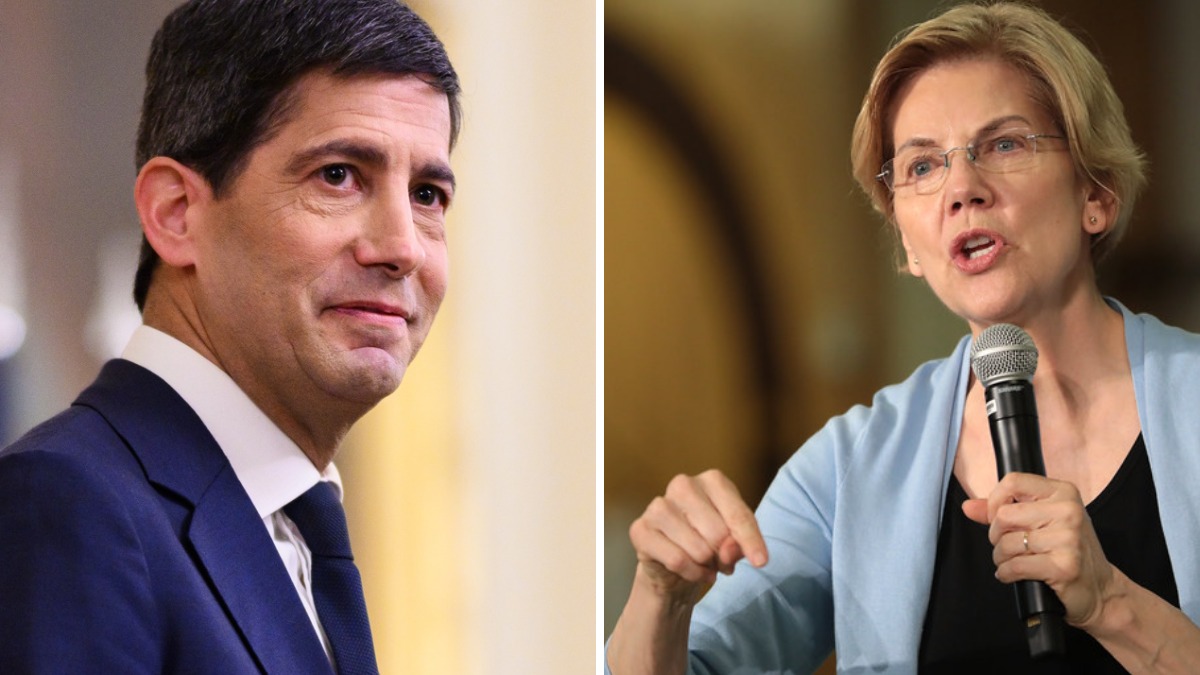

Senator Elizabeth Warren is demanding answers from Federal Reserve Chair Kevin Warsh regarding an investigation into a private dinner attended by Vice Chair of Supervision Michelle Bowman, The Hill reported. The event, hosted by Bank of America, took place on June 17, just hours after the Federal Reserve concluded its June monetary policy meeting.
This situation is particularly sensitive because Fed officials are subject to a strict two-week blackout period surrounding Federal Open Market Committee meetings, during which they are prohibited from discussing monetary policy.
During a Senate Banking Committee hearing on Wednesday, Warren pressed Warsh on his handling of the situation. She pointed out that reports suggest Bowman spoke about both monetary policy and regulatory policy while at the closed-door dinner. Warren told Warsh, “At this closed-door dinner, she reportedly spoke about both monetary policy topics and regulatory policy. Now, I’ve called on the inspector general to review her conduct, but you’re the guy in charge. As chair, you set the tone on culture.”
Warren challenged Warsh over allegations of corruption and ethical lapses
Warsh, who was confirmed by the Senate less than two months ago with a 51-45 vote, repeatedly refused to confirm whether he had spoken to Bowman about the incident. He maintained that he would prefer to leave the matter to the Fed inspector general rather than interfere with an ongoing process. He told the committee, “Out of an enormous respect for him, his investigation, what he chooses to do with it, I’m going to leave it to him to do without trying to micromanage that.”
Warren shot back, “Did you care enough to ask? How can you be chair and not ask your own vice chair whether or not she violated the blackout period, violated the law?” Warsh defended his position by stating that he believed it would be inappropriate to prejudge facts that are currently being gathered by an independent actor. Warren quickly countered this by asking, “How can you prejudge them if you don’t even ask?”
For her part, Bowman has denied the allegations regarding her conduct at the dinner. In a statement, she said, “I did not share my views on monetary policy.” She further asserted, “I have consistently complied with all applicable FOMC and ethics rules and remain firmly committed to doing so.”
This controversy arrives at a time when the Federal Reserve is already navigating a difficult economic landscape. In a unanimous decision, the Federal Open Market Committee recently maintained its baseline interest rate at a range of 3.5 percent to 3.75 percent. This was a notable change from the May meeting, where the panel was divided and four members dissented.
Warsh faces a very complicated task as he tries to balance the push for rate cuts from President Trump with the reality of rising inflation. Inflation reached a three-year high in May, largely driven by the war with Iran which caused energy costs and other goods to spike. According to the consumer price index, prices rose 4.2 percent year over year. This is a significant jump from February, when the annual inflation rate was sitting at 2.4 percent.
There is some hope on the horizon regarding the conflict. The United States and Iran are expected to sign a memorandum of understanding to end the war on Friday. This agreement is expected to reopen the Strait of Hormuz, which has been a major bottleneck for shipping since the conflict began in February. The price of oil, which had climbed above $100 per barrel, dropped to about $77 per barrel on Wednesday. While the average U.S. gas price dipped slightly to $4.03 per gallon, experts are warning that consumers might see elevated prices for several months to come.
The economic outlook remains murky. The May jobs report came in hotter than expected, which has made the prospect of interest rate cuts this year look increasingly dim. Many analysts are now suggesting that rate hikes are a real possibility. In economic projections released on Wednesday, eight members of the FOMC indicated they expect the central bank to hold rates steady for the remainder of the year. Nine members actually anticipated rate hikes, while only one member suggested a single quarter-point cut might be appropriate.
Warsh’s appearance at the Senate Banking Committee was his first mandatory twice-yearly appearance before the panel, following a hearing with the House Financial Services Committee on Tuesday.

Published: Jul 15, 2026 05:00 pm