



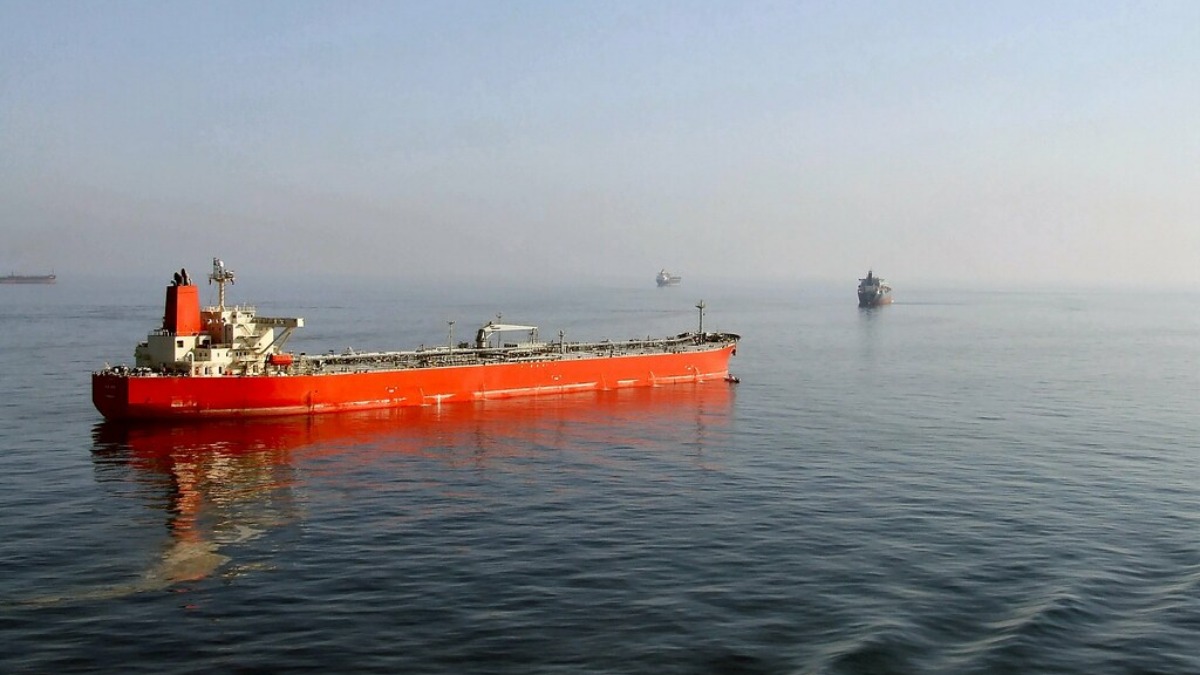

The United States is currently maintaining that the Strait of Hormuz remains open for transit, directly contradicting claims from Iran that the vital waterway has been closed following a massive escalation in regional hostilities, the BBC reports.
This standoff comes after a week of intense military activity, which saw the United States launch strikes against more than 140 targets across Iran on Saturday. These operations were initiated by the United States as a direct response to Iranian forces attacking a commercial ship that was allegedly navigating an unapproved route through the strait.
The situation turned significantly more volatile on Sunday, when Iran’s Islamic Revolutionary Guard Corps launched wide-ranging attacks targeting United States bases and regional allies. These strikes represent a major expansion of the current conflict. Iran reported that it successfully hit a United States base in Jordan, while authorities in the United Arab Emirates, Qatar, Kuwait, Oman, and Bahrain all confirmed that they had to respond to incoming missiles and drones launched from Iran.
This standoff was in the making throughout the past week
The BBC has reached out to United States Central Command to seek comment regarding the reported attack in Jordan. It is notable that Qatar, which has acted as a mediator in ceasefire negotiations, had not experienced an attack since April, and the United Arab Emirates had remained untouched since May.
By Sunday afternoon, the situation became even more complex when Iran’s IRNA news agency reported that missiles were launched by the “enemy” toward Qeshm Island. This location is strategically vital to the Gulf region and serves as home to a significant IRGC base. The rapid succession of these events has placed the interim ceasefire agreement, which was signed just last month, in severe jeopardy. That agreement was originally intended to reopen the Strait of Hormuz and provide a path toward a permanent end to the ongoing conflict.
Earlier this week, President Donald Trump declared that the Iranian attacks signaled the end of the ceasefire agreement. Conversely, Iran’s Foreign Minister Abbas Araghchi accused the United States of violating the terms of the deal. Despite these conflicting claims, President Trump noted that discussions would continue and that various mediators are still working to revive the diplomatic process.
There have been reports from United States media outlets suggesting that Iran communicated to American officials that the initial attacks on tankers earlier in the week were a mistake, attempting to attribute the actions to a rogue internal group.
The spark for this latest round of violence occurred when the IRGC claimed it fired a naval cruise missile at a vessel for using an unauthorized route. United States Central Command stated that the IRGC “blatantly attacked” a Cyprus-flagged vessel, which resulted in the ship being “unable to continue its journey” due to significant damage to its engine room.
The United Kingdom’s Maritime Trade Operations reported that it was informed by military authorities that the crew was forced to abandon the ship and was currently in a lifeboat. Centcom confirmed that one crew member from the MV GFS Galaxy is currently missing.
In a post on X, Centcom stated, “Iran was provided yet another opportunity to demonstrate adherence to the Memorandum of Understanding after being held accountable for earlier attacks on commercial vessels but has again failed.” The United States military confirmed that its strikes targeted 140 Iranian military sites, which included coastal surveillance locations, communication networks, and missile and drone launch facilities. United States Secretary of Defense Pete Hegseth shared the statement on X and wrote, “Iran made a poor choice. Now they pay.”
The IRGC acknowledged the strikes, stating that the United States had targeted “a number of coastal bases and telecommunications towers on the southern coast.” In what Iran described as the “first phase” of its retaliation, the country claimed it destroyed the command and control center and MQ9 drone hangars at the Prince Hassan Air Base in Jordan.
Despite the intensity of these exchanges, United States Central Command reiterated on Sunday that the Strait of Hormuz remains open and warned that the United States military is positioned to ensure the waterway stays free-flowing.
The rhetoric from Iranian officials remains equally firm. Mohammad Bagher Ghalibaf, the speaker of the Iranian parliament and the country’s chief negotiator with the United States, wrote on X that the “era of one-sided deals is OVER.” He added, “We told you: keep your word or pay the price. Reality is knocking.”






Published: Jul 12, 2026 04:00 pm