



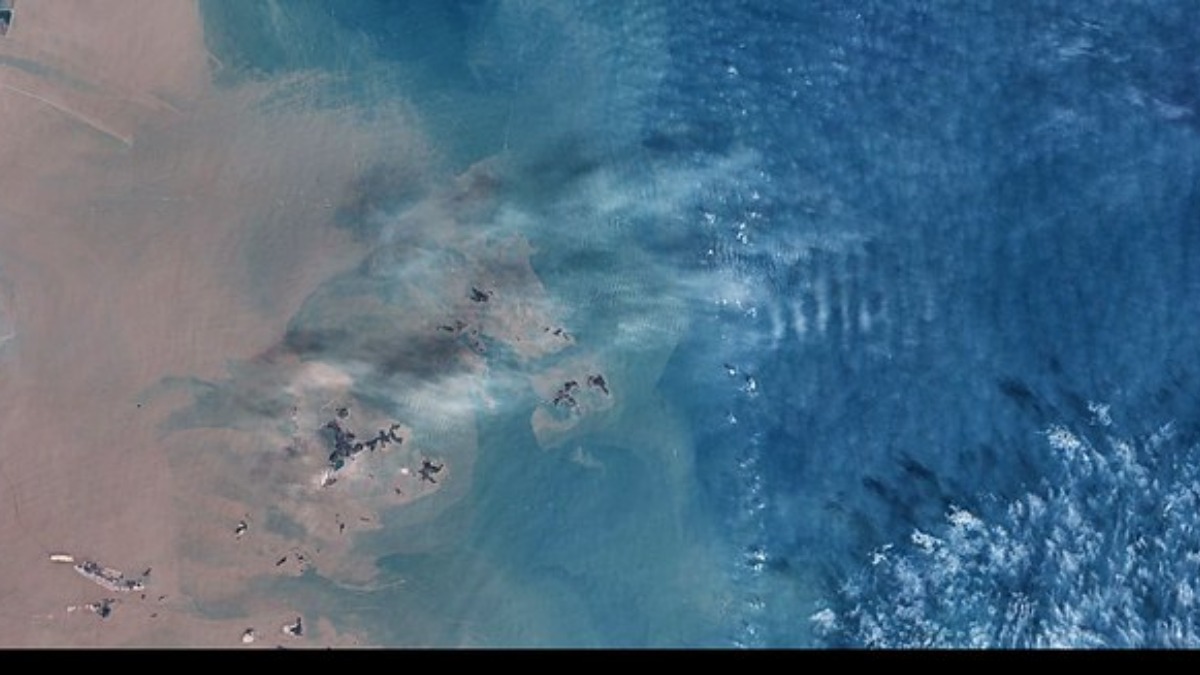

The Department of War released a major trove of declassified UAP files on May 8, 2026, following a directive from President Donald Trump. Among the most striking entries is a 2022 report from the East China Sea describing a football-sized object that entered the water at extremely high speed with no splash and no change in velocity as it transitioned from air to sea. The files are publicly accessible at war.gov/UFO.
As highlighted by Barrons, a separate 2023 report in the same release documents an aircraft making multiple 90-degree turns at an estimated 80 mph, a maneuver that would be physically catastrophic for any known airframe. Another 2023 incident involved a pilot whose weapons systems were completely paralyzed as they approached a small UAP, suggesting some form of advanced electronic interference. The FBI also contributed reports of objects invisible to the naked eye that appeared clearly on radar.
The release is part of the Presidential Unsealing and Reporting System for UAP Encounters, known as PURSUE. As detailed by the Department of War, the effort involves the Department of War and the Office of the Director of National Intelligence working to review and declassify millions of records. Secretary of War Pete Hegseth stated in a release that these files have “long fueled justified speculation” and that it is time the American people see them.
Not all observers are convinced the release tells the full story
The Pentagon has been clear that the materials on the site are unresolved cases, meaning the government cannot make a definitive determination on the observed phenomena due to insufficient data. The Department of War is encouraging private-sector analysis to help make sense of the information. Many of the images in the archive are black dots or blurry shapes, with limited technical data attached. Amid the broader political reaction to the release, some Republicans called the UFO file dump propaganda designed to distract from ongoing foreign policy concerns.
On the financial side, the iShares Aerospace and Defense ETF has seen an 8% decline since the start of the conflict in Iran, a sign that investors are focused more on geopolitics and government spending trends than on the UAP release itself. Lockheed Martin reported a 1% year-over-year decrease in aeronautics revenue for the first quarter of 2026, attributing the dip largely to lower sales of approximately $325 million on classified programs. Classified programs at Lockheed are expected to draw between $500 million and $700 million throughout the year. The scrutiny on defense sector investments is not limited to market performance; Hegseth’s broker faced questions over defense contractor investments made ahead of the Iran conflict.
Additional documents are set to be added to war.gov/UFO on a rolling basis, with tranches expected every few weeks as the government continues its review of tens of millions of records.









Published: May 10, 2026 05:30 am