



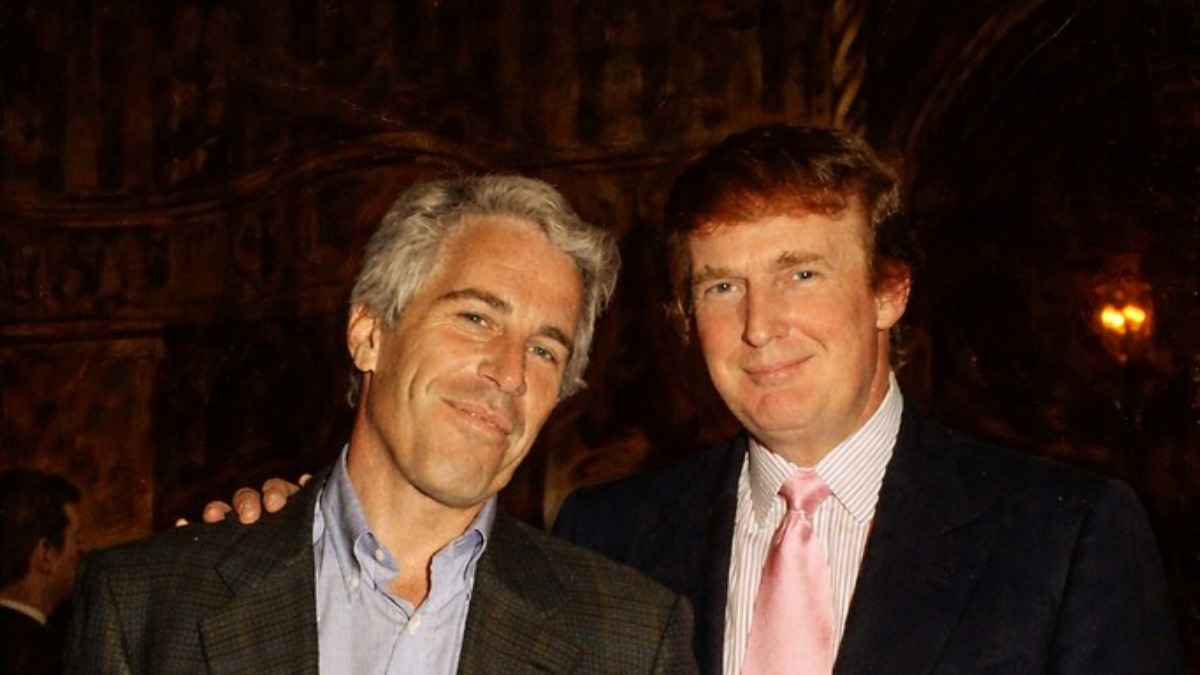

A federal judge has ordered the Trump Justice Department to submit unredacted versions of several Jeffrey Epstein-related documents for private court review. According to MeidasTouch News, U.S. District Judge Emmet Sullivan directed Acting Attorney General Todd Blanche to provide the records along with evidence supporting the department’s claims about why the material was redacted.
The order comes as part of a lawsuit filed by MeidasTouch co-founder Katie Phang, who has challenged the Trump administration’s compliance with the Epstein Files Transparency Act. That law, passed by Congress last year, reportedly requires the government to release the majority of its Epstein-related records.
According to the order, Sullivan is not accepting the Justice Department’s explanations for its redactions without proof. The judge has instead required the department to submit documentation backing up its claims by 3:00 p.m. ET on July 30.
Judge orders in-camera review of eight email chains and two other documents
Sullivan’s order reportedly requires Blanche to submit eight unredacted email chains, identified by specific Bates numbers, for the court’s private review. The department must also provide evidence supporting its claim that the names blacked out in those emails belong to victims whose identities are protected under law, according to the order.
The order additionally directs the Justice Department to produce an unredacted version of a separate document, along with evidence supporting its assertion that the names removed from the “to” and “from” fields belong to law enforcement personnel. A third document must also be submitted unredacted, along with documentation supporting the department’s claim that the names concealed in it belong to victims, the order states.
The review will take place in camera, meaning privately in the judge’s chambers, rather than in open court. Sullivan cited recent D.C. Circuit precedent recognizing a court’s authority to review sensitive materials privately as the basis for the order.
Sullivan’s latest order follows an earlier ruling in which he found that the Justice Department had not substantively responded to Phang’s arguments in the case. “The Attorney General does not respond substantively to any of these arguments,” Sullivan wrote in that opinion. He added, “The Attorney General has conceded that he is in violation of the Act.”
That earlier ruling rejected the Justice Department’s request to dismiss the lawsuit and found that the Administrative Procedure Act allows Phang’s challenge to proceed, according to the report. Sullivan also ordered the department at that time to either disclose additional information or provide stronger legal justification for withholding it.
The administration’s handling of the broader records dispute has drawn scrutiny elsewhere, including Vance’s comments on the administration’s messaging around the Epstein files controversy.
Phang shared the order publicly on Saturday. Writing on Threads, she said: “In my lawsuit against Todd Blanche for the Epstein Files, Judge Sullivan has just ordered Blanche to produce, in camera (in chambers), the UNREDACTED emails & documents, and Blanche must bring documentation supporting his representations the DOJ’s redactions are what he claims they are.”
Phang noted that Sullivan denied her request to be present during the in-camera review. “I don’t get to be present in chambers for this production, but that’s ok. It was worth the ask in the first place,” she wrote.
She also said the order “clearly reflects that a federal judge does NOT just believe what the Acting AG Todd Blanche represents and has ordered him to basically ‘prove it.'”
The Justice Department has denied conceding any violation of the law and has indicated it plans to appeal Sullivan’s earlier ruling, according to the report. Separately, Trump has pursued legal action of his own tied to Epstein coverage, having refiled his lawsuit against the Wall Street Journal over its reporting on his ties to Epstein.
Before any appeal in Sullivan’s case moves forward, Blanche is required to submit the unredacted records to the judge for private review, allowing Sullivan to independently assess whether the redactions match what the department has claimed.







Published: Jul 26, 2026 07:30 am