



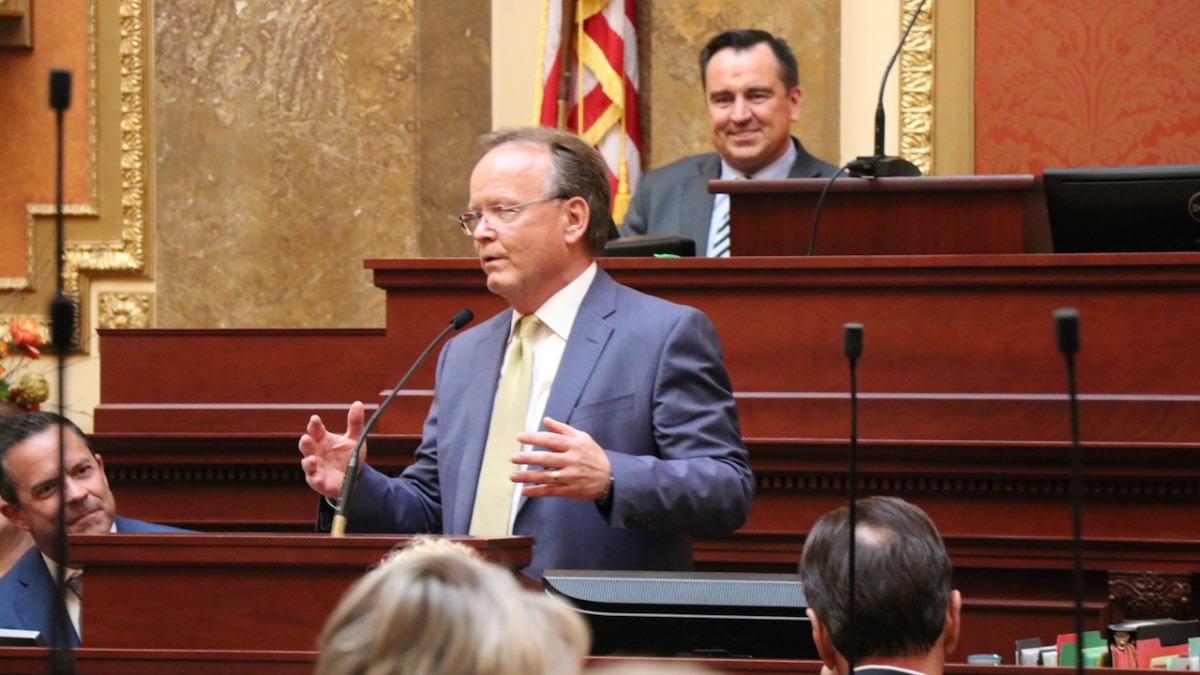

An 18-year-old, who is the grandson of Utah Senate President J. Stuart Adams, was charged with two counts of child rape and two counts of child sodomy after having sex with a 13-year-old. But after a last-minute change in the law, he walked away with no jail time and no requirement to register as a sex offender. The case has since sparked a major debate about how Utah handles child rape cases involving older teens.
According to the Salt Lake Tribune, the law change was initially suggested by Adams himself. It created a new option for prosecutors to file a third-degree felony charge against 18-year-old high school students who have sex with 13-year-olds. This change was included in SB213, a 49-page bill that adjusted various criminal sentences. The new law was not made retroactive, but it gave prosecutors a new path to follow in narrow situations.
The case started when the 13-year-old’s mother reported her child’s allegations to the police. Plea bargain talks had stalled, but after the law changed, prosecutors offered the 18-year-old a plea deal. He pleaded guilty to reduced charges, served only a week in jail, and did not have to register as a sex offender.
The victim’s family feels the system let them down, and the law change raises serious fairness concerns
The victim’s mother made her outrage clear, saying, “I feel like a law is the law, regardless of who you are, but that wasn’t what was going on here. I feel like [the 18-year-old] just got special treatment … and nobody was going to say anything about it.”
She also said she regrets not attending the sentencing to speak against what she saw as lenient punishment. “I would like to have said: I have kids. I know this was a mistake, but there are consequences to actions,” she said. “It’s changed both of you, but once you’re an adult, you take responsibility.”
The case raises a bigger question that courts across the country are still trying to answer: what should the justice system do when an older teen has sex with someone too young to legally consent? In Utah, children under 14 cannot consent by law, but the rules around consent for older minors depend on the age of the other person involved.
Utah’s Republican lawmakers have recently faced scrutiny on other fronts too, with one Senate Republican defying Trump’s shutdown strategy over a key legislative principle. Pam Vickrey, executive director of the Utah Juvenile Defender Attorneys, said it is not unusual for 18-year-olds still in high school to socialize with younger students.
But when sexual contact is involved with a younger peer, they can be prosecuted as adults. “Across the country, in the space of juvenile justice, everyone is struggling with what to do with … situations involving people who are too young to consent to sexual behavior,” Vickrey said.
Rep. Karianne Lisonbee, R-Clearfield, the House sponsor of the bill, said she did not know what drove the change for 18-year-olds or who crafted the language. “All of my other work in the criminal justice space underscores that if I had known that the proposed language was intended to potentially lower the penalty for the crime of rape of a child, I would have held or amended the bill to remove that section,” she said.
The victim’s mother said she understands why the law sometimes treats young offenders differently from older ones. But she also said the abuse has deeply affected her child, who has become more withdrawn, more careful, and less willing to spend time with friends. Utah has previously made other changes to treat 18-year-old high school students the same as their 17-year-old peers.
In 2022, a bill sent 18-year-olds to juvenile court for certain crimes, mainly minor offenses like smoking or speeding in a school parking lot. Utah’s political landscape has seen its share of controversy lately, including a Trump-backed effort to flip a Utah seat that descended into chaos with fraud claims and assaults. The debate over how the system should handle cases like this one is far from over.







Published: May 11, 2026 01:00 pm