



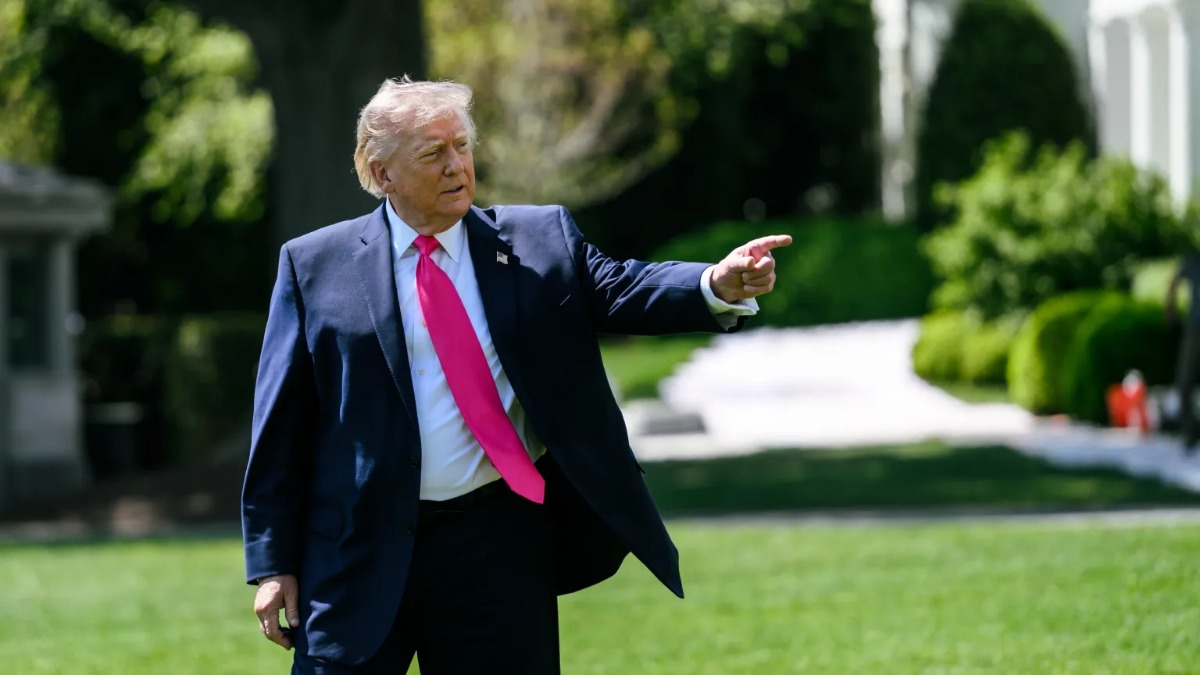

The ceasefire between the United States and Iran is set to expire on Wednesday evening, and President Trump is making it clear that he has no intention of granting an extension, The Hill reported. This high-stakes situation is reaching a critical point as the deadline approaches, with the president stating that he expects to be bombing if a deal is not reached before time runs out. The current two-week truce, which began on April 7 following threats against Iranian infrastructure, is now in its final hours.
During a discussion on Tuesday, the president was asked if he would consider lengthening the current ceasefire if peace talks taking place this week show signs of progress. His response was blunt and immediate. “I don’t want to do that,” he said. He further explained his reasoning by noting that the clock is ticking, and by the time Iranian negotiators could even arrive in Pakistan for the scheduled talks, the ceasefire would likely be nearing its end anyway.
While Vice President Vance is expected to depart for Pakistan on Tuesday to lead a delegation that includes U.S. envoy Steve Witkoff and Jared Kushner, the situation remains uncertain because Iran has not yet confirmed that it will send its own negotiators to Islamabad. Despite this lack of confirmation, the president remains confident in the American position. He suggested that Iran has no real choice but to send representation, describing the current leadership in Iran as being much more rational than those who held power in the past.
Trump is maintaining a firm stance, emphasizing that he is not feeling any pressure to settle for a subpar agreement
In a post on his Truth Social platform on Monday, he wrote, “I am under no pressure whatsoever, although, it will all happen, relatively quickly! Time is not my adversary, the only thing that matters is that we finally, after 47 years, straighten out the MESS that other Presidents let happen because they didn’t have the Courage or Foresight to do what had to be done with respect to Iran.” He has echoed this sentiment in interviews, stating that he is not going to be rushed into making a bad deal and that his primary demand remains the abandonment of the Iranian nuclear program.
Tensions have been further complicated by activities in the Strait of Hormuz. The U.S. Navy has maintained a blockade of the waterway since April 13, and the president has confirmed that this blockade will remain in place until a deal is officially signed. According to U.S. Central Command, naval forces have already directed 25 commercial vessels to turn around or return to Iranian ports since the blockade began. On Monday, naval forces intercepted an Iranian-flagged cargo ship after issuing multiple warnings.
The president addressed this incident, hinting at potential foreign involvement in the ongoing regional tension. He told reporters that he suspected China might be aiding Iran. “We caught a ship yesterday that had some things on it, which wasn’t very nice, a gift from China perhaps, I don’t know,” he said.
“I was a little surprised because I have a very good relationship, and I thought I had an understanding with President Xi, but that’s alright, that’s the way war goes, right?” He did not provide specific details regarding the location of the ship or the reasoning behind his suspicion regarding the origin of the cargo.
In response to the interception, Esmaeil Baqaei, a spokesperson for the Iranian Ministry of Foreign Affairs, claimed on Monday that the action was a violation of the ceasefire. He also stated that the regime currently has no plans for the next round of negotiations with the United States. Despite this, the president remains undeterred and appears prepared to escalate the situation if necessary. Regarding his willingness to continue seizing vessels, he remarked that he has five other ships he would take today if he had to.
Looking ahead to the potential for a resolution, the president expressed optimism that a deal could be reached. “What I think is that we’re going to end up with a great deal,” he said, noting that the United States is currently in a very strong negotiating position. He believes that Iran can get itself on a very good footing if they choose to make a deal in Pakistan this week. However, he balanced this optimism with a clear warning about the consequences of failure.
“I think that’s a better attitude to go in with,” he said, adding, “But we’re ready to go, I mean the military is raring to go.”






Published: Apr 21, 2026 04:45 pm