



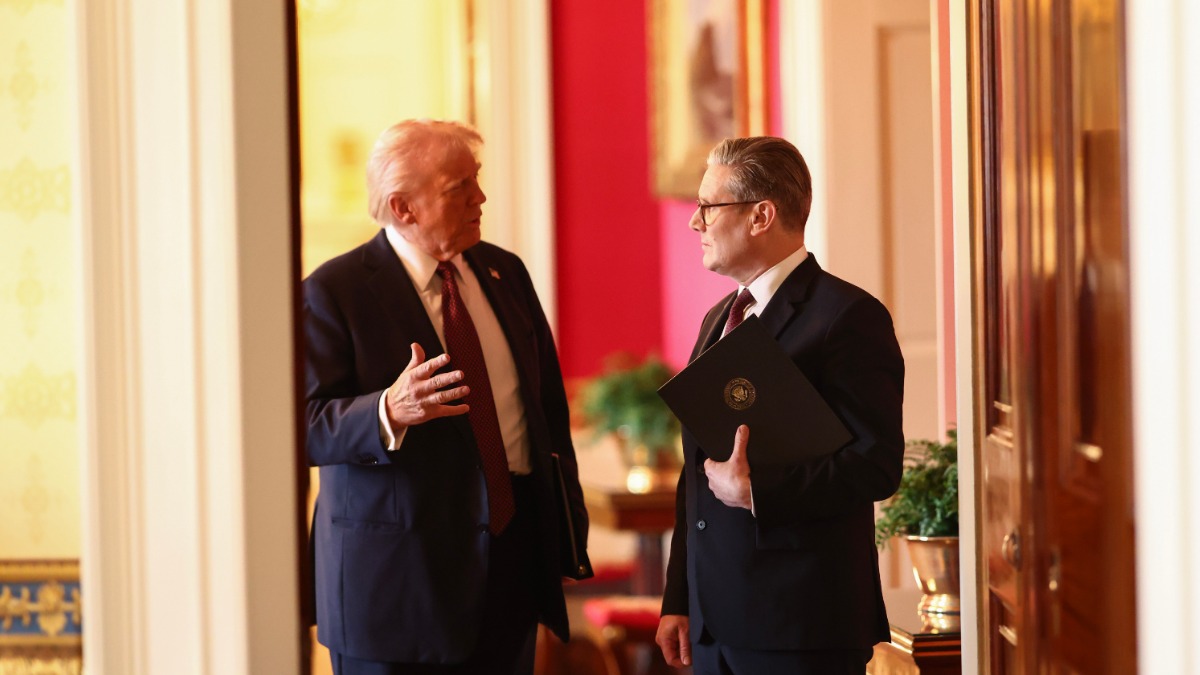

President Trump claimed on Sunday that British Prime Minister Keir Starmer is set to resign, a development that follows a difficult period for the United Kingdom leader. “Keir Starmer will resign as Prime Minister of The United Kingdom. He failed badly on two very important subjects- IMMIGRATION AND ENERGY (OPEN NORTH SEA OIL!). I wish him well!” Trump wrote on a Truth Social post, The Hill reported.
It is interesting to see such a direct prediction regarding the political stability of the United Kingdom, especially given the various pressures Starmer has been navigating lately. The timing of this comment is notable because there are reports suggesting the prime minister may be considering his future.
According to reports from Sunday, there are increasing signals that Starmer could begin planning to leave his role as early as Monday. Multiple individuals within the government have reportedly indicated that they believe Starmer might unveil a timeline for his exit soon.
This situation puts PM Starmer in a very tight spot
He is currently facing a choice between leaving his job voluntarily or potentially facing a challenge for his position from fellow Labour Party member Andy Burnham. While the U.K. leader has publicly pledged to continue serving as prime minister, the internal pressure is clearly mounting. A growing number of Labour Party members reportedly believe that he must step down, which adds a layer of complexity to his ongoing tenure. If he were to leave, he would be joining a list of five other prime ministers who have departed the role over the course of the last decade.
The dissatisfaction with Starmer seems to be rooted in several areas. He has faced mounting criticism for not delivering the economic growth he promised, and many people have been vocal about the lack of improvement regarding the cost of living. Beyond these domestic economic concerns, he has also been under political fire regarding the appointment of Peter Mandelson as the U.K. ambassador to the U.S., specifically due to Mandelson having ties to the deceased convicted sex offender Jeffrey Epstein.
Energy policy remains a massive point of contention between the president and the British government. President Trump has been quite vocal about his frustration with the United Kingdom over its refusal to drill for oil in the North Sea. On Tuesday, the president slammed the country for this stance, noting that Europe is currently desperate for energy. “Europe is desperate for Energy, and yet the United Kingdom refuses to open North Sea Oil, one of the greatest fields in the World,” Trump wrote on Truth Social.
The president also pointed out a specific economic dynamic that he finds problematic. He noted that Norway currently sells its North Sea oil to the U.K. at double the price, which he claims allows Norway to make a fortune. His stance is that the U.K. is better situated on the North Sea for energy purposes than Norway and should be acting accordingly. “It is absolutely crazy that they don’t… AND, NO MORE WINDMILLS!” he added. His mantra for the region is simple: “DRILL, BABY, DRILL!!!”
This tension over energy is happening while oil prices remain high, a situation exacerbated by the ongoing war involving Iran and the uncertainty surrounding the flow of oil tankers through the Strait of Hormuz. The president has been at odds with Starmer for some time over the latter’s reluctance to get involved in the war or offer support to the United States.
Last month, the president suggested that the U.K. should buy from the U.S. and find the courage to take action in the region. He stated, “You’ll have to start learning how to fight for yourself, the U.S.A won’t be there to help you anymore, just like you weren’t there for us.”
Starmer has maintained a different perspective on these international matters. On Monday, he confirmed that the U.K. will not aid the U.S. in its planned blockade of the Strait of Hormuz, especially after negotiations failed to reach a deal over the weekend. Starmer told the media that his focus has been on bringing countries together to keep the waterways open rather than shutting them down.
This refusal to align with the U.S. approach on the Strait of Hormuz has clearly contributed to the friction between the two leaders, adding another layer to the already strained relationship. Whether these combined pressures will lead to the resignation predicted on Sunday remains to be seen.








Published: Jun 21, 2026 04:00 pm