



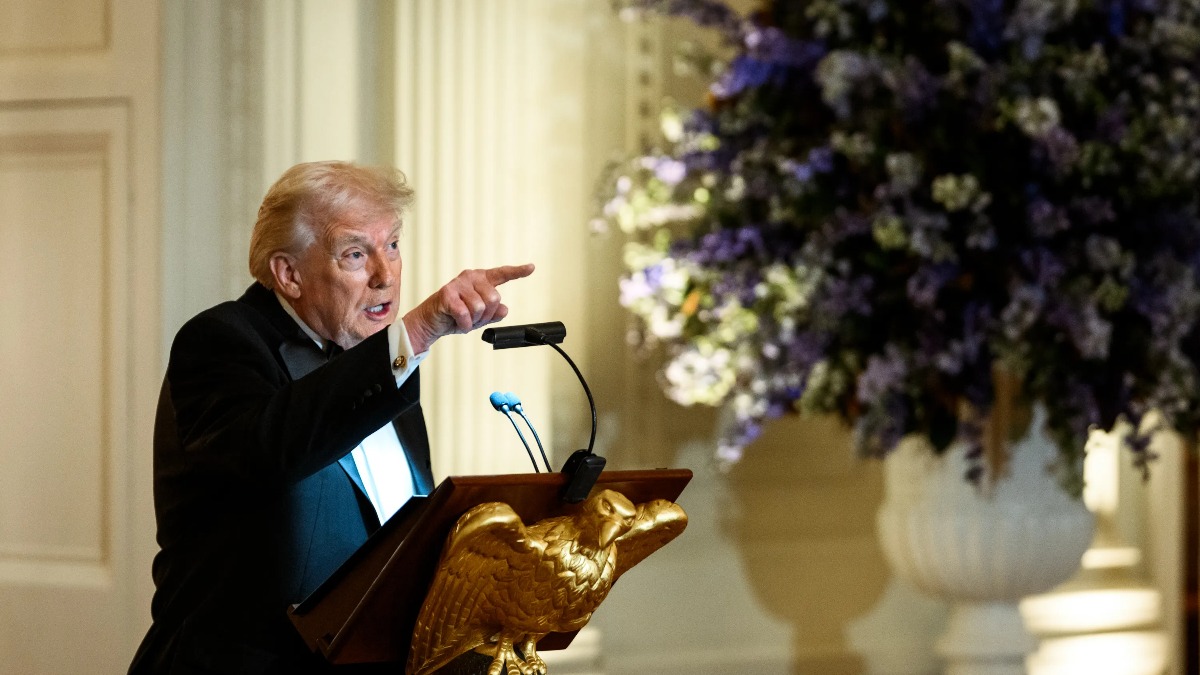

Donald Trump dropped a $10 billion lawsuit against the IRS just hours after a federal judge demanded answers about how he could sue his own government, according to reporter Scott Dworkin. The lawsuit was filed in January and claimed that the IRS had failed to protect Trump’s tax returns from a leak years ago. The problem was that Trump’s own government – specifically, the Department of Justice – would have been defending the IRS in the case.
On Monday, the deal became official: Trump dropped the lawsuit in exchange for the DOJ creating an “Anti-Weaponization Fund” worth $1.776 billion. This fund will allow people who believe they were unfairly investigated or prosecuted to apply for payouts. Acting Attorney General Todd Blanche described it as “a lawful process for victims of lawfare and weaponization to be heard and seek redress.”
Many people are criticizing this arrangement. Rep. Jamie Raskin, the top Democrat on the House Judiciary Committee, called it “one of the single most corrupt acts in American history.” The fund would be a highly unusual resolution and would also show the administration’s willingness to reward Trump’s allies who have long claimed they were unjustly investigated, and in some cases, charged and convicted.
The Anti-Weaponization Fund is being called a slush fund for Trump’s allies
The creation of the fund fits with Trump’s long-running claims that the Justice Department under the Biden administration was weaponized against him. He has pointed to the since-abandoned criminal charges he faced between his first and second terms – charges related to conspiring to overturn the 2020 presidential election results and to retaining classified documents at his Mar-a-Lago estate in Florida.
Trump has also been making bold moves on the international stage, such as when he launched Project Freedom without notifying Saudi Arabia, a decision that forced him to pause the entire operation. Trump’s Justice Department has already approved payouts to supporters caught up in the Trump-Russia investigation and has investigated and prosecuted some of his perceived political enemies.
In 2021, he also pardoned or commuted the sentences of supporters who rioted at the U.S. Capitol on January 6th. In a statement, Rep. Raskin said, “This case is nothing but a racket designed to take $1.7 billion of taxpayer dollars out of the Treasury and pour it into a huge slush fund for Trump at DOJ to hand out to his private militia of insurrectionists, rioters, and white supremacists, including those who brutally beat police officers on January 6, 2021, and sycophant accomplices to his election stealing schemes.”
The fund would represent not just an unorthodox legal resolution but also a further sign of the administration’s eagerness to use government resources in ways that benefit Trump’s allies. Critics say this is a clear pattern of using taxpayer money to reward those loyal to the president.
Meanwhile, Trump’s foreign policy decisions continue to draw scrutiny, particularly as his own officials have warned about his shrinking options to claim an Iran victory amid an ongoing blockade strategy. As for Trump’s decision to drop the lawsuit itself, the timing raised many eyebrows. The lawsuit was dropped the very morning a federal judge was pressing for answers about how a sitting president could sue his own government – a question that, on its own, had no clean legal answer.







Published: May 19, 2026 03:15 pm