



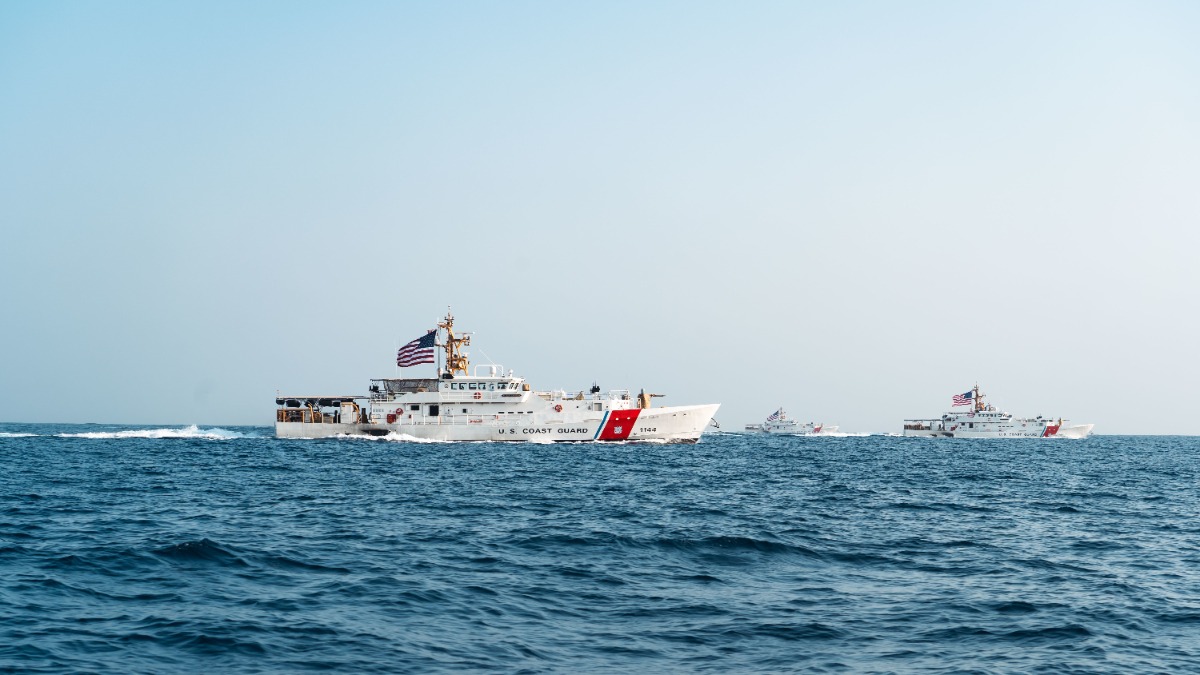

President Donald Trump has issued a 48-hour ultimatum to Iran, demanding the full reopening of the Strait of Hormuz or face US strikes on its power plants. Iran immediately responded with its own threat to target vital energy and water infrastructure across the Gulf.
Trump made his demands in a social media post on Saturday around 7:45 PM EDT. He stated, “If Iran doesn’t FULLY OPEN, WITHOUT THREAT, the Strait of Hormuz, within 48 HOURS from this exact point in time, the United States of America will hit and obliterate their various POWER PLANTS, STARTING WITH THE BIGGEST ONE FIRST!”
According to Reuters, Iran responded quickly. Military spokesman Ebrahim Zolfaqari warned that if Iran’s fuel and energy infrastructure is attacked, “all energy infrastructure, as well as information technology…and water desalination facilities, belonging to the US and the regime in the region will be targeted pursuant to previous warnings.”
Iran’s threat to water supplies puts millions of Gulf residents at serious risk
This is a major concern because Gulf countries rely heavily on desalination plants for drinking water. Bahrain and Qatar get 100% of their water this way, the UAE over 80%, and Saudi Arabia 50%. Parliament Speaker Mohammad Baqer Qalibaf warned that critical infrastructure and energy facilities in the Middle East could be “irreversibly destroyed” if Iranian power plants are hit.
The Revolutionary Guards also stated, “The Strait of Hormuz will be completely closed and will not be opened until our destroyed power plants are rebuilt.” Even before this latest escalation, the Strait of Hormuz was effectively closed, triggering the worst oil crisis since the 1970s.
European gas prices surged by as much as 35% last week. Iran is also building a vetting system for Strait of Hormuz traffic, and what ships must disclose to pass is raising serious concerns. IG market analyst Tony Sycamore called Trump’s threat a “48-hour ticking time bomb of elevated uncertainty” for markets.
Iran’s representative to the International Maritime Organisation, Ali Mousavi, claimed the strait is open to all shipping except vessels linked to “Iran’s enemies,” but ship-tracking data shows only a few vessels, like Indian-flagged ships and a Pakistani oil tanker, have actually passed through safely.
This exchange of threats comes after weeks of intense conflict. US and Israeli bombardment has reportedly reduced Iran’s missile capabilities, but Tehran has continued striking back. Air raid sirens blared across parts of northern and central Israel, including Tel Aviv, overnight on Sunday. Iranian strikes on two southern Israeli towns injured dozens, near Israel’s nuclear reactor and military installations, and Israel responded early Monday with wide-scale strikes on Iranian infrastructure in Tehran.
Iranian news agencies reported at least one child was killed and several others injured in a bombing of a residential area in Khorramabad city, with another neighborhood in Urmia also damaged. Saudi Arabia also reported two ballistic missiles launched toward Riyadh early Monday, with one intercepted. Analysts have also pointed out that the war’s environmental cost is escalating rapidly, with massive emissions adding another layer to the crisis.
The broader conflict, which began on February 28, has already claimed over 2,000 lives in the US and Israel, spiked fuel costs, and fueled global inflation fears. Israel expects “weeks more of fighting against Iran and Hezbollah,” according to military spokesperson Brigadier General Effie Defrin. Hezbollah has fired hundreds of rockets at Israel since March 2, leading to an Israeli offensive that has killed over 1,000 people in Lebanon.


Published: Mar 23, 2026 11:45 am