




Peace talks between the United States and Iran have reportedly hit a “dead end,” with mediators saying Iran has told them that US demands are “unacceptable” and that they will not be meeting US officials as planned. This comes even after President Donald Trump publicly said that the downing of an American F-15 fighter jet over Iran would not affect peace negotiations, stating, “No, not at all. No, it’s war. We’re in war.”
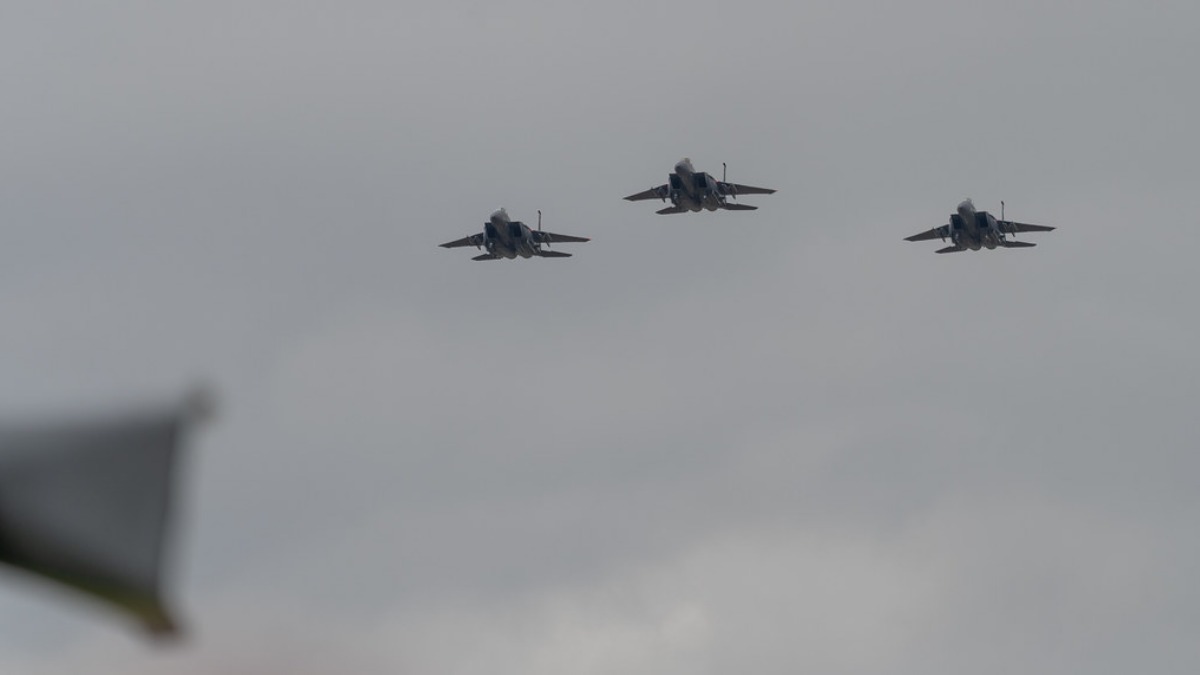
On Friday, Tehran claimed it had shot down an American F-15 over southern Iran, marking the first time a US plane has been destroyed by enemy fire in this conflict. American officials confirmed that one of the two crew members, believed to have been based at a British military installation, was successfully rescued by a helicopter mission. The fate of the second crew member remains unclear, with search and rescue operations still ongoing.
Despite the F-15 incident and the ongoing search for the missing airman, President Trump maintained that negotiations would continue. However, The Wall Street Journal says reports from third-party mediators suggest Iran has walked away from planned meetings in Pakistan.
Iran’s rejection of Trump’s peace plan has left both sides deeply entrenched
Islamabad had previously hosted initial talks involving foreign ministers from Egypt, Turkey, and Saudi Arabia, though the US, Israel, and Iran never attended those sessions. Officials from Turkey and Egypt are still exploring new venues like Doha or Istanbul and looking at fresh proposals to break the deadlock.
The negotiations stalled after President Trump presented Tehran with a 14-point, or 15-point depending on the report, peace plan. The plan called for Iran to abandon its nuclear program, stop supporting regional proxies, and reopen the Strait of Hormuz in exchange for sanctions relief.
Iran quickly deemed it unrealistic and publicly offered a five-point counter-proposal, which included US reparations for war damage and recognition of Tehran’s right to control the Strait of Hormuz. However, according to the NY Post, Trump believes recent escalations, including the F-15 incident, will not affect the talks.
Iran has gained significant leverage by blocking global oil shipments through the Strait of Hormuz, putting pressure on global energy prices. President Trump has been considering a ground invasion over the past week, even while claiming the war is coming to an end.
He also said on Wednesday that Iran had requested a ceasefire, a claim Iran swiftly denied, with Iran saying instead that it was Trump who signaled openness to a ceasefire if Iran reopened the Strait. Trump has also threatened to destroy civilian infrastructure like bridges and electricity plants if no deal is reached, and posted on social media that the US could “easily open” the Strait of Hormuz and “make a fortune” by exporting oil.
Alex Vatanka, a senior fellow at the Middle East Institute, said the F-15 downing would have emboldened Iran. He noted it was “bad news for the US military because they’ve done their job and here they are, staying in this war without a clear sense of how it’s going to end.”
He also said, “The regime in Tehran will use this as propaganda and say, ‘If you thought we were on our knees, think again.'” Mona Yacoubian, director of the Middle East program at the Centre for Strategic and International Studies, said that if the missing pilot were captured and paraded, it would “elevate the challenges in the US domestically” and “increase the pressure further on the administration to do something.”
The conflict has had wide consequences across the region. Kuwait and the UAE have faced Iranian missile and drone attacks, with strikes damaging an oil refinery and a power and water desalination plant in Kuwait. Abu Dhabi’s largest natural gas processing plant, Habshan, also suspended operations after an attack.
Israeli Prime Minister Benjamin Netanyahu stated that Israeli and American strikes have destroyed 70 percent of Iran’s steel production capacity, impacting the Khuzestan Steel Company and Mobarakeh Steel Company. Adding to the turbulence within the US military command, Pete Hegseth fired the US Army Chief of Staff in a move widely seen as nearly unprecedented during wartime.
European leaders have also spoken out. French President Emmanuel Macron criticized Trump for starting the war without consulting allies and for his “unrealistic” demands regarding the Strait of Hormuz, and a key European ally has since disrupted critical US plans, leaving US officials scrambling.
Pope Francis urged Israeli President Isaac Herzog to “reopen all paths of dialogue” with Iran and protect civilians. Meanwhile, Iran’s parliamentary speaker, Mohammad Bagher Ghalibaf, mocked the US for a “brilliant no-strategy war,” and senior Iranian military officer Ali Akbar Ahmadian said Iran “will neither retreat under threats nor be swayed by clamour and empty shows.”







Published: Apr 4, 2026 06:30 am