



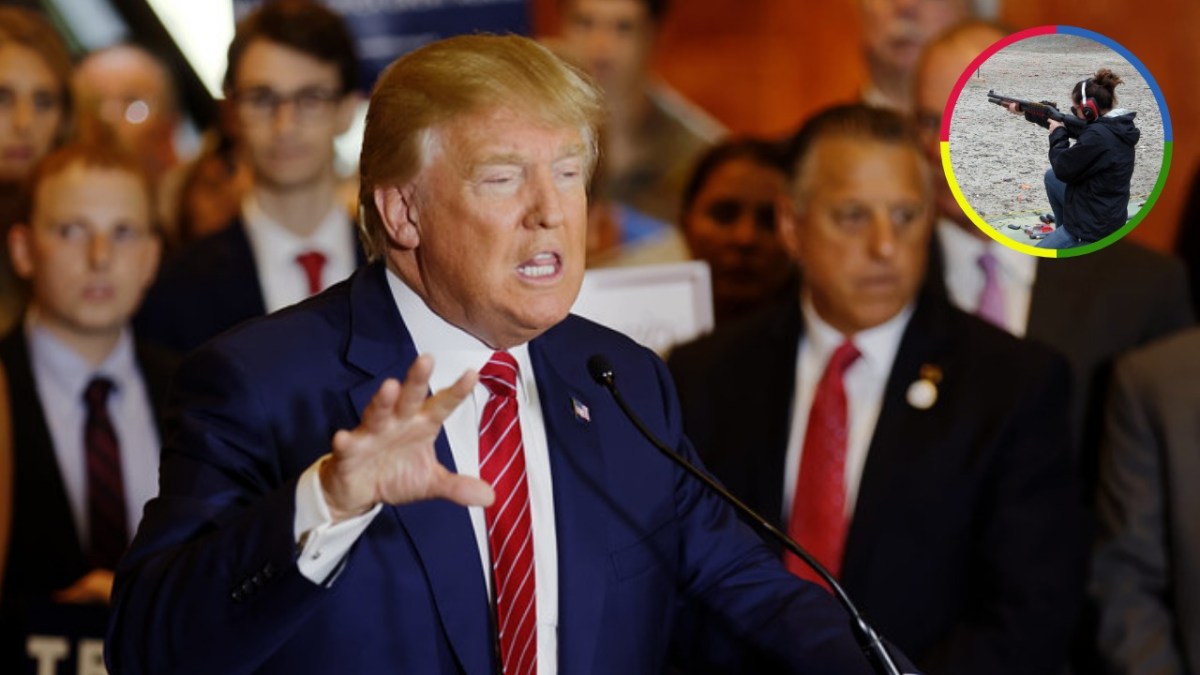

The National Firearms Act has governed silencers and short-barreled firearms since 1934, and one line in a tax bill has knocked the legs out from under much of it. President Donald Trump personally instructed the Justice Department not to appeal the federal ruling that blocked enforcement of those requirements, according to CBS. The instruction breaks with a department practice of defending acts of Congress even when its own lawyers doubt the arguments.
The ruling traces back to the One Big Beautiful Bill Act, signed by Trump last year. That law cut the making and transfer tax on silencers, short-barreled rifles, short-barreled shotguns and the catch-all category known as any other weapon to $0, effective at the start of this year. Registration, fingerprinting and ATF approval requirements all stayed on the books.
U.S. District Judge James Wesley Hendrix, a Trump appointee in the Northern District of Texas, issued his decision on August 5. He found that the registration and transfer provisions could no longer stand as the government now collects no revenue from the firearms in question. Hendrix did not decide the case on Second Amendment grounds, resting instead on the limits of Congress’s enumerated powers.
Prosecutors are already losing cases over this
The injunction is not a nationwide repeal of the National Firearms Act. Protection runs to the plaintiffs in the consolidated Texas cases, to the plaintiff organizations’ members and customers, and to future members and customers as well. Several of those groups sell memberships for a small fee, which makes the practical reach far wider than the party list suggests.
That breadth showed up in Alabama this month. The Justice Department dismissed an indictment against Cameron Silmon on a charge of knowingly receiving a silencer with no serial number, another instance of the department backing away from federal charges in a closely watched case. Silmon’s attorney said his client had joined covered gun-rights groups after the injunction issued. However, the prosecutor rejected the argument that a judge in Texas can stop a U.S. attorney in Alabama from enforcing federal criminal law.
Silmon has not walked away clean. The government said its continuing investigation turned up evidence of further crimes, and he now faces charges that include illegal possession of a machine gun. Machine guns fall outside the injunction, as Congress left the tax on them intact.
The taxing power had carried the National Firearms Act for nearly a century. The Supreme Court upheld the statute in 1937 in Sonzinsky v. United States, finding that Congress could regulate through a tax even where the tax discouraged the activity. Hendrix concluded that the justification disappears once the tax reads $0.
Government attorneys had floated a fallback, arguing that the requirements could rest on the Commerce Clause rather than the taxing power. That position never reached an appeals court, as Trump intervened before the department filed anything. The department has said it plans to notify Congress that the ruling will stand.
Destructive devices are untouched, and the broader federal system remains in place. The Gun Control Act still applies, and the White House has said that anyone barred from owning firearms before the ruling remains barred now. However, the registration framework that survived 92 years now rests on a footing the administration has declined to defend.
The Justice Department has until October 5 to file a notice of appeal, and Congress could rebuild the framework by restoring a nonzero tax or rewriting the National Firearms Act to rest on a different constitutional authority.







Published: Sep 18, 2026 10:00 am