



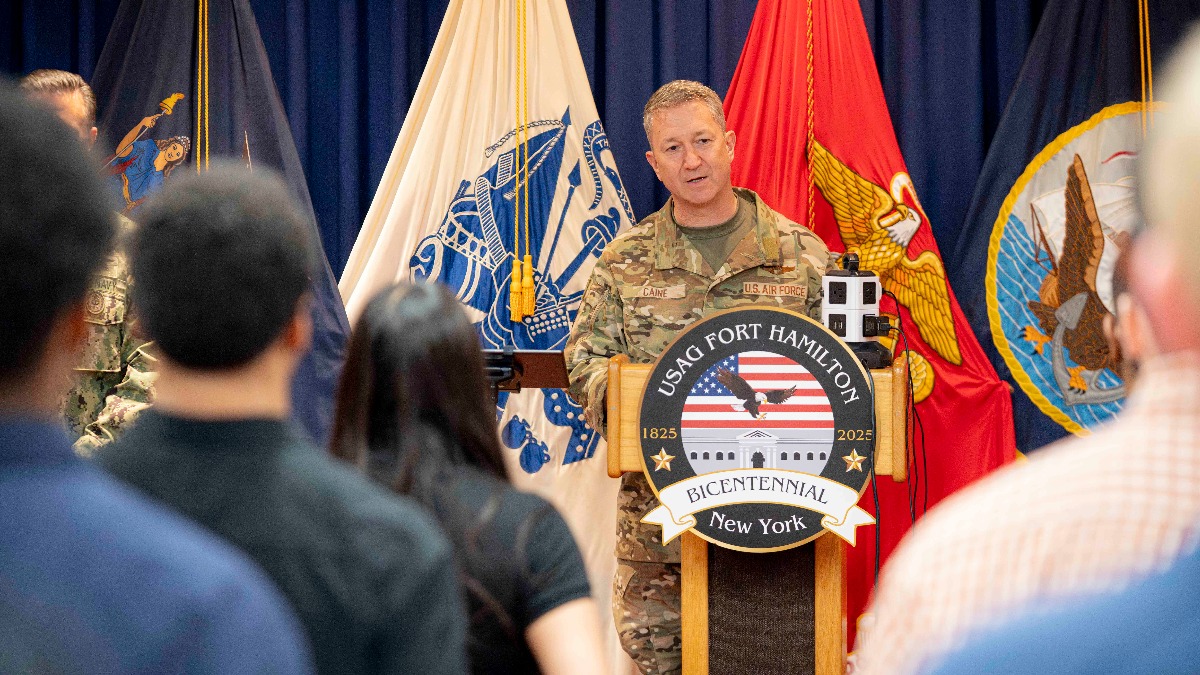

General Dan Caine, Chairman of the Joint Chiefs of Staff, has privately told senior Trump administration officials that the United States needs to find a way out of the war with Iran, according to three sources familiar with the matter, says CNN.
Caine believes the military options available to escalate the conflict could backfire, and that airpower alone is unlikely to achieve President Trump’s stated goals. “Caine is looking for an off ramp,” one source said.
Caine has raised these concerns with other top Cabinet officials, including CIA Director John Ratcliffe, Secretary of State Marco Rubio, and Vice President JD Vance, two of the sources said. He has held side conversations with these officials to coordinate their views before meetings with the president.
General has voiced limits of air power in public testimony
One source told CNN that Caine’s discussions with other officials appeared aimed at protecting the military’s position. Caine and others have tried to develop options that fit within Trump’s own preferences, since the president has consistently shown reluctance toward sending ground troops into Iran and has instead suggested that bombing alone could pressure Iran into a deal.
The war has continued for nearly six months. It began with claims that Iran’s military capabilities had been severely damaged, and has been shaped throughout by Trump’s stated goal of preventing Iran from obtaining a nuclear weapon. During a public hearing last month, Caine told lawmakers, “airpower has its limits.”
Caine’s spokesperson, Joseph Holstead, said: “We do not discuss the Chairman’s confidential conversations with the President, the Secretary, or other senior leaders, nor do we comment on anonymous, agenda-driven characterizations of those conversations by sources who were not privy to them.”
A White House official defended Caine’s work, telling CNN: “General Caine is an incredible asset to President Trump’s national security team, and the overwhelming success of Operations Epic Fury, Midnight Hammer, and Absolute Resolve speaks for itself.”
The official added that Caine “always provides accurate, unbiased information and a host of options to the Commander-in-Chief, who ultimately makes decisions based on what he feels is best for US national security.” In late July, Caine and other officials raised concerns about a plan to launch more aggressive strikes, worried about the fallout that could follow.
This was not the first time such warnings had surfaced. Caine had raised similar concerns during a prior White House meeting that led to a pause in nightly strikes. One source said Trump initially seemed ready to approve what he called a “massive” operation, but added that “the only ones in favor of the operation were elements of CENTCOM.” The source said Israel also supported escalating the conflict.
A senior administration official told CNN that Trump decided to hold off after speaking with Middle East allies, who told him they feared Iranian retaliation against their energy infrastructure. The official said the president has not ruled out the strikes for a later date.
Dwindling US stockpiles of key munitions were also a factor in the decision, multiple sources said. Gulf officials told the administration that a shortage of high-end American air defense systems could limit their ability to defend against Iranian retaliation if the conflict escalates further. Reporting has since detailed how the military has depleted its long-range missile supply over the course of the war.
Trump’s repeated threats to strike Iran’s energy infrastructure are unlikely to force Iran to give in, sources said, and would likely draw retaliatory strikes on Gulf countries’ energy facilities. Several sources said this could also further alienate the Iranian public rather than turn blame toward the government.
Trump has also considered bombing bridges, though a second source said this is unlikely to produce meaningful results, noting that much of the remaining targets involve smaller, scattered drone and missile sites.
While raising concerns, Caine has been careful about how he presents the downsides of military options directly to Trump, in order to preserve his relationship with the president. He has worked to secure more regular access to Trump, including seeking an office at the White House.
Two sources said Caine was “doing his job” when he raised concerns about the depleted munitions stockpile during a White House meeting with Trump and other officials last month. But during that same meeting, one source said Caine also told the president that if he wanted to proceed with the operations, “we could absolutely wreck them.”
A third source said that privately, Caine has been more direct about the limits of air power and his view that bombing alone is unlikely to meet Trump’s objectives at this stage of the war. However, one source who has observed Caine’s interactions with Trump said earlier this year that “He’s definitely pulling punches,” comparing his White House conversations with more candid discussions among military leaders.
CNN previously reported that Caine raised concerns about the depleted munitions stockpile in at least two recent meetings with Trump about escalation options. Sources said Caine has also told Trump that the US military could inflict major damage on Iran if the president chooses to escalate the war.
Before the war began, Caine and other military leaders warned Trump that a long military campaign could affect weapons stockpiles supporting Israel and Ukraine. A source said senior US military commanders now consider the munitions stockpile “dangerously low.” Trump has grown frustrated that this issue has become public, raising it during a Cabinet meeting at Camp David last week.
The munitions shortage is one reason the Pentagon and US Central Command have begun reassessing military strategy, CNN has reported. A senior CENTCOM official recently sent an email seeking new ideas for pressuring Iran, according to sources. One source said, “It is rough when you are looking at those options in the middle of the war instead of before it starts.”
As chairman, Caine is responsible for drafting military options for striking Iran. Sources familiar with his advice said that even before the war started, he raised concerns in Pentagon meetings about the scale, complexity, and potential for US casualties in a major operation. Trump had previously invoked Caine by name in a pre-war social media post, claiming his top military adviser believed the conflict “will be something easily won.”
One source familiar with how Caine is handling the current situation said, “He is out of his depth on this one.” Many officials within the administration and outside analysts agree that decisively defeating Iran would require a major ground operation, one that could cost thousands of American lives.
The Pentagon has such plans on file, sources said, but no one in the administration is currently pushing for that option. Instead, the current focus is on finding an off-ramp that could give Trump a “symbolic” win, starting with an agreement to reopen the Strait of Hormuz.







Published: Aug 8, 2026 11:30 am