



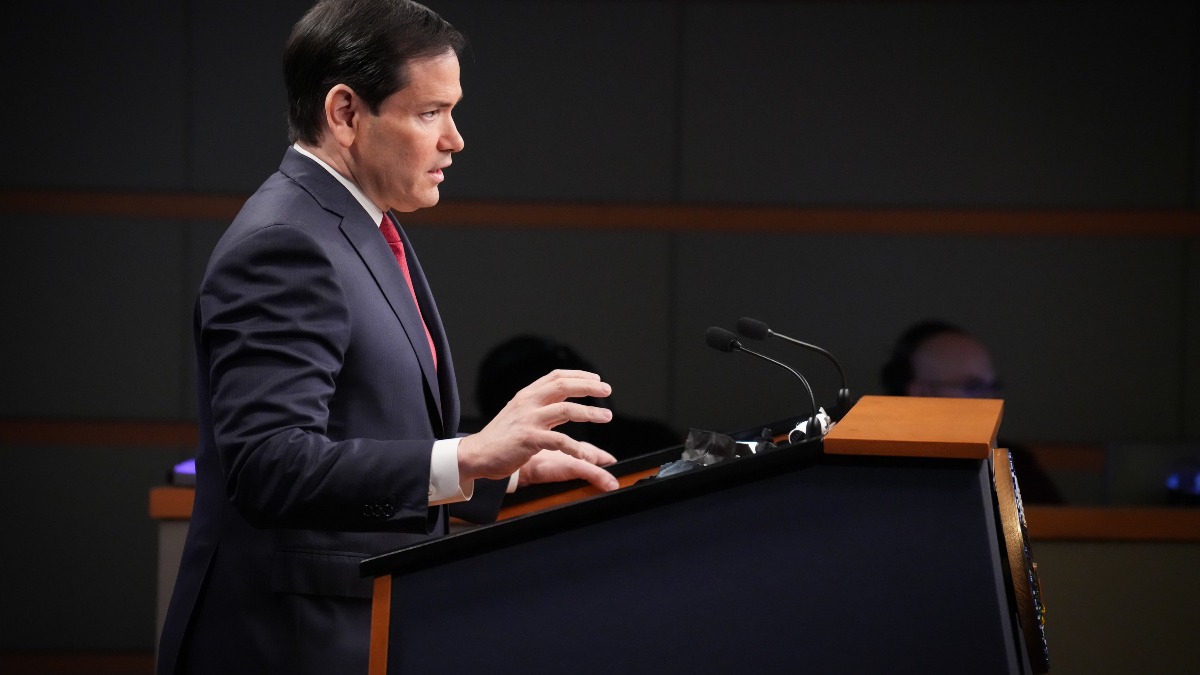

For the past three months, the U.S. and Iran have been engaged in talks aimed at ending the ongoing conflict in the region. Both sides played down hopes of a quick breakthrough. U.S. Secretary of State Marco Rubio warned that if diplomacy fails, Washington will deal with Iran in “another way.”
Rubio made these comments in New Delhi while speaking to reporters. He said the U.S. would give diplomacy every chance before considering other options. Iran’s foreign ministry spokesperson, Esmaeil Baghaei, said Iran was negotiating an end to the war but was not currently discussing nuclear issues, and added that while a framework had been reached, no one could say a deal was imminent.
According to Reuters, Baghaei also said the potential memorandum of understanding contains no specific details about the management of the Strait of Hormuz, which belongs to the coastal countries. The Strait of Hormuz is a critical waterway that carries a fifth of global oil and liquefied natural gas shipments.
A deal is still far from done, with major issues between the two sides yet to be resolved
Oil prices dropped 5% to two-week lows on Monday as optimism grew that the two countries were moving closer to a deal. Earlier reports had suggested that the U.S. and Iran were nearing a peace agreement, though Trump had simultaneously warned of bombing Iran at a higher level.
Trump had raised expectations on Saturday when he said Washington and Tehran had “largely negotiated” a memorandum of understanding that would reopen the Strait of Hormuz. However, Baghaei said on Monday that Iran would not charge tolls for passage through the waterway, but noted it was “normal for services provided to require a price.”
On Sunday, Trump wrote on Truth Social that the U.S. blockade on Iranian ships in the strait would “remain in full force and effect until an agreement is reached, certified, and signed,” and added, “Both sides must take their time and get it right.”
The two sides still disagree on several difficult issues, including Iran’s nuclear ambitions, Israel’s war in Lebanon with the Iranian-backed Hezbollah militia, and Tehran’s demands for the lifting of sanctions and the release of tens of billions of dollars of Iranian oil revenues frozen in foreign banks. A senior Trump administration official outlined what he described as the latest issues being negotiated.
According to that official, Iran had agreed “in principle” to open the Strait of Hormuz in exchange for the U.S. lifting its naval blockade, and to dispose of Tehran’s highly enriched uranium. When asked whether Iran had accepted disposing of its stockpiled enriched uranium, the official pushed back and said, “It’s a question about how.”
A second senior administration official said on Sunday that the proposed framework would give negotiators 60 days to reach a final deal. Iranian sources had told Reuters that in future stages, “feasible formulas” could be found to resolve the dispute over its highly enriched uranium stockpile, including diluting the material under the supervision of the U.N. nuclear watchdog.
The war has had a devastating impact on the region, with thousands killed in Iran and Lebanon. A fragile ceasefire has held since early April, but any deal reinforcing it would bring relief to markets without immediately solving a global energy crisis that has pushed up costs of fuel, fertilizer, and food.
This conflict has had wide-reaching consequences, and how the energy crisis is hitting American public schools is one example of its less visible effects. Trump pushed back at critics of his approach to the negotiations, posting on Sunday: “If I make a deal with Iran, it will be a good and proper one … So don’t listen to the losers, who are critical about something they know nothing about.”







Published: May 25, 2026 10:45 am